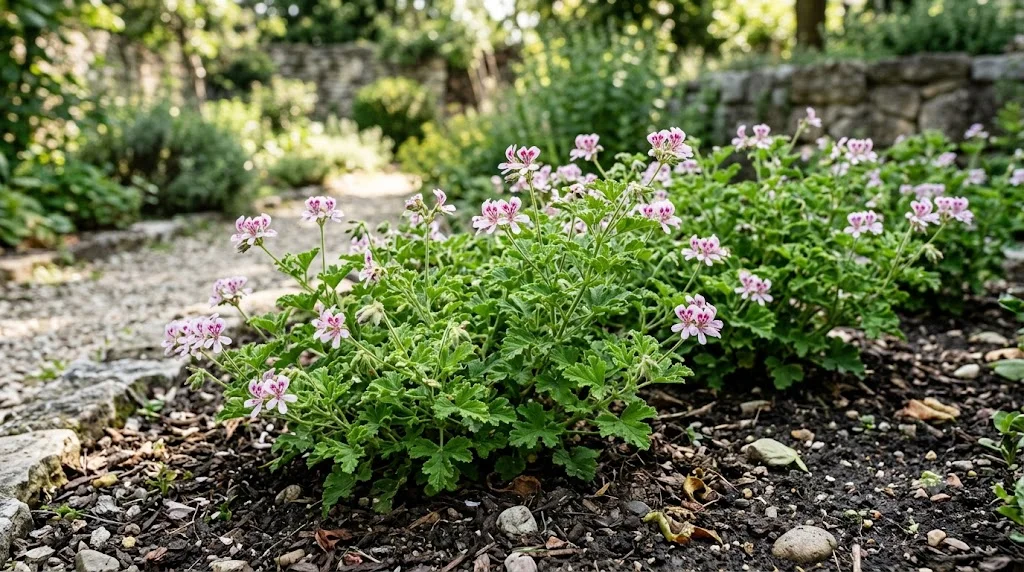

Overwintering allows a lemon-scented geranium to survive cold months and return to vigorous growth in spring. Because the plant is not frost hardy, it must be moved into protection before freezing temperatures damage its leaves and stems. Winter success depends less on warmth than on the correct balance of light, cool temperatures and restrained watering. A bright, frost-free room is usually far more suitable than a hot, dark living space.
Preparation should begin before the first frost is forecast. Waiting until the plant has been chilled can result in leaf loss and weakened tissues. A gradual transition gives it time to adjust to lower light levels. Healthy plants enter winter more successfully than neglected or heavily infested specimens.
The plant does not become completely dormant under ordinary indoor conditions. Instead, its growth slows because of shorter days and cooler temperatures. It still needs light and occasional moisture. Treating it like an actively growing summer plant usually causes more harm than allowing a controlled rest.
Several overwintering methods are possible, but keeping the plant in its container is the most reliable. It protects the root system and makes spring recovery faster. Mature specimens can also be backed up with cuttings in late summer. Young rooted plants occupy less space and may overwinter more easily.
Preparing the plant before autumn cold
Inspect the entire plant several weeks before moving it indoors. Look closely beneath leaves and along stems for whiteflies, aphids, mites and mealybugs. Treat any infestation while the plant is still outside or isolated. Bringing untreated pests indoors allows them to multiply rapidly.
More articles on this topic
Remove dead leaves, spent flowers and weak shoots. Light pruning reduces the plant’s size and improves air circulation. Avoid cutting it back too severely immediately before winter because large wounds heal slowly in poor light. More substantial shaping can be carried out in spring.
Clean the outside of the container and remove debris from the compost surface. Check that drainage holes are open and that the pot is not cracked. If the compost is compacted or sour, repotting may be necessary. Otherwise, major repotting is better postponed until active growth resumes.
Move the plant first to a sheltered outdoor position for several days. This step reduces the sudden difference between full outdoor sunlight and indoor conditions. Bring it inside before night temperatures become dangerously low. Protect the plant from cold wind during the transition.
Creating suitable indoor conditions
Choose the brightest available frost-free room. A cool conservatory, enclosed porch or bright stairwell is often suitable. Temperatures around 8 to 15 degrees Celsius help slow growth without exposing the plant to freezing conditions. Warmer rooms require stronger light and more careful pest monitoring.
More articles on this topic
Place the pot near a window, but prevent leaves from touching cold glass. Condensation and low surface temperatures can damage foliage. Rotate the plant occasionally so that all sides receive light. Avoid repeatedly moving it between warm and cold rooms.
Good air circulation remains important during winter. Open the room briefly on mild days if this can be done without exposing the plant to icy drafts. Do not place the pot directly beside a radiator or heating vent. Hot, dry air encourages mites and increases water loss from the leaves.
Supplemental lighting may be useful where winter daylight is weak. A suitable grow lamp can prevent extreme stretching and premature leaf drop. Maintain a regular daily lighting period rather than leaving the lamp on continuously. Plants still benefit from a dark phase.
Watering and maintaining the plant in winter
Allow more of the compost to dry between waterings than during summer. Growth is slow, so the roots absorb moisture gradually. Water thoroughly when needed, then let the container drain. Never leave water standing beneath the pot.
Check the compost at depth before watering. A cool surface can feel dry while the lower root zone remains moist. Pot weight is especially useful for winter assessment. When uncertain, waiting another day is usually safer than adding water to already damp compost.
Fertilizer is generally unnecessary during the coldest and darkest part of winter. Nutrients cannot compensate for insufficient light. Feeding may stimulate pale, weak shoots that are vulnerable to insects and disease. Resume fertilizer only when strong spring growth begins.
Remove yellow leaves promptly and continue checking for pests. A few dropped leaves are normal during adjustment, but rapid decline signals a problem. Soft stems and persistent wetness indicate overwatering. Fine webbing and pale leaves suggest spider mites.
Restarting growth in spring
As daylight increases, the plant will begin producing fresh shoots. Increase watering gradually rather than returning immediately to a summer schedule. Move it to a slightly warmer position if necessary. New growth should remain compact and green.
Spring is the best time for stronger pruning and repotting. Remove weak winter growth and shorten long branches to encourage a balanced crown. Inspect the roots before moving the plant into fresh compost. Use a container only slightly larger than the existing one.
Begin feeding at low strength once active growth is established. A balanced liquid fertilizer supports new leaves without forcing excessive softness. Increase the dose only if the plant responds well. Fresh compost may provide enough nutrition for the first few weeks.
Outdoor acclimatization must be gradual. Begin with a sheltered, shaded position during mild daytime weather. Extend the time outdoors and introduce direct sunlight over one or two weeks. Keep the plant inside whenever frost remains possible.