
Light is one of the most influential factors in the growth, fragrance and overall appearance of a lemon-scented geranium. Strong illumination encourages compact stems, richly coloured leaves and a more noticeable citrus aroma. Insufficient light produces elongated shoots, wide spaces between leaves and reduced flowering. The goal is to provide abundant brightness while protecting the foliage from sudden exposure to extreme heat.
The plant performs best when it receives several hours of direct sun each day. Gentle morning sunlight is particularly valuable because it supports photosynthesis without creating the intense heat associated with late afternoon exposure. In moderate climates, full-day sun may be suitable. Local temperature and humidity determine how much direct light the leaves can tolerate.
Plants gradually adapt to the light conditions in which their leaves develop. Foliage formed indoors is tender and can scorch when moved suddenly into outdoor sun. Leaves produced outside are usually smaller, firmer and better protected. Any major change in exposure should therefore occur over several days.
Light quality changes through the seasons. A windowsill that is bright in summer may become shaded in winter because of the lower sun angle or surrounding buildings. Regularly reassessing the position prevents gradual decline. The plant’s growth pattern often reveals whether its current location remains suitable.
Providing ideal outdoor light
Choose a site with direct morning sun and bright light for the rest of the day. This arrangement supports strong growth while reducing afternoon heat stress. In cool coastal climates, longer exposure may improve performance. In very hot inland areas, some afternoon shade is beneficial.
More articles on this topic
Container plants heat more quickly than plants growing in the ground. Dark pots exposed to intense sunlight can become hot enough to stress roots. Shading the container while allowing light to reach the foliage can solve this problem. Grouping pots loosely may also protect root zones without crowding leaves.
Newly purchased or overwintered plants must be hardened gradually. Begin with a few hours in bright shade, then introduce early sunlight. Extend exposure each day while watching for pale or bleached patches. Once acclimatized, the plant will tolerate much stronger light.
Wind and sunlight together increase moisture loss. A sunny position may therefore require more frequent moisture checks. This does not mean keeping the compost permanently wet. The plant should receive enough water to support photosynthesis while retaining air around its roots.
Managing light indoors
Place the plant close to the brightest window available. In the Northern Hemisphere, south-facing windows usually provide the longest exposure, while east-facing windows offer gentler morning sun. West-facing windows can work well but may become hot in summer. North-facing positions are often too dim without additional lighting.
More articles on this topic
Keep the glass clean because dust and condensation reduce light transmission. Clean the plant’s leaves gently as well, especially in rooms where household dust accumulates. Do not use leaf-shine products on aromatic foliage. A soft brush or careful rinse is usually sufficient.
Rotate the pot by a small amount every week. This prevents all new shoots from leaning toward one side. Sudden large rotations can temporarily disturb growth orientation, so gradual adjustment is preferable. Balanced exposure produces a more symmetrical plant.
A grow light can compensate for poor winter daylight. Position it according to the manufacturer’s guidance so that the plant receives useful intensity without heat damage. Provide a consistent daily period of illumination. Extended light cannot replace correct watering and temperature management.
Reading the plant’s response to light
Long, thin stems with large gaps between leaves indicate insufficient light. The plant may lean strongly toward a window and lose lower foliage. Moving it to a brighter position and pruning weak growth usually improves its form. Increase direct exposure gradually to avoid scorch.
Sun-damaged leaves develop pale, bleached or brown areas, often on the side facing the strongest light. Damage can occur after an abrupt move outdoors or when foliage touches hot window glass. Remove only badly injured leaves because partially green tissue can still function. Provide temporary shade while the plant adapts.
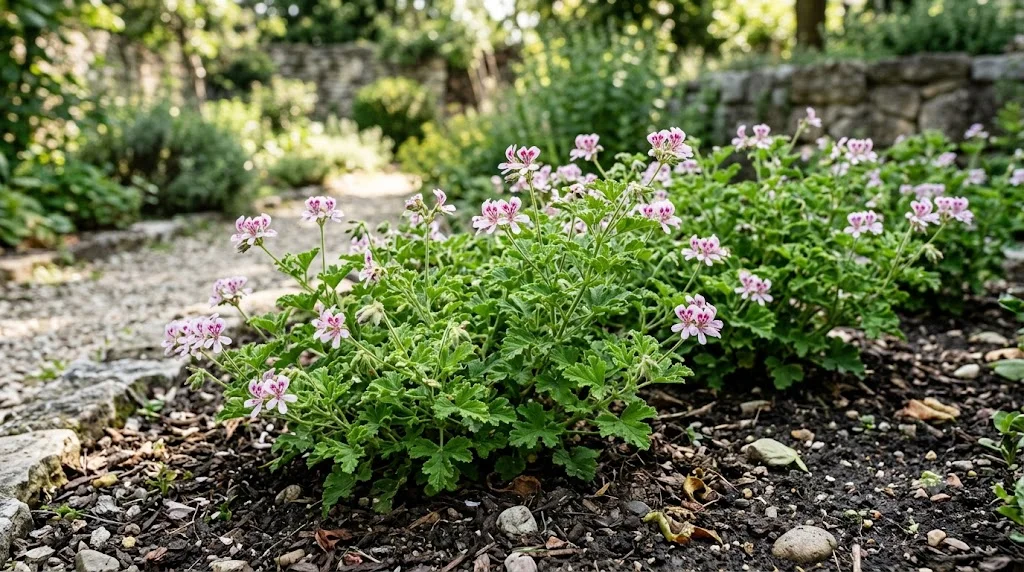
Leaves that are healthy, firm and closely spaced indicate suitable illumination. Strong fragrance when the foliage is touched is another positive sign. The plant should maintain an upright but branched structure. Flowering is also more likely under adequate light.
Light should always be evaluated together with temperature and water. A plant in intense sun uses moisture faster than one in bright shade. A cool winter plant uses little water even when positioned near a window. Matching these factors creates stable growth and prevents avoidable stress.