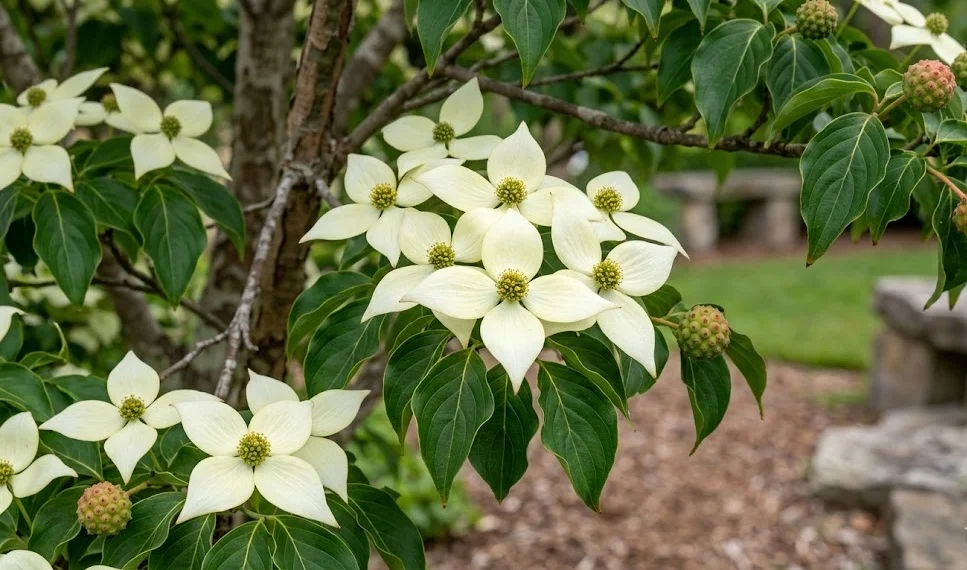

Kousa dogwood is often considered a resilient flowering tree, but it is not completely free from diseases or pests. Most serious problems appear when the tree is stressed by poor drainage, drought, excessive shade, compacted soil, or unsuitable planting depth. Healthy trees in good sites usually tolerate minor pest activity and occasional leaf blemishes without major decline. The most effective protection is a combination of prevention, early recognition, and careful correction of growing conditions.
Common disease pressures
Leaf spot diseases can appear on kousa dogwood during wet or humid seasons. They often show as small brown, purple, or reddish lesions on the leaves. In many cases, late-season spotting is mostly cosmetic and does not seriously harm the tree. Repeated severe spotting, however, can weaken the plant if leaves are lost too early.
Powdery mildew may develop when air movement is poor and foliage remains under stress. It appears as a pale, powdery coating on leaf surfaces and can distort young growth in heavy cases. While kousa dogwood is often more tolerant than many related dogwoods, susceptible cultivars or crowded sites can still show symptoms. Improving airflow and avoiding overhead watering are practical first steps.
Anthracnose is generally less severe on kousa dogwood than on some flowering dogwoods, but it should still be understood. Symptoms may include blotched leaves, twig dieback, and poor canopy density. Stress from drought, shade, or weak roots can make any foliar disease more damaging. Good tree vigor is the strongest long-term defence.
Root rot is among the most dangerous disease problems because it is often hidden until decline is advanced. It is associated with poorly drained soil, overwatering, deep planting, or mulch piled against the trunk. Leaves may wilt or scorch even though the soil is wet because damaged roots cannot function properly. Preventing saturated root conditions is far easier than rescuing a tree once root decline is severe.
More articles on this topic
Recognising stress before disease spreads
Many disease-like symptoms begin with environmental stress. Leaf scorch, sparse growth, small leaves, and premature autumn colour can result from drought or root damage. These signs do not automatically mean a pathogen is the primary cause. A careful gardener checks soil moisture, drainage, planting depth, and root-zone disturbance before choosing treatment.
Deep planting is a frequent hidden problem. If the root flare is buried, bark and roots may remain too moist and poorly aerated. Over time, this can lead to decline, girdling roots, and greater disease susceptibility. The trunk should widen naturally at the soil line, and mulch should not hide that transition.
Compacted soil can also mimic disease. When soil pores collapse, roots receive less oxygen and water movement becomes irregular. The canopy may thin gradually, and individual branches may die back. Protecting the root zone from foot traffic and machinery helps prevent this chronic stress.
Drought stress can make pest and disease problems more severe. Water-stressed trees produce weaker growth and may be less able to compartmentalize wounds or resist insects. In hot weather, the first visible symptoms may appear on leaf margins. Deep watering and mulch are often more effective than spraying when the real issue is dry soil.
More articles on this topic
Insect pests and their signs
Scale insects are among the more common pests on dogwoods. They attach to stems or leaves and feed on sap, sometimes appearing as small bumps rather than obvious insects. Heavy infestations can weaken branches and lead to sticky honeydew on surfaces below the tree. Sooty mould may grow on this honeydew, making the problem more visible.
Aphids can appear on soft new shoots, especially in spring. They may cause curling leaves, sticky residue, and minor distortion of tender growth. Natural predators often control aphids without intervention, particularly in biodiverse gardens. Strong chemical treatment is rarely necessary for light infestations.
Borers can become a concern when bark is damaged or trees are weakened. They may enter through wounds caused by mowers, trimmers, sunscald, or poor pruning. Symptoms can include dieback, sawdust-like frass, or weakened sections of trunk and branches. Preventing bark injury is the best way to reduce borer risk.
Spider mites may develop during hot, dry periods. Their feeding can cause stippled, dull, or bronzed leaves, and fine webbing may be visible in severe cases. Mites often increase when plants are dusty, dry, or under heat stress. Improving moisture conditions and encouraging beneficial insects can help keep populations in check.
Prevention and cultural control
The foundation of disease and pest prevention is proper planting. A tree in well-drained, humus-rich soil with the root flare visible is far less likely to suffer chronic decline. Good site selection reduces the need for repeated intervention later. Strong roots support stronger leaves, branches, and natural resistance.
Sanitation helps reduce some disease pressure. Fallen leaves with heavy spotting can be removed from around the tree rather than left to overwinter beneath the canopy. Diseased twigs should be pruned out with clean, sharp tools. Tools should be disinfected when moving between infected and healthy material.
Watering practices strongly influence disease development. Soil-level watering keeps foliage drier and reduces conditions favourable to many leaf diseases. Deep, infrequent watering supports roots better than light surface sprinkling. Mulch further stabilizes moisture and protects the root zone from temperature extremes.
Biodiversity in the garden can improve pest balance. Flowering perennials, mixed hedges, and reduced broad-spectrum pesticide use support predators and parasitoids that help control aphids, scale crawlers, and mites. A sterile, chemically overmanaged garden often loses these natural allies. Integrated care works better than reacting to every insect with immediate spraying.
Treatment decisions and long-term recovery
Treatment should begin with accurate identification. Different problems can look similar, and the wrong response can worsen stress. For example, adding water to a tree already suffering from root rot may accelerate decline. Observing symptoms, checking soil, and considering recent weather are essential diagnostic steps.
Minor leaf diseases often do not require chemical treatment. If the tree is otherwise vigorous, improving airflow, sanitation, and watering technique may be enough. Fungicides are most effective preventively, not after leaves are already badly infected. They should be used only when disease history and conditions justify them.
Insect control should target the vulnerable stage of the pest. Scale insects, for example, are easier to manage during the crawler stage than when protected by mature covers. Horticultural oils can be useful when applied at the correct time and according to label directions. Beneficial insects should be protected whenever possible.
Long-term recovery depends on correcting the underlying cause. A stressed kousa dogwood may need better mulch, improved drainage, careful watering, root-zone protection, or selective pruning of dead wood. Severe decline may take more than one season to reverse. Patience, observation, and steady cultural care give the tree its best chance to regain strength.