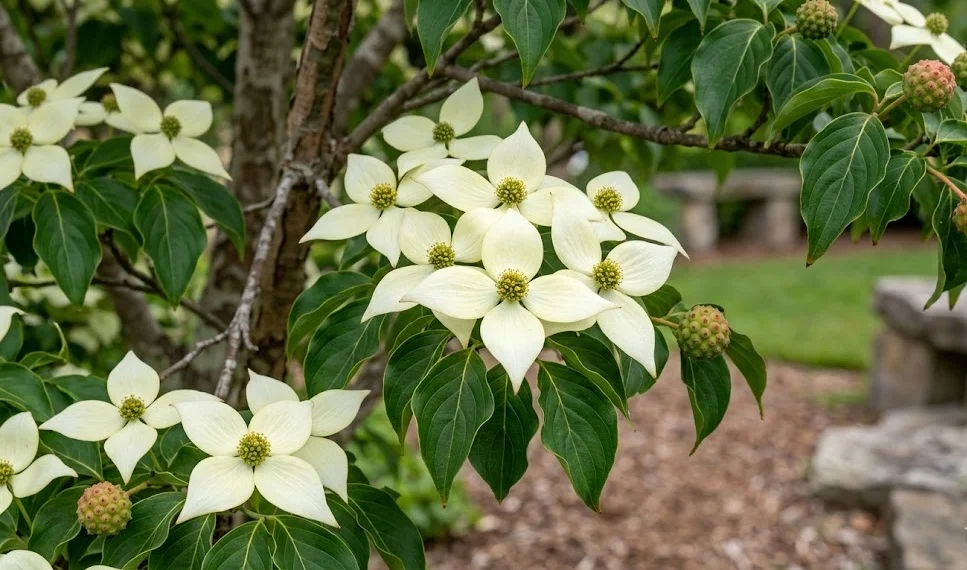

Kousa dogwood is one of the most elegant flowering trees for gardens where seasonal beauty, refined structure, and long-term ornamental value matter. It brings creamy white or softly pink bracts in late spring to early summer, attractive layered branches, decorative fruit, and fine autumn foliage. Although it is generally more resilient than many flowering dogwoods, it still rewards careful site selection and steady, balanced care. When its soil, moisture, light, and root environment are managed well, it can become a graceful focal point for decades.
Choosing the right growing place
Kousa dogwood performs best in a sheltered position where it receives bright light without being exposed to harsh, drying conditions all day. Morning sun with light afternoon shade is often ideal, especially in warmer gardens or areas with reflective paving. In cooler climates, it can tolerate more direct sun if the soil remains evenly moist and the root zone is protected. The aim is to give the tree enough light for flowering while preventing stress from heat and drought.
The site should have good air circulation, but it should not be fully exposed to strong winds. Young trees in particular can suffer when wind dries their leaves faster than the roots can replace moisture. A position near larger shrubs, open woodland edges, or a lightly sheltered lawn border often works very well. Avoid narrow, hot spaces beside walls where heat accumulates and rainfall may not reach the soil properly.
Soil quality is one of the most important factors in successful kousa dogwood care. The tree prefers humus-rich, well-drained soil that holds moisture without becoming waterlogged. Heavy clay can be improved with compost, leaf mould, and careful planting technique, but compacted soil should be loosened before planting. Sandy soil benefits from organic matter that helps retain moisture and nutrients around the shallow root system.
The root zone should be kept calm, cool, and undisturbed. Kousa dogwood does not appreciate repeated digging, deep cultivation, or aggressive competition from dense turf right up to the trunk. A generous mulched area beneath the canopy is much better than bare soil or grass pressed tightly around the base. This simple detail often makes the difference between a tree that merely survives and one that grows steadily with strong flowering.
More articles on this topic
Soil preparation and root health
Before planting or improving an existing kousa dogwood, the soil should be examined for drainage, compaction, and organic matter content. A tree planted into poorly drained ground may show weak growth, yellowing leaves, and root decline over time. If water remains in a test hole for many hours after rain or irrigation, the site may need raised planting or drainage improvement. Good root health begins long before fertilizer or pruning becomes relevant.
Organic matter should be incorporated gently and broadly rather than concentrated in a small planting hole. Compost, mature leaf mould, and well-rotted bark improve soil structure and support beneficial microbial life. They also help the soil buffer moisture fluctuations, which is especially useful during dry spells. Fresh manure or overly rich amendments should be avoided because they can burn roots or encourage soft, vulnerable growth.
Kousa dogwood roots are relatively shallow, so soil compaction is a serious concern. Walking repeatedly under the canopy, parking equipment nearby, or storing heavy materials around the tree can reduce oxygen in the soil. Roots need both moisture and air, and compacted soil deprives them of both. Protecting the root area is a practical, professional form of long-term plant care.
Mulching is one of the best ways to maintain soil health around kousa dogwood. A layer of shredded bark, leaf mould, wood chips, or composted mulch helps moderate soil temperature and reduce evaporation. The mulch should be spread widely but kept away from direct contact with the trunk. A mulch volcano against the bark can trap moisture, encourage decay, and create ideal shelter for pests.
More articles on this topic
Watering throughout the seasons
Young kousa dogwoods need consistent watering while they establish their root system. During the first two to three growing seasons, deep watering is more valuable than frequent shallow sprinkling. The goal is to moisten the soil through the active root zone without leaving it saturated. A slow hose, watering bag, or drip system can provide water efficiently and reduce waste.
Mature trees are more tolerant of short dry periods, but they still benefit from supplemental watering during prolonged heat or drought. Stress often appears as leaf curling, early leaf drop, scorched margins, or reduced flowering in the following season. Because flower buds develop before the next blooming period, summer drought can affect future display. Consistent moisture is therefore not only about survival but also about ornamental quality.
The best time to water is early morning, when soil can absorb moisture before temperatures rise strongly. Evening watering is acceptable in dry weather, but wet foliage overnight can sometimes favour fungal problems. Water should be directed to the soil rather than sprayed over the canopy. This approach keeps leaves drier and places moisture exactly where roots need it.
Overwatering can be just as harmful as drought. Kousa dogwood dislikes standing water, and roots may decline when soil remains soggy for long periods. Symptoms can resemble drought stress because damaged roots cannot move water properly to the canopy. Checking the soil before watering is more reliable than following a rigid calendar.
Feeding and nutrient management
Kousa dogwood usually grows best with moderate fertility rather than heavy feeding. In a garden with healthy, organic soil, annual mulching may supply much of what the tree needs. Excess nitrogen can produce lush shoots at the expense of flowering and may make new growth more vulnerable to cold or pests. A balanced approach is more effective than aggressive fertilization.
If growth is weak, leaves are pale, or soil is known to be poor, a slow-release balanced fertilizer can be applied in spring. The fertilizer should be spread evenly over the root zone, not piled near the trunk. Watering after application helps move nutrients into the soil gradually. It is important to follow the product rate, because ornamental trees are often damaged by overfeeding rather than underfeeding.
Soil testing is the most professional way to understand nutrient needs. It can reveal pH, phosphorus, potassium, organic matter, and possible deficiencies. Kousa dogwood generally prefers slightly acidic to neutral soil, though it is adaptable when drainage and organic matter are good. When pH is too high, certain nutrients become less available even if they are present in the soil.
Late-season fertilizing should be avoided in most climates. Feeding too late can stimulate tender growth that does not harden properly before winter. This is especially important for young trees, recently planted specimens, and plants growing near the colder edge of their range. Spring is usually the safest and most useful time to support growth.
Pruning and shaping
Kousa dogwood naturally develops a graceful, layered habit, so pruning should be restrained and purposeful. The best pruning maintains structure, removes damaged wood, and preserves the tree’s elegant form. Heavy cutting can spoil the natural branching pattern and reduce flowering. A light professional touch usually gives the best result.
Dead, broken, crossing, or diseased branches can be removed whenever they are noticed, although major work is best done during dormancy or just after flowering. Clean tools reduce the risk of spreading disease between cuts. Cuts should be made just outside the branch collar without leaving long stubs. Proper wound placement allows the tree to seal the cut more efficiently.
Lower branches may be lifted gradually if clearance is needed for paths, seating areas, or maintenance access. This should be done over several years rather than all at once. Removing too many low branches can weaken the visual balance of the tree and expose the trunk to sunscald. The goal is to guide the tree, not force it into an unnatural shape.
Pruning should also consider future size. Kousa dogwood is not a shrub that responds well to repeated hard reduction. Planting it where it has enough room is far better than trying to keep it permanently small with annual severe cutting. Good design prevents many pruning problems before they begin.
Managing stress, pests, and diseases
Kousa dogwood is valued partly because it is often more disease resistant than some other flowering dogwoods. Even so, stress can make it more vulnerable to fungal leaf spots, powdery mildew, scale insects, aphids, and root problems. Healthy soil, proper watering, and good airflow reduce many issues naturally. Prevention is usually more successful than repeated treatment after decline has begun.
Leaf spots may appear during wet seasons, especially where foliage remains damp for long periods. Removing fallen leaves, avoiding overhead irrigation, and improving air movement can reduce disease pressure. Minor spotting late in the season rarely requires dramatic action. Repeated severe infection, however, should prompt a closer review of site conditions and plant health.
Scale insects can settle on stems and weaken the tree by feeding on sap. They may also encourage sticky honeydew and sooty mould on leaves or surfaces below the canopy. Small infestations can sometimes be managed with careful pruning or horticultural oil at the correct season. Severe infestations should be identified accurately before any treatment is chosen.
Root stress is one of the most common hidden causes of poor performance. Symptoms may include sparse foliage, small leaves, dieback, and reduced flowering. Causes often include poor drainage, compacted soil, planting too deeply, mulch against the trunk, or drought during establishment. Solving the root-zone problem is more important than treating only the visible symptoms.
Year-round maintenance and ornamental value
Kousa dogwood care changes with the seasons, and this rhythm helps the tree remain strong. In spring, check winter damage, refresh mulch, and monitor soil moisture as growth begins. In late spring and early summer, enjoy the bracts while keeping the root zone evenly moist. During hot periods, watch for drought stress and water deeply when needed.
Summer maintenance focuses on moisture conservation and stress prevention. Mulch should remain loose, breathable, and away from the trunk. Weeds should be removed carefully by hand rather than with deep hoeing that damages surface roots. A calm, protected root environment supports the tree through heat and helps preserve flower bud development.
Autumn is a valuable time to observe leaf colour, fruiting, and overall plant balance. Fallen leaves can be collected if disease has been present, while healthy leaf litter can be composted separately or used in garden systems where appropriate. Watering may still be needed in a dry autumn, especially before winter in free-draining soils. Trees that enter winter dehydrated are more likely to suffer branch dieback.
Winter care is usually simple but still important. Young trees may benefit from protection against browsing animals, trunk injury, and drying winds. Snow should be allowed to melt naturally, while heavy, wet snow can be gently brushed from bending branches if damage is likely. With thoughtful year-round attention, kousa dogwood becomes a dependable, refined, and richly seasonal garden tree.