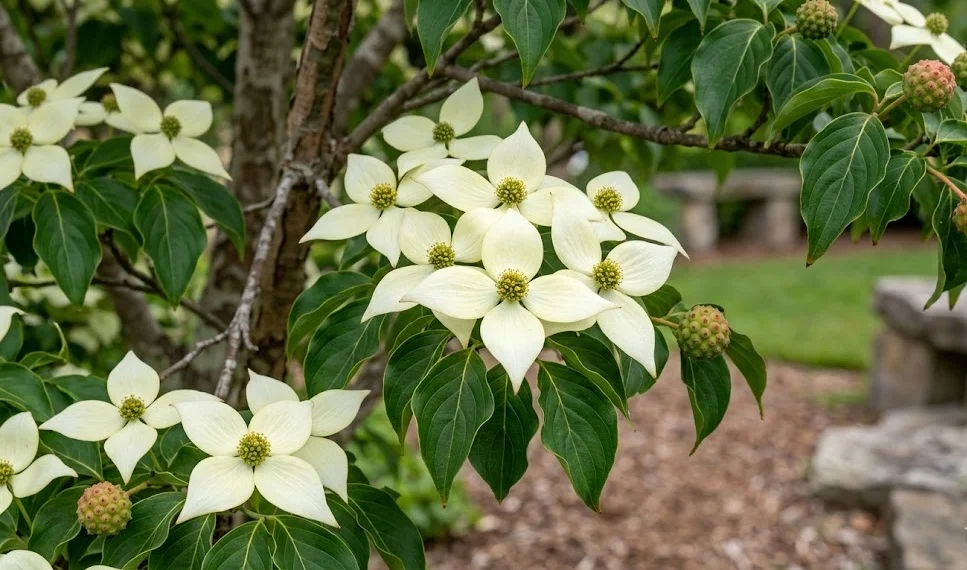

Planting kousa dogwood successfully begins with understanding that this ornamental tree needs time, space, and a carefully prepared root environment. It is not a plant to squeeze into poor soil and correct later with heavy pruning or fertilizer. The best results come from choosing a suitable site, planting at the correct depth, and supporting slow, steady establishment. Propagation is possible by seed, cuttings, grafting, or layering, but each method requires patience and realistic expectations.
Site selection before planting
A good planting site should provide bright light, moderate shelter, and soil that drains well while retaining some moisture. Kousa dogwood can grow in full sun in cooler regions, but it often appreciates light afternoon shade in warmer or drier gardens. A site with morning sun and filtered afternoon light supports flowering without excessive leaf scorch. This balance is especially useful during the first years after planting.
Space is just as important as exposure. Kousa dogwood develops a broad, layered canopy as it matures, and crowding reduces both its health and ornamental shape. It should not be planted too close to walls, fences, driveways, or large competing trees. Giving it room at planting time prevents future stress and unnecessary corrective pruning.
The planting site should be evaluated after rainfall if possible. Soil that remains waterlogged is risky because kousa dogwood roots need oxygen as well as moisture. If drainage is uncertain, a slightly raised planting area can improve conditions. In very heavy clay, careful soil preparation across a wide area is more effective than digging a narrow, amended pit.
Nearby competition should also be considered. Dense grass, aggressive groundcovers, and thirsty shrubs can reduce establishment by stealing moisture from the young root system. A wide mulch ring around the new tree gives roots a better start. The mulch zone also protects bark from mower and trimmer damage, which is a common cause of long-term decline.
More articles on this topic
Correct planting technique
The planting hole should be wide rather than deep. A broad hole loosens surrounding soil and encourages roots to spread outward, which is essential for stability and water uptake. The depth should match the root ball so the root flare sits at or slightly above the surrounding soil level. Planting too deeply is one of the most damaging mistakes with ornamental trees.
Before planting, inspect the root ball carefully. Container-grown trees may have circling roots that should be loosened or corrected before the tree is set in place. Balled-and-burlapped trees should have excess material removed from the top and sides after positioning, depending on the wrapping type. Roots need direct contact with native soil to establish properly.
Backfill should usually consist mostly of the original soil, improved only lightly if needed. Filling the hole with rich compost alone can create a soft pocket that holds water differently from the surrounding ground. This can discourage roots from moving outward and may cause instability. A moderate amount of organic matter is useful only when blended thoughtfully into the broader planting area.
After planting, water slowly and thoroughly to settle soil around the roots. The tree should be checked for straightness before the soil firms completely. Staking is not always necessary, but it can help in windy sites or with top-heavy young trees. If stakes are used, ties must be flexible and removed once the tree is stable.
More articles on this topic
Establishment after planting
The first growing season is critical for kousa dogwood establishment. Roots are still limited to a relatively small soil volume, so drought stress can develop quickly in warm weather. Deep watering once or twice weekly during dry periods is usually better than light daily watering. The exact frequency should depend on soil moisture, rainfall, temperature, and mulch coverage.
Mulch should be applied in a broad, shallow layer around the tree. A depth of five to eight centimetres is usually sufficient for conserving moisture and moderating soil temperature. The mulch must not touch the trunk, because constant moisture against bark can cause decay. A visible gap around the trunk is a small but important sign of proper professional planting.
Newly planted trees should not be heavily fertilized. Strong fertilizer can push top growth before the root system is ready to support it. In most cases, compost-based mulching and good watering are enough during the first year. If soil is very poor, a mild slow-release fertilizer may be used cautiously in spring.
Flowering may be limited during the early establishment period. This is normal, because the tree is investing energy in root growth and structural development. Removing stress is more important than forcing bloom. Once established, kousa dogwood typically becomes more generous with flowers and fruit as the canopy matures.
Propagation methods and practical expectations
Growing kousa dogwood from seed is possible, but it requires patience. The fleshy fruit should be cleaned, and the seeds usually need warm and cold stratification before germination. Seedlings may vary in flower colour, habit, and growth strength because they do not always match the parent plant exactly. This method is useful for enthusiasts and breeding work, but it is slow for producing predictable garden specimens.
Softwood or semi-hardwood cuttings can be attempted in controlled conditions. Cuttings are usually taken from healthy, non-flowering shoots and placed in a well-drained propagation medium under high humidity. Rooting hormone may improve results, but success can be variable. Clean tools, bottom warmth, and careful moisture control are important because cuttings rot easily if kept too wet.
Grafting is commonly used for named cultivars because it preserves their exact characteristics. This is why many nursery-grown forms show reliable bract colour, mature size, or variegated foliage. Grafting requires skill, suitable rootstock, and controlled aftercare. For home gardeners, buying a professionally propagated cultivar is usually more dependable than attempting grafting without experience.
Layering can sometimes work with low, flexible branches. A section of stem is wounded lightly, pinned into moist soil, and encouraged to form roots while still attached to the parent plant. This method is slow but less technically demanding than cuttings. Once roots are well developed, the new plant can be separated and grown on carefully before final planting.