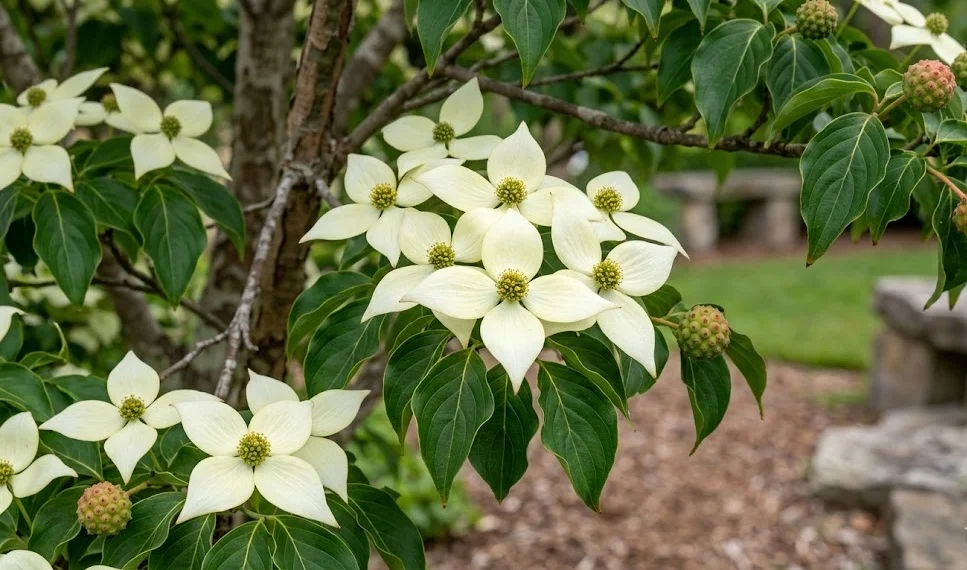

Kousa dogwood is generally hardy in suitable climates, but winter success depends on how well the tree enters the cold season. A well-watered, properly mulched, and unstressed tree tolerates freezing weather much better than one weakened by drought, late fertilization, or root damage. Young trees need the most attention because their root systems and bark are still developing. Winter preparation should begin in late summer and autumn rather than after severe cold has already arrived.
Preparing the tree before winter
Late-season care should focus on hardening growth rather than stimulating new shoots. Fertilizer high in nitrogen should be avoided from late summer onward because it can encourage tender growth. This soft growth may not mature properly before frost and can be damaged by cold. A tree that slows naturally into dormancy is better prepared for winter.
Water management is very important in autumn. If rainfall is low, deep watering before the ground freezes helps prevent winter dehydration. Evergreen plants are most famous for winter water loss, but deciduous trees also benefit from entering dormancy with adequately moist soil. This is especially important for young kousa dogwoods and trees planted in free-draining soil.
Mulch should be refreshed before winter, but it must be applied correctly. A broad layer over the root zone helps buffer soil temperature and reduces freeze-thaw stress. The mulch should remain several centimetres away from the trunk to prevent bark decay and rodent shelter. A flat ring is useful, while a mound against the bark is harmful.
The tree should be inspected before winter storms begin. Broken, dead, or weakly attached branches can be removed with clean cuts. Major shaping is not necessary at this time unless there is a structural problem. Removing obvious hazards reduces the chance of snow or wind causing further tearing.
More articles on this topic
Protecting young trees
Young kousa dogwoods can be vulnerable to winter sun, wind, and animal damage. In exposed locations, cold wind may dry twigs and buds, especially when soil is frozen and roots cannot replace moisture. A temporary windbreak can be helpful during the first winters. The protection should reduce wind without trapping excessive moisture around the canopy.
Trunk protection may be useful where rabbits, deer, or rodents are common. A breathable tree guard or wire barrier can prevent bark chewing during winter food shortages. The guard should not be tight against the trunk and should be checked regularly. Any protection must allow air movement and should not hold wet material against bark.
Sunscald can occur when winter sun warms bark during the day and temperatures drop sharply at night. Young trunks with thin bark are most at risk, particularly on the south or southwest side in sunny climates. Proper siting, mulch, and occasional trunk protection can reduce this risk. White plastic guards or breathable wraps should be used carefully and removed when no longer needed.
Snow load can bend or break young branches. Light snow usually causes no problem, but heavy wet snow may weigh down flexible limbs. Branches can be gently brushed upward with care if breakage seems likely. Ice should not be knocked off, because this often causes more damage than leaving it to melt naturally.
More articles on this topic
Container and marginal-climate overwintering
Kousa dogwood grown in a container needs more winter attention than one planted in the ground. Roots in pots are exposed to colder temperature swings because they are not insulated by surrounding soil. Even a hardy tree can suffer root injury if the container freezes deeply and repeatedly. Large pots, insulated positions, and sheltered placement improve survival.
A container should be moved to a protected outdoor location before severe cold. An unheated garage, cold frame, sheltered wall, or grouped container area may be suitable depending on climate. The tree must remain dormant and should not be brought into a warm room. Warm indoor conditions can break dormancy too early and weaken the plant.
Watering container plants in winter requires balance. The soil should not be kept wet, but it should not become bone dry either. Occasional checks during mild periods are important because dormant roots still need some moisture. Containers under eaves may receive little natural precipitation and can dry unexpectedly.
In colder edge-of-range gardens, site selection becomes part of overwintering strategy. Planting near a wind-protected area, away from frost pockets, and in well-drained soil improves winter performance. Avoid low spots where cold air settles and wet soil persists. A slightly sheltered, elevated, and mulched site is usually safer.
Spring recovery after winter
Spring inspection should be patient because kousa dogwood may leaf out later than some other garden trees. A branch that appears inactive early in the season is not always dead. Bud swelling, bark colour, and flexible twigs can help indicate life. Premature pruning may remove wood that would have recovered.
Winter-damaged tips can be pruned once growth clearly begins. Cuts should be made back to healthy wood using clean, sharp tools. Removing dead material improves appearance and reduces entry points for pests or disease. Heavy pruning should still be avoided unless damage is extensive.
Mulch should be adjusted in spring if it has shifted against the trunk. Winter wind, animals, or frost heave can move mulch into harmful positions. The root zone should remain covered, but the trunk flare must stay visible. This simple check supports long-term bark and root health.
After a harsh winter, the tree should be supported with steady care rather than forced growth. Deep watering during dry spring weather and a light organic mulch are usually more useful than strong fertilizer. If dieback was significant, the tree may need a full season to rebuild energy. Consistent aftercare helps kousa dogwood return to healthy flowering and balanced growth.