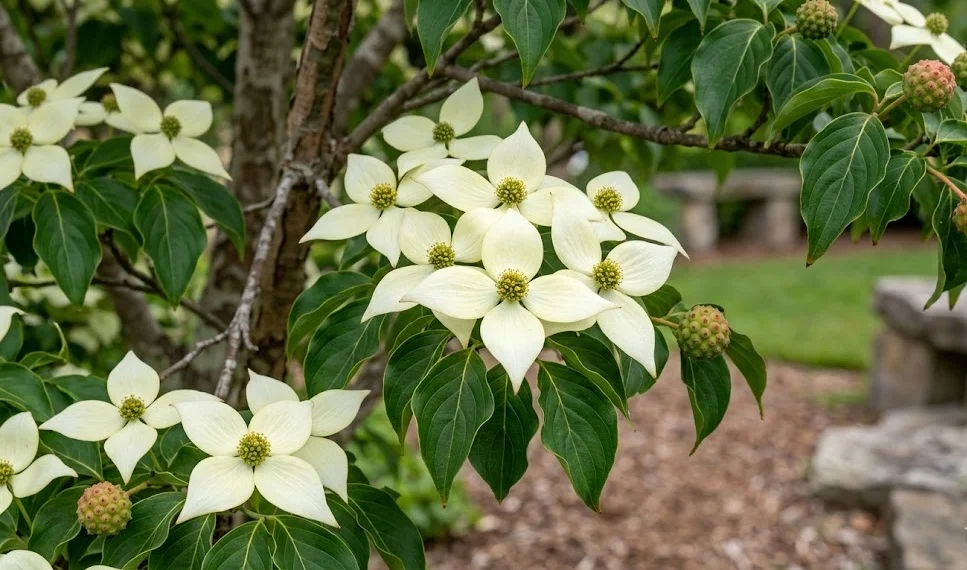

Kousa dogwood needs enough light to flower well, develop dense foliage, and maintain a strong layered form. At the same time, it can suffer when exposed to intense heat, dry soil, and reflected sunlight in unsuitable sites. The best light conditions depend on climate, soil moisture, wind exposure, and the age of the tree. A balanced position with bright light and some protection often produces the healthiest and most attractive specimen.
Ideal light exposure
In many temperate gardens, kousa dogwood performs well in full sun to partial shade. Full sun can produce abundant flowering when the soil remains cool and evenly moist. However, hot afternoon sun may stress the tree in warmer regions or on dry soils. The ideal exposure often combines morning sun with filtered shade later in the day.
Flowering depends strongly on light availability. Trees planted in deep shade may survive, but they often flower sparsely and develop a thinner canopy. Their branches may stretch toward brighter areas, creating an uneven shape. For a strong floral display, the tree needs several hours of good light each day.
Partial shade is especially useful in gardens with high summer temperatures. Light shade from taller trees, open canopies, or east-facing positions can reduce heat stress. This kind of shade should be bright and airy rather than dense and gloomy. Kousa dogwood dislikes both scorching exposure and dark stagnation.
The quality of shade matters as much as the amount. Dappled woodland-edge light is very different from the heavy shadow of buildings or evergreen hedges. A moving pattern of sunlight through the day supports photosynthesis while moderating stress. A permanently dark corner is rarely suitable for long-term ornamental performance.
More articles on this topic
Signs of too much or too little light
Too much light often becomes a problem when it is combined with heat and drought. Leaves may show scorched margins, curling, dull colour, or premature browning. Young trees are more vulnerable because their roots cannot yet supply water quickly enough during hot spells. Mulch and deep watering can reduce these symptoms, but site correction may be needed in extreme exposures.
Reflected heat from paving, walls, gravel, or light-coloured surfaces can intensify sun stress. A location that seems suitable on paper may become much hotter in real garden conditions. Kousa dogwood near terraces or driveways should have a generous root zone and reliable moisture. Without these protections, leaves may burn even when regional climate is generally suitable.
Too little light produces different symptoms. The canopy may become open, flowering may decline, and new shoots may grow long and weak. Autumn colour may also be less impressive in dense shade. If shade increases over time as nearby plants mature, the tree’s performance may gradually change.
When evaluating poor flowering, light should be considered alongside pruning, age, and nutrition. A young tree may simply need more time, while a shaded mature tree may need canopy thinning nearby. Excess nitrogen can also reduce flowering by encouraging leafy growth. Diagnosis is strongest when all cultural factors are reviewed together.
More articles on this topic
Adjusting garden care to light conditions
A tree in sunnier conditions needs more attention to soil moisture. Mulch should be maintained consistently, and watering should be deep during long dry periods. The root area should be wide and free from dense grass competition. These measures help the tree benefit from sun without suffering unnecessary stress.
A tree in partial shade should be monitored for airflow. Shade combined with still, humid air can encourage leaf diseases such as spotting or powdery mildew. Selective pruning of surrounding vegetation may improve air movement without exposing the tree to harsh sun. The aim is bright, breathable shade rather than a damp, enclosed pocket.
In very shaded positions, transplanting may be considered while the tree is still young. Moving an older kousa dogwood is more difficult because it can disturb a large root system. If transplanting is not practical, improving light by thinning nearby branches may help. Any changes should be gradual to avoid sudden sun scorch on foliage and bark.
Light management is part of long-term design. Kousa dogwood should be placed where its mature canopy will receive stable, suitable exposure, not just where a young plant fits temporarily. Surrounding trees and shrubs will grow, and their future shade should be anticipated. With the right light balance, kousa dogwood flowers reliably and keeps its refined, architectural habit.