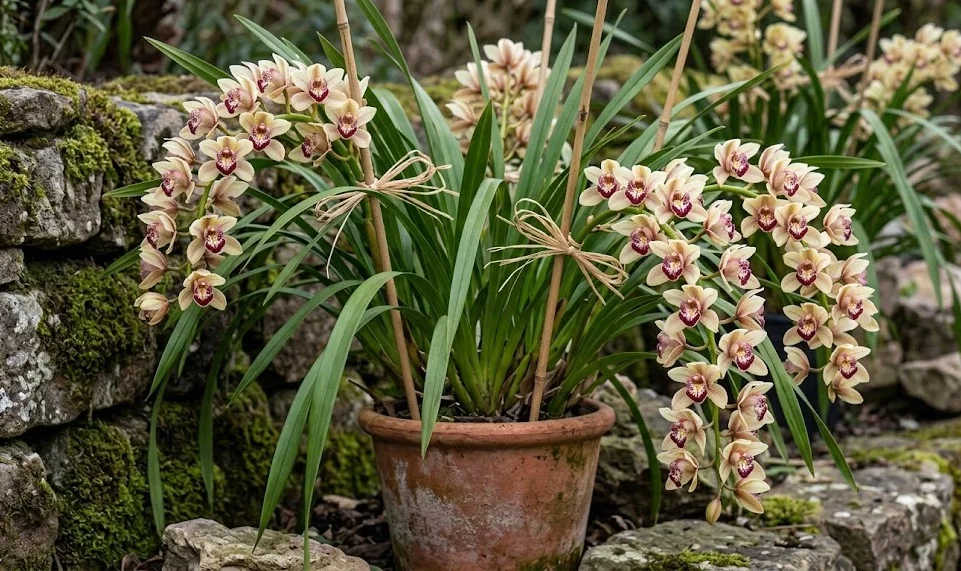

Boat orchids are generally robust, but they can suffer from root rot, fungal leaf spots, bacterial infections, and persistent insect pests when growing conditions are poor. Most serious problems begin when moisture, temperature, light, or airflow falls out of balance. Early diagnosis is important because symptoms often spread faster than expected in crowded foliage. Preventive hygiene and careful observation are more effective than emergency treatment after damage becomes severe.
Root rot and pseudobulb decline
Root rot is one of the most common problems in boat orchids. It usually develops when the potting medium stays wet and airless for too long. Decomposed bark, oversized pots, and cool temperatures all increase the risk. The first visible sign may be weak leaves rather than obvious root damage.
Healthy roots are firm, while rotten roots become soft, hollow, or dark. A plant with severe root loss may show shriveled pseudobulbs even when the medium is wet. This creates a dangerous misunderstanding, because the grower may water even more. The real solution is to restore root health, not drown the plant.
Affected plants should be removed from the pot and inspected. Dead roots and collapsed medium should be discarded. The plant should be repotted into a fresh, open mix after damaged tissue is removed. Watering must be reduced until new roots begin to grow.
Prevention depends on drainage, airflow, and correct watering. The medium should be replaced before it turns dense and sour. Pots must drain freely after watering. Cool-season watering should be especially cautious.
More articles on this topic
Fungal and bacterial leaf problems
Leaf spots can appear when foliage remains wet for long periods. Fungal spots are often circular or irregular and may expand slowly. Bacterial problems can spread faster and may look water-soaked at first. Any rapidly spreading lesion should be treated seriously.
Good spacing between plants reduces leaf disease pressure. Crowded leaves trap moisture and slow drying. Watering in the morning helps foliage dry before night. Avoiding overhead watering during cool weather is also helpful.
Infected leaves should be handled with clean tools. Cutting through diseased tissue and then healthy tissue with the same blade can spread pathogens. Tools should be disinfected between cuts. Removed plant material should not be left near the growing area.
Environmental correction is essential after any treatment. A spray may suppress disease, but it will not fix stagnant air or excessive wetness. The plant should be moved to brighter, better-ventilated conditions if needed. Prevention is always more reliable than repeated chemical intervention.
More articles on this topic
Scale insects, mealybugs, and aphids
Scale insects can hide along leaf bases, pseudobulbs, and under old sheaths. They may appear as small brown or pale bumps attached to the plant. Heavy infestations weaken growth and produce sticky honeydew. Sooty mold can grow on this sticky residue.
Mealybugs are another frequent pest of boat orchids. They appear as white cottony clusters in protected areas. They feed by sucking sap and can spread from plant to plant. Their hiding habit makes repeated inspection necessary.
Aphids often attack tender flower spikes and buds. They can distort new tissue and contaminate flowers with honeydew. Because they reproduce quickly, small colonies should not be ignored. Flowering plants should be checked regularly.
Control begins with isolation of the affected plant. Visible pests can be removed manually with care. Suitable horticultural soaps or oils may help when used correctly. Repeated treatments are often needed because eggs and hidden insects survive the first cleaning.
Spider mites and environmental stress pests
Spider mites are more likely in warm, dry, stagnant air. They are tiny and may not be noticed until leaves look dull or speckled. Fine webbing can appear in advanced infestations. The undersides of leaves should be inspected closely.
Mite damage can reduce plant vigor over time. Leaves may develop a silvery or stippled appearance. Severe infestations weaken photosynthesis and stress the plant further. Dry indoor conditions often make the problem worse.
Increasing humidity slightly and improving airflow can reduce mite pressure. However, humidity should not be increased by keeping the potting mix constantly wet. The air environment and root environment must be managed separately. Misting alone rarely solves an established infestation.
Treatment should be repeated according to the product used and the pest life cycle. A single application often misses newly hatched mites. Leaves should be covered thoroughly, especially underneath. The surrounding growing area should also be cleaned.
Cultural prevention and quarantine
New plants should be inspected before joining an existing collection. Pests often arrive hidden in leaf bases, pot rims, or old sheaths. A quarantine period reduces the risk of spreading problems. This practice is valuable even for plants that look healthy.
Dead leaves, old flower spikes, and dry sheaths should be removed when they harbor pests or moisture. However, removal should be gentle to avoid damaging pseudobulbs. Clean culture reduces hiding places. It also makes future inspections easier.
The growing area should be kept tidy and well ventilated. Benches, windowsills, and tools can carry pests or disease organisms. Regular cleaning is part of professional plant care. Neglect around the plant often becomes a problem on the plant.
A strong boat orchid is naturally more resistant to many problems. Adequate light, correct watering, and seasonal temperature management all improve resilience. Stressed plants attract pests and recover more slowly from infection. Good culture is the first and most important plant protection method.