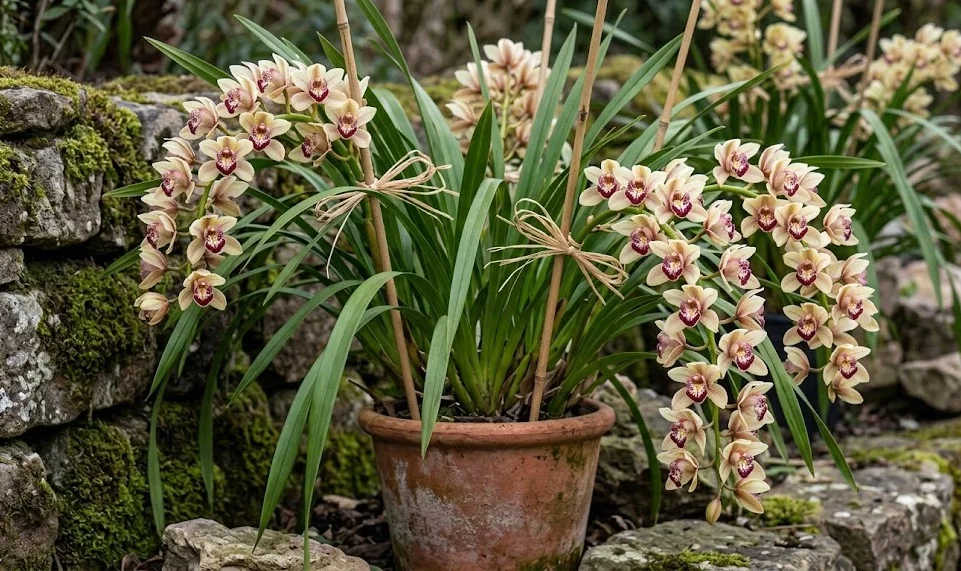

Light is one of the main reasons boat orchids either thrive or fail to flower. These plants need more brightness than many common indoor orchids, yet their leaves can burn in harsh direct sun. The grower must provide strong filtered light that supports photosynthesis without overheating the foliage. When light is correct, the plant forms firm pseudobulbs, upright leaves, and better flower spikes.
Recognizing healthy light levels
A well-lit boat orchid usually has firm, fresh green leaves. The foliage should not be extremely dark, soft, or stretched. Dark green leaves often indicate too little light. The plant may look healthy but refuse to bloom.
Yellowish leaves can suggest excessive light, especially if combined with dry patches or scorch marks. Sunburn often appears as pale, tan, or brown areas on exposed leaves. Burned tissue does not recover. Prevention is therefore much better than correction.
Leaf angle and growth habit also provide clues. Strong light encourages compact, sturdy growth. Weak light often produces long, floppy leaves and poor pseudobulb development. A plant that leans strongly toward the window may need more even exposure.
Flowering depends heavily on the previous growing season. A plant cannot produce strong spikes if it did not build enough energy earlier. Light during spring and summer is therefore crucial. Winter brightness alone cannot fully compensate for months of shade.
More articles on this topic
Indoor and outdoor placement
Indoors, an east-facing window is often suitable. It gives gentle morning sun and bright conditions without the worst afternoon heat. South or west windows may work if filtered by a curtain or placed slightly back from the glass. The exact choice depends on climate and building conditions.
Outdoors, boat orchids often perform well in bright shade. A position under light tree cover, shade cloth, or a sheltered patio can be ideal. Direct early morning or late afternoon sun is usually acceptable. Harsh midday sun should be avoided in hot weather.
Moving a plant outdoors should be done gradually. Leaves accustomed to indoor light can burn quickly outside. A transition period in shade allows the foliage to adapt. After that, brightness can be increased carefully.
During winter, the plant should receive as much safe light as possible. Short days reduce the total energy available to the plant. A bright cool room is better than a dim warm corner. Clean windows also make a noticeable difference.
More articles on this topic
Balancing light with heat and moisture
Light cannot be considered separately from temperature. A sunny windowsill may be bright, but it can become dangerously hot behind glass. Overheated leaves lose moisture quickly and may suffer stress. Ventilation helps reduce this risk.
Higher light usually increases water use. A plant in strong light may dry faster than one in shade. Watering should therefore reflect the actual growing position. However, brighter light does not justify keeping the roots constantly wet.
Humidity can moderate stress in bright conditions. Dry air combined with intense light can cause leaf tip browning or poor growth. Humidity trays or grouped plants may help around the foliage. The pot should still drain freely.
The best light level is the one that produces strong growth without damage. This may require seasonal adjustments. A position that is safe in winter may be too hot in summer. Observing the leaves is the most reliable guide.