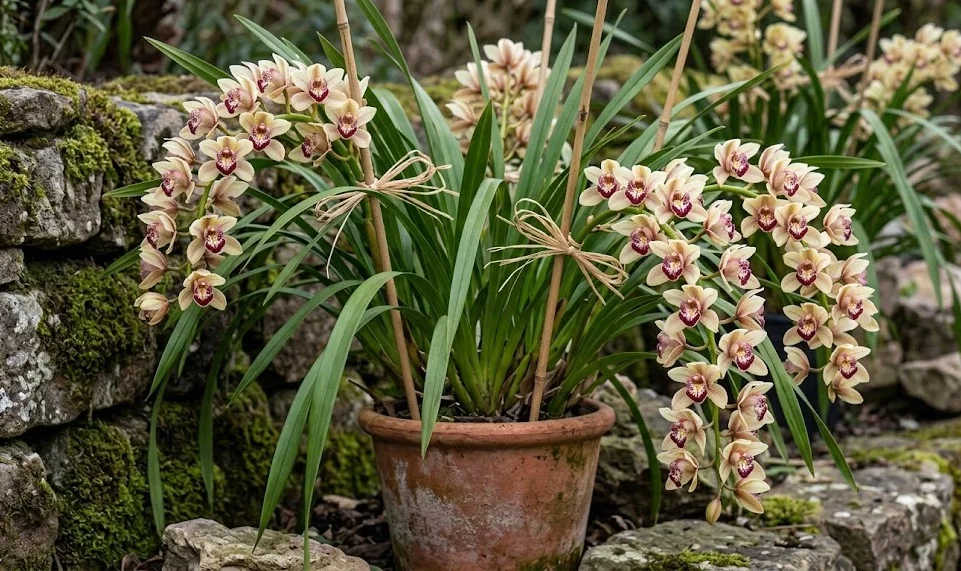

Boat orchids are among the most rewarding orchids for growers who can offer bright light, cool nights, and steady seasonal care. They are sturdier than many tropical orchids, yet they still respond poorly to extremes, neglected roots, or constant indoor warmth. Their long arching leaves and tall flower spikes make them valuable both as houseplants and as seasonal patio specimens. With the right routine, a mature plant can produce impressive blooms year after year.
Understanding the natural rhythm of the boat orchid
Boat orchids grow from thick pseudobulbs that store water and nutrients for future growth. These pseudobulbs are not decorative curiosities, but essential survival organs. A healthy plant usually carries both older bulbs and younger active shoots at the same time. The balance between them reveals how well the plant has been managed.
New growth normally begins after flowering or as temperatures start to rise. This is the period when the plant builds the leaves and pseudobulbs that will support the next bloom cycle. Weak growth during spring and summer often leads to poor flowering later. Strong flowering is therefore prepared many months before flower spikes appear.
Unlike many orchids kept in warm rooms, boat orchids appreciate a clear difference between day and night temperatures. Cool nights help trigger flower spike initiation in many varieties. If the plant remains in steady warmth all year, it may grow leaves but refuse to flower. This is one of the most common reasons for disappointment.
Seasonal observation matters more than following a rigid calendar. A plant growing in a bright conservatory behaves differently from one placed on a shaded balcony. The correct care routine depends on light, temperature, potting mix, airflow, and plant maturity. A grower who watches new roots, leaf color, and pseudobulb firmness will usually make better decisions than one who waters by habit.
More articles on this topic
Choosing the right position
Boat orchids need bright light, but they should not be exposed to harsh midday sun behind glass. Strong filtered light encourages compact growth, firm leaves, and better flower initiation. Leaves should usually be fresh green rather than deep dark green. Very dark foliage often signals insufficient light.
An east-facing position is often excellent indoors because it provides morning sun without excessive heat. A lightly shaded south or west-facing position can also work if the leaves are protected from scorching. Outdoors, the plant benefits from bright shade or dappled light under trees. The goal is generous light without overheated leaves.
Air circulation is just as important as brightness. Stagnant air around the foliage and potting mix increases the risk of fungal problems. Good airflow also helps water evaporate at a natural pace after watering. This is especially important during cooler periods when roots stay wet longer.
The pot should not be placed directly beside radiators, heaters, or drying air vents. Artificial heat can dehydrate leaves while the root zone remains too wet. This imbalance weakens the plant and can damage new growth. A bright, cool, well-ventilated position is far better than a hot windowsill.
More articles on this topic
Temperature management through the year
Boat orchids tolerate moderate warmth during active growth, especially if humidity and watering are balanced. During spring and summer, they can grow well in conditions that are comfortable for people. However, they should not be trapped in hot, still air. Heat stress often appears as limp leaves, stalled roots, or dry leaf tips.
Cooler nights are particularly valuable from late summer into autumn. This temperature drop encourages the plant to shift from leaf production toward flower spike development. Many plants benefit from spending part of the year outdoors in a sheltered place. The natural day-night difference outside can be more effective than indoor care.
The plant should be protected before cold becomes damaging. Cool conditions are helpful, but freezing temperatures are dangerous. Roots in pots are especially vulnerable because they chill faster than roots in garden soil. When nights approach unsafe levels, the plant should be moved to a protected bright location.
Indoor winter care should avoid excessive warmth. A heated living room may keep the plant alive, but it often prevents ideal flowering. A bright cool room, enclosed porch, or frost-free conservatory is usually more suitable. The plant should remain cool but not exposed to icy drafts.
Potting mix and root health
Boat orchids need an open, airy potting medium that drains quickly. Their roots require moisture, but they also need oxygen around them. A compacted or decomposed mix suffocates roots and invites rot. Repotting before the medium collapses is therefore a key part of long-term care.
A suitable mix often includes medium bark, coarse organic particles, and materials that improve drainage. The exact recipe depends on climate and watering habits. In a dry home, a slightly moisture-retentive mix may help. In a humid or cool environment, a faster-draining mix is safer.
Healthy roots are usually firm, pale, and active at the tips during growth. Brown, hollow, or mushy roots indicate serious problems. Root decline often begins invisibly inside the pot before leaves show symptoms. For this reason, the condition of the potting mix should never be ignored.
The pot should match the root system rather than the size of the foliage. An oversized container stays wet for too long and can slow recovery after repotting. Boat orchids often perform well when slightly snug, provided the mix is fresh. A pot with generous drainage holes is essential.
Watering habits for stable growth
Watering should be thorough whenever the plant needs moisture. A light splash on the surface is rarely enough for a mature boat orchid. Water should pass through the potting mix and drain freely from the bottom. This flushes old salts and moistens the root zone evenly.
The frequency of watering depends on temperature, season, pot size, and medium texture. During active growth, the plant often uses more water. During cool periods, the same pot may remain moist much longer. Checking the pot by weight and feel is more reliable than using a fixed weekly schedule.
The plant should not sit in standing water. Constantly wet roots are one of the fastest ways to lose a boat orchid. Saucers should be emptied after watering unless the pot is raised above the water level. Moist air is useful, but waterlogged roots are harmful.
Rainwater or low-mineral water is often beneficial where tap water is hard. Minerals can accumulate in the medium and damage sensitive root tips. Occasional flushing with clean water reduces this risk. Leaf tip browning may be connected to salt buildup, irregular watering, or very dry air.
Feeding for leaves, bulbs, and flowers
Boat orchids are heavier feeders than many delicate orchids, but they still need balanced nutrition. Fertilizer should support steady growth rather than force lush, weak leaves. A diluted orchid fertilizer applied regularly during active growth is usually safer than occasional strong feeding. Consistency produces better results than excess.
Feeding is most useful when roots are actively growing. A plant without functioning roots cannot use fertilizer properly. Applying fertilizer to a stressed or rotting plant can worsen the situation. Root health must come before feeding intensity.
As new pseudobulbs mature, the feeding strategy should become more restrained. Too much nitrogen late in the season can encourage leaves at the expense of flower spikes. Many growers reduce fertilizer as autumn approaches. This supports a natural transition toward flowering.
Salt buildup should be prevented by flushing the potting mix periodically. Fertilizer residues can accumulate even when the label rate seems modest. Clean water passing freely through the pot helps protect the roots. This practice is especially important for plants grown in containers for several years.
Flowering and long-term maintenance
Flower spikes often emerge from the base of mature pseudobulbs. They can be mistaken for new growth at first, but their shape becomes clearer as they lengthen. Spikes should be handled carefully because young ones can snap easily. Once damaged, they cannot be repaired.
Staking may be needed as the inflorescences develop. Boat orchid flowers can be heavy, and tall spikes may bend under their own weight. A soft tie prevents injury to the stem while keeping the display elegant. The support should guide the spike, not force it unnaturally.
After flowering, spent spikes can be removed near the base with clean tools. The old pseudobulbs should generally remain unless they are dead or diseased. They continue to store energy and support the plant. Removing too many older bulbs can reduce vigor.
A mature plant should be reviewed every year for space, mix condition, and bulb density. Crowded plants may flower well for a time, but eventually the center can decline. Repotting and division should be timed carefully, usually when new growth and roots are beginning. Good maintenance keeps the plant productive rather than merely alive.