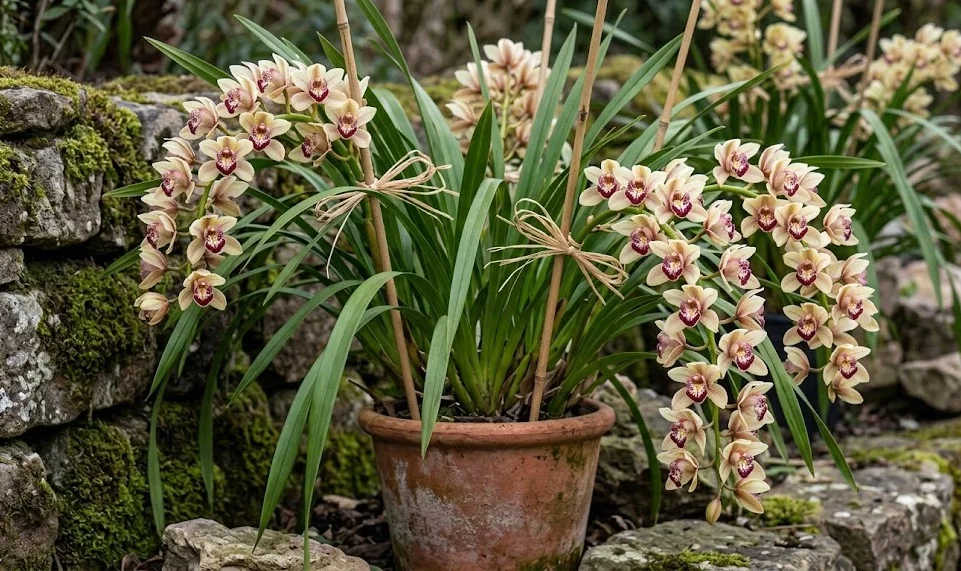

Water and fertilizer management determines whether a boat orchid develops firm pseudobulbs, strong roots, and flower-ready growth. These orchids are not desert plants, but they cannot tolerate stagnant wetness around the roots. They need a rhythm that changes with season, temperature, light, and the condition of the potting medium. The most successful routine is neither dry neglect nor constant saturation, but a controlled cycle of moisture and aeration.
Reading the plant before watering
A boat orchid gives many clues about its water status. Firm pseudobulbs suggest adequate reserves, while excessive shriveling points to stress. However, shriveled bulbs do not always mean the plant needs more water immediately. If roots are damaged, extra water can make the problem worse.
The potting medium should be checked below the surface. The top may dry quickly while the center remains moist. Lifting the pot helps reveal how much water remains inside. A heavy pot usually needs more drying time.
Leaves also provide useful information. Limp leaves can indicate underwatering, root loss, heat stress, or salt damage. Yellowing leaves may be natural aging, but sudden yellowing can suggest root problems. Symptoms should always be interpreted together rather than in isolation.
Watering should be adjusted as conditions change. A plant in bright outdoor summer air may dry quickly. The same plant in a cool winter room may need far less water. Seasonal flexibility prevents most watering mistakes.
More articles on this topic
Water quality and watering technique
Water should be applied thoroughly when the plant is watered. The entire root zone should be moistened, and excess water should drain away. Shallow watering encourages roots to remain near the surface. Deep watering supports a more functional root system.
Hard water can create mineral deposits in the potting medium. Over time, these salts can burn root tips and contribute to brown leaf ends. Rainwater, filtered water, or blended water can be helpful in areas with mineral-rich tap water. Regular flushing also reduces accumulation.
The temperature of the water should be moderate. Very cold water can shock roots, especially in winter. Lukewarm water is generally safer for indoor plants. Sudden extremes should be avoided.
Water should not remain trapped in leaf bases during cool conditions. Moisture sitting in tight growth points can encourage rot. Morning watering gives the plant time to dry before night. This timing is especially useful during autumn and winter.
More articles on this topic
Seasonal watering adjustments
During spring, new growth and roots often begin to accelerate. Watering can gradually increase as the plant becomes more active. The medium should still drain well between waterings. The goal is steady moisture without suffocation.
Summer growth may require frequent watering, especially outdoors. Warm air, wind, and stronger light can dry pots rapidly. Large plants with many leaves may use water faster than expected. Even so, the roots should never be left in stagnant water.
In autumn, watering should be moderated as temperatures fall. Cooler nights reduce evaporation and slow root activity. This is also a critical period for flower initiation in many boat orchids. Overwatering at this stage can damage roots just when the plant needs stability.
In winter, the plant usually needs less water, particularly if kept cool. The medium should not become bone dry for long periods, but it should not remain soaked. A careful balance protects stored energy in the pseudobulbs. Cool roots in wet medium are especially vulnerable.
Fertilizer strategy during active growth
Fertilizer should be applied during periods of active root and shoot growth. A balanced orchid fertilizer at reduced strength is often effective. Weak feeding at regular intervals is usually safer than strong feeding once in a while. Roots absorb nutrients more efficiently when they are healthy and evenly moist.
Nitrogen supports leaf and pseudobulb development. Phosphorus and potassium contribute to root function, energy transfer, and flowering processes. Trace elements are also important, especially in bark-based mixes that contain few nutrients. A complete fertilizer is usually more reliable than a narrow formula.
Fertilizer should not be applied to dry roots. Watering first or feeding with a diluted solution helps prevent burn. Sensitive root tips can be damaged by concentrated salts. This is particularly important in warm weather.
The feeding program should reflect the plant’s growth stage. Young shoots and expanding bulbs benefit from regular nutrition. Mature bulbs approaching the cooler season need less nitrogen pressure. Feeding should support natural development rather than force soft growth.
Preventing fertilizer-related problems
Salt buildup is a common hidden problem in container-grown boat orchids. Fertilizer residues, minerals from water, and decomposing medium all contribute. White crusts on the pot or surface can be a warning sign. Brown root tips and leaf edges may follow.
Flushing the potting mix with clean water helps remove excess salts. This should be done thoroughly, allowing water to run freely through the pot. It is especially useful after several fertilizer applications. The plant should then be allowed to drain completely.
Overfertilized plants may produce soft, overly lush foliage. This growth can be more susceptible to pests and disease. It may also reduce flowering quality if nitrogen remains high late in the season. Balanced restraint produces stronger plants.
A plant with damaged roots should not be pushed with fertilizer. Recovery depends first on restoring root function and proper moisture. Once new roots are visible, feeding can resume gently. Fertilizer is a supplement, not a rescue treatment.