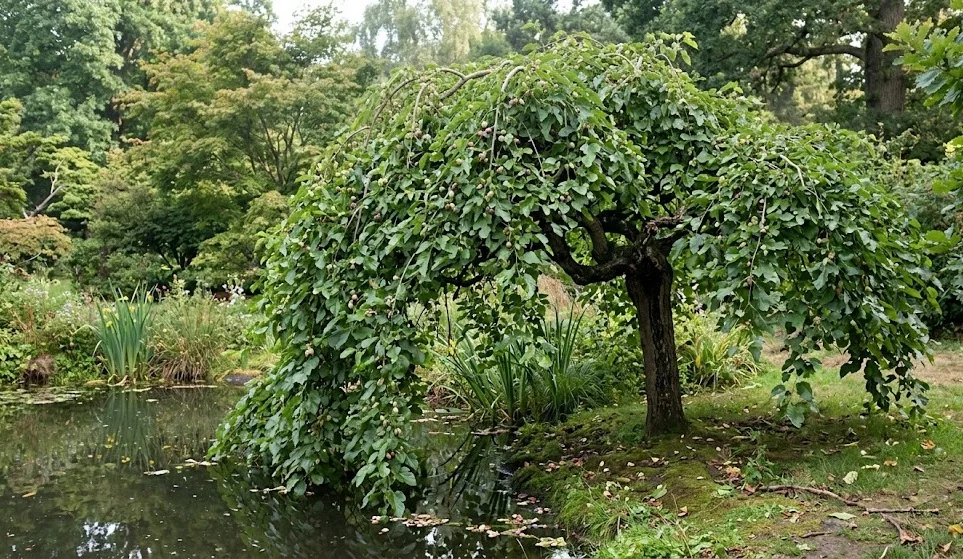

Weeping mulberry is one of those ornamental trees that brings structure, movement, and a quiet sense of character to a garden. Its arching crown, cascading branches, and dense summer foliage make it especially valuable in smaller landscapes where a full-sized shade tree would be too dominant. Although it looks refined and almost sculptural, it is a resilient plant when placed in the right position. Successful care begins with understanding its natural growth habit and giving the tree conditions that support both beauty and long-term health.
Weeping mulberry is most often appreciated as a focal-point tree, but it should never be treated as a purely decorative object. It is a living woody plant with specific needs related to light, soil, pruning, water, and air circulation. When these needs are respected, the tree forms a balanced umbrella-like canopy that can remain attractive for decades. When they are ignored, the crown can become tangled, weak, sparse, or vulnerable to disease.
A well-grown weeping mulberry has a compact trunk and a broad, downward-growing head of branches. Because the mature height is usually determined by the grafting point, the tree does not behave like a typical upright species that continues rising year after year. Its visual growth is mostly expressed through the widening and lengthening of the crown. This makes thoughtful early training especially important, because the framework created in the first years influences the appearance of the tree for a long time.
In practical garden design, weeping mulberry works well near lawns, entrance areas, courtyards, and open beds. It needs enough room for the canopy to drape naturally without being constantly cut back from paths, walls, or other plants. The tree is most effective when its silhouette can be seen clearly from several angles. Crowding it into a narrow corner usually weakens both its appearance and its health.
Site selection and garden placement
The best place for a weeping mulberry is an open, sunny position with good air movement and enough space around the crown. Full sun supports dense foliage, strong shoot growth, and a healthier branch structure. In shaded positions, the canopy often becomes thinner, and the shoots may stretch unevenly toward the available light. A tree that receives light from all sides usually develops the most balanced shape.
More articles on this topic
Spacing should be planned according to the mature spread rather than only the height at planting. Many young trees look small and manageable when bought from a nursery, but their pendulous crowns can become broad with age. A generous planting area prevents constant corrective pruning and reduces stress on the plant. It also allows the natural weeping habit to remain elegant rather than forced.
Avoid planting weeping mulberry directly against buildings, fences, or dense evergreen hedges. These barriers can restrict air circulation and create damp microclimates around the crown. Poor airflow increases the risk of leaf spots, mildew, and general canopy decline during wet seasons. A little openness around the tree is often more valuable than extra fertiliser or repeated treatments later.
The tree can be used as a solitary specimen, but it also combines well with low perennials and groundcovers. Plants beneath the canopy should tolerate some seasonal shade and occasional dryness caused by root competition. Avoid aggressive shrubs that grow into the hanging branches and make maintenance difficult. The goal is to frame the tree, not to hide its distinctive form.
Soil conditions and root environment
Weeping mulberry adapts to a range of garden soils, but it performs best in deep, moderately fertile, well-drained ground. The soil should hold enough moisture to support summer growth while allowing excess water to drain away after heavy rain. Constantly waterlogged soil can suffocate roots and encourage decline. A healthy root environment is the foundation of a stable and attractive crown.
More articles on this topic
Before planting or improving an existing tree, it is worth assessing the soil texture. Sandy soils dry quickly and may require organic matter to improve moisture retention. Heavy clay soils can be productive, but they need careful handling because compaction and stagnant water can cause root stress. Loamy soil with a crumbly structure is usually ideal.
Mulching is one of the simplest and most effective care practices for weeping mulberry. A layer of composted bark, leaf mould, or mature garden compost helps regulate soil temperature and moisture. It also protects the root zone from mechanical damage caused by mowing or hoeing. The mulch should not be piled against the trunk, because a damp collar around the bark can encourage rot.
Root disturbance should be kept to a minimum once the tree is established. Digging deeply under the canopy can damage fine feeder roots and reduce the tree’s ability to absorb water and nutrients. If planting companions beneath the tree, choose small plants and install them carefully. Long-term soil care should focus on gentle surface improvement rather than repeated deep cultivation.
Watering through the seasons
A newly planted weeping mulberry needs consistent watering during its first growing seasons. Even though established mulberries are reasonably tolerant of dry periods, young trees have limited root systems and cannot yet explore a large soil volume. Watering should be deep enough to moisten the root ball and surrounding soil. Frequent shallow sprinkling is less useful because it encourages roots to remain near the surface.
During the first year, the soil should be checked regularly rather than watered according to a rigid calendar. Warm, windy weather can dry the root zone quickly, especially in light soils. Rainfall may not fully penetrate the planting area if the canopy or surrounding vegetation intercepts water. A simple hand check below the mulch often gives the clearest indication of whether irrigation is needed.
Established trees usually require less intervention, but prolonged drought can still affect leaf quality and shoot growth. Signs of water stress include dull foliage, early yellowing, premature leaf drop, and slowed extension growth. Deep watering during extended dry spells helps preserve both ornamental value and plant health. It is better to water thoroughly at longer intervals than to apply small amounts every day.
Late-season watering should be handled with balance. The tree should not enter winter severely dry, especially in free-draining soil. At the same time, excessive watering late in the season can encourage soft growth that is less prepared for cold weather. Good care aims for steady hydration, not lush and forced growth.
Feeding and nutrient management
Weeping mulberry does not usually require heavy feeding in ordinary garden soil. Excessive fertiliser can produce long, soft shoots that spoil the compact weeping shape and may be more vulnerable to wind or frost damage. A moderate approach is usually more successful than an aggressive feeding programme. The aim is steady, well-ripened growth rather than rapid extension.
In early spring, a light application of mature compost or a balanced slow-release fertiliser can support healthy bud break. This is especially useful for young trees, trees growing in poor soil, or specimens that have been pruned strongly. Nutrients should be spread over the root zone rather than placed directly against the trunk. Watering after feeding helps move nutrients into the active soil layer.
Leaf colour and annual shoot growth provide useful clues about nutrition. Pale leaves, weak growth, and sparse canopies may suggest nutrient deficiency, but they can also be caused by drought, compaction, poor drainage, or root damage. Fertiliser should not be used as a quick answer to every problem. Diagnosing the growing conditions first prevents unnecessary and sometimes harmful applications.
Organic matter is often more valuable than concentrated fertiliser. Compost improves soil structure, microbial activity, and moisture balance while releasing nutrients gradually. This slow support suits the long-term nature of ornamental tree care. A tree that grows in living, well-managed soil is usually more resilient than one repeatedly pushed with strong fertilisers.
Pruning for form and health
Pruning is central to the care of weeping mulberry because the canopy can become dense and tangled if left unmanaged. The goal is not to remove the weeping character but to refine it. A good pruning approach preserves the graceful downward habit while improving light penetration and airflow. This helps reduce disease pressure and keeps the tree visually clear.
The best time for structural pruning is usually late winter or early spring before active growth begins. At this stage, the branch framework is easy to see, and cuts can be made with purpose. Dead, damaged, crossing, or inward-growing branches should be removed first. After that, the crown can be lightly shaped to maintain balance.
Avoid cutting every shoot back to the same length, as this can create a stiff, artificial outline. Weeping mulberry looks best when the canopy retains some natural variation in branch length. Selective thinning is often better than blanket shortening. The most attractive trees have movement, depth, and a slightly layered curtain of growth.
Suckers and upright shoots emerging from below the graft should be removed promptly. These shoots may come from the rootstock and can grow much more vigorously than the ornamental crown. If allowed to develop, they can weaken the intended form and compete with the grafted head. Removing them while young prevents larger wounds later.
Disease prevention and general plant health
A healthy weeping mulberry begins with preventive care rather than rescue treatments. Good light, open spacing, balanced watering, and correct pruning greatly reduce the likelihood of disease. Dense, wet, shaded crowns are more prone to fungal leaf problems. Strong, well-aerated trees are usually able to tolerate minor seasonal imperfections without serious decline.
Leaf spots can appear during humid or rainy periods, especially if fallen leaves remain under the canopy. Removing diseased leaf litter helps reduce overwintering sources of infection. Tools should be clean when pruning, particularly if dead or suspicious branches are being removed. Sanitation is a simple but important part of professional tree care.
Pests such as scale insects, aphids, mites, or caterpillars may occasionally affect weeping mulberry. Regular inspection allows small problems to be noticed before they spread through the canopy. Many pest issues can be managed by improving tree vigour and encouraging beneficial insects. Chemical intervention should be reserved for severe or persistent infestations and applied with care.
Stress is often the hidden cause behind repeated plant health problems. Drought, compacted soil, poor drainage, mechanical bark damage, and incorrect pruning can all weaken the tree. A stressed tree is less able to defend itself against pests and pathogens. Long-term care should therefore focus on reducing stress factors rather than treating symptoms alone.
Long-term maintenance and ornamental value
As weeping mulberry matures, its care becomes more about refinement than establishment. Annual inspection is important, even when the tree appears healthy. Small corrections made regularly are far easier than major renovation after years of neglect. A steady maintenance rhythm keeps the canopy graceful and prevents structural problems.
The area beneath the tree should remain tidy and protected. Lawn equipment can easily damage the trunk or exposed roots, and such wounds may become entry points for decay. A mulched circle around the base reduces this risk and makes the tree look more intentionally placed. It also simplifies mowing and garden maintenance.
In gardens where fruit drop may be an issue, placement deserves special attention. Some weeping mulberries may produce fruits that stain paving, furniture, or paths. Planting away from high-traffic hard surfaces prevents inconvenience later. Where fruiting occurs, the tree is often better suited to lawns, informal areas, or beds with absorbent mulch.
A well-cared-for weeping mulberry offers beauty in every season. In spring, fresh leaves soften the crown; in summer, the canopy becomes lush and shaded; in autumn, the structure begins to show again; and in winter, the bare branches reveal the sculptural form. This seasonal rhythm is part of the tree’s charm. With thoughtful care, it becomes not just a plant in the garden, but a lasting feature with personality.