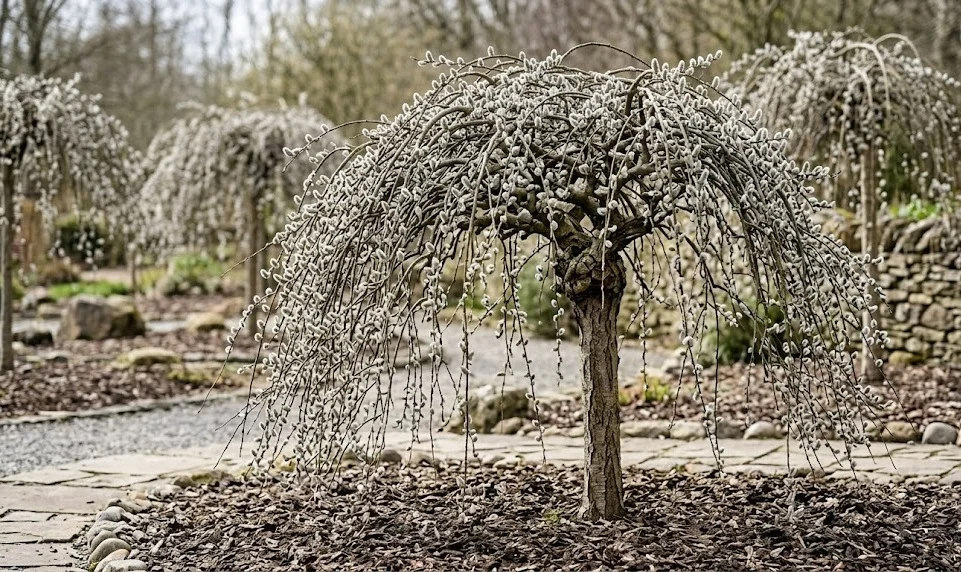

A weeping pussy willow has a naturally high appreciation for moisture, but successful care does not mean keeping the roots constantly flooded. The best results come from steady, even watering combined with moderate feeding and good soil structure. Too little water causes stress and poor shoot development, while too much stagnant moisture can weaken the roots. Balanced irrigation and nutrition help the tree produce healthy catkins, flexible shoots, and attractive foliage year after year.
Understanding moisture needs
A weeping pussy willow prefers soil that remains consistently moist through the active growing season. This preference reflects its willow heritage, as many willows grow naturally in places where water is readily available. However, garden conditions are often different from natural stream banks or damp meadows. Roots still require oxygen, so moisture must be paired with reasonable drainage.
Young plants need the closest attention because their roots have not yet spread into the surrounding soil. After planting, the root ball can dry out even when the nearby ground appears damp. This happens because nursery compost and garden soil may absorb and release water differently. Deep, careful watering helps bridge this transition and encourages establishment.
Established trees are more resilient, but they should not be ignored during drought. Prolonged dryness can reduce leaf size, weaken new shoots, and shorten the ornamental life of the foliage. Catkin production in the following season may also suffer if the plant experiences severe stress. A tree that is watered well during critical dry periods usually recovers more strongly.
The best watering practice is based on observation. Soil texture, rainfall, wind, temperature, and plant size all affect how quickly moisture is used. A hand check beneath the mulch gives practical information that surface appearance cannot provide. If the soil is dry several centimeters down, watering is usually needed.
More articles on this topic
Watering after planting
The first season after planting is the most important period for irrigation. Water should be applied slowly so it penetrates into the full root zone. A quick splash around the trunk is rarely enough, especially in warm weather. The aim is to encourage roots to grow outward and downward into stable soil moisture.
A watering basin can be useful around a newly planted tree. This shallow ring holds water long enough for it to soak into the planting area. It should not be so deep that water stands for many hours after every watering. Once the tree is established, the basin can be leveled gradually.
Mulch greatly improves watering efficiency. It reduces evaporation, keeps the soil cooler, and prevents weeds from competing for moisture. Organic mulch also improves soil as it breaks down, which helps water move and remain available. A mulch layer is especially valuable during the first two summers.
Watering frequency should be adapted to the weather. In cool, rainy spring conditions, watering may be needed only occasionally. In hot, dry spells, the tree may require thorough watering once or twice a week. Container-grown plants may need water more often, sometimes daily during extreme heat.
More articles on this topic
Avoiding overwatering and poor drainage
Although the plant likes moisture, overwatering can still cause serious problems. Roots sitting in stagnant, airless soil become weak and more vulnerable to decay. Symptoms may resemble drought stress, including yellowing leaves and wilting shoots. This is why checking soil moisture before watering is essential.
Heavy clay soils need special attention. They can hold water for a long time after rain, particularly in low areas of the garden. Improving the planting area with organic matter helps, but drainage must still be monitored. If water remains on the surface for long periods, the site may not be suitable without improvement.
Containers are another common place where overwatering occurs. A pot without drainage holes is unsuitable for a weeping pussy willow. Saucers should not remain full of water for long periods, especially in cool weather. The compost should feel moist, not sour, slimy, or permanently saturated.
Water quality can also influence container plants. Very hard water, repeated fertilization, and evaporation can lead to salt buildup in the compost. Occasional deep watering that allows water to drain freely helps flush excess salts. This practice should be combined with sensible feeding rather than heavy fertilizer use.
Feeding in garden soil
A weeping pussy willow in fertile garden soil usually needs only light feeding. Spring is the best time to provide nutrients, because the plant is beginning active growth. A balanced slow-release fertilizer or organic feed can support leaves, shoots, and root activity. The application should follow the product guidance and remain moderate.
Compost is often more beneficial than strong fertilizer. It improves soil texture, moisture retention, and microbial activity while providing gentle nutrition. A yearly top-dressing around the root zone can maintain soil fertility without overstimulating growth. This suits the natural rhythm of a small ornamental tree.
Too much nitrogen should be avoided. It encourages long, soft, leafy growth that may spoil the compact weeping shape. Such growth can be more attractive to aphids and more vulnerable to weather damage. Balanced nutrition produces sturdier shoots and a more refined crown.
Nutrient problems should be diagnosed carefully. Pale leaves may suggest deficiency, but they may also be caused by water stress, root damage, compacted soil, or disease. Feeding cannot correct a poorly drained or severely dry site. Good horticultural practice begins with the roots and soil, not only the fertilizer bag.
Feeding container-grown plants
Container-grown weeping pussy willows rely more heavily on the gardener for nutrition. The limited volume of compost contains fewer reserves than open soil. Nutrients are gradually used by the plant and washed out through watering. A planned feeding routine keeps growth steady without making the canopy coarse.
A slow-release fertilizer added in spring is a practical option. It provides nutrients gradually over several months and reduces the risk of sudden excess. Liquid feeding can also be used during the active season, especially if growth appears weak. It should be applied to moist compost rather than dry roots.
Repotting or refreshing the top layer of compost may be needed after a few years. As the compost breaks down, it can become compacted and less able to hold air. Removing some old surface compost and replacing it with fresh material helps maintain root health. Larger plants may eventually need root pruning or a bigger container.
Feeding should taper off in late summer. The plant needs time to harden its shoots before cold weather arrives. Late feeding can encourage tender growth that is more easily damaged by frost. A container plant prepared gradually for winter is healthier than one pushed into late soft growth.