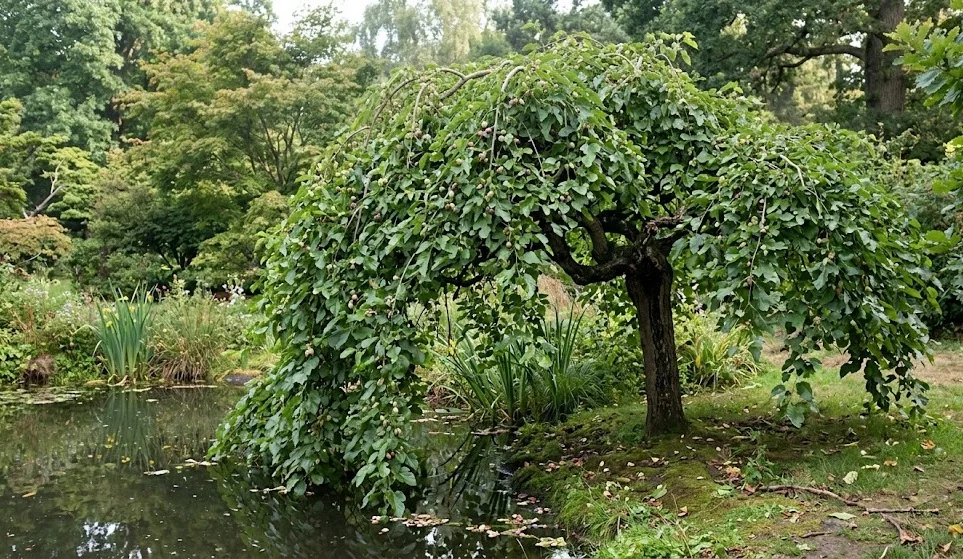

Overwintering weeping mulberry is usually straightforward when the tree is well established, properly planted, and not forced into late soft growth. The plant is more cold-tolerant than its delicate appearance suggests, but young specimens, grafted trees, and container-grown plants still need thoughtful preparation. Winter care focuses on root protection, moisture balance, graft safety, and prevention of physical damage. A tree that enters dormancy gradually and healthily is far more likely to start spring with strong buds and clean growth.
The weeping mulberry’s winter needs depend strongly on climate, soil, exposure, and plant age. A mature tree in open ground usually requires less attention than a recently planted one. A tree in a windy or frost-prone position may need more protection than one in a sheltered garden. Care should be adapted to actual conditions rather than applied mechanically.
Autumn management has a major influence on winter performance. Late heavy feeding, excessive watering, or severe pruning can stimulate vulnerable growth at the wrong time. The tree should be allowed to slow naturally as days shorten and temperatures fall. This helps shoots harden and prepare for dormancy.
Winter problems are not caused only by cold. Waterlogged soil, drying winds, sunscald, animal damage, and freeze-thaw movement can also harm the tree. Good overwintering therefore involves more than covering the canopy. It is a complete seasonal care strategy.
Preparing the tree in autumn
Autumn preparation begins with reducing any strong nitrogen feeding well before the end of the growing season. Nitrogen applied too late can encourage soft shoots that do not mature properly. These shoots are more likely to be damaged by frost. A slow transition into dormancy is healthier than continued lush growth.
More articles on this topic
Watering should be adjusted according to rainfall and soil moisture. The tree should not go into winter severely dry, especially if autumn has been unusually warm or windy. However, saturated soil is also dangerous because roots need oxygen even during dormancy. The goal is moderately moist, well-drained soil.
Fallen leaves should be removed if they show signs of disease. Leaf litter can shelter fungal spores and pests through winter. Clean ground beneath the canopy reduces disease pressure the following spring. Healthy leaves may be composted, while diseased material should be handled more cautiously.
Light inspection of the crown is useful before winter. Broken, dead, or clearly diseased branches can be removed if necessary. Major shaping is usually better left until late winter or early spring. Heavy autumn pruning can expose the tree to unnecessary stress before cold weather.
Protecting roots, trunk, and graft union
The root zone benefits from a protective mulch layer before winter. Organic mulch helps buffer soil temperature and reduces rapid freeze-thaw changes. It also protects shallow roots from exposure during harsh weather. The mulch should be spread broadly but kept away from direct contact with the trunk.
More articles on this topic
Young trees may need trunk protection in cold or wildlife-prone areas. A breathable tree guard can reduce bark chewing by rodents or rabbits. It may also help prevent mechanical injury from winter maintenance. The guard should be checked so it does not become tight or trap moisture.
The graft union is a sensitive structural point and should remain visible and healthy. It should not be buried under soil or mulch. Moisture held against the graft can encourage decay and weakness. Protection should shield the area from damage without smothering it.
In exposed sites, winter sun and cold winds can create bark stress. Rapid temperature changes may lead to cracking on vulnerable trunks. Light-coloured breathable wrapping can be useful for young trees in severe conditions. It should be removed or checked regularly once the risk period has passed.
Container-grown trees in winter
Weeping mulberry grown in containers needs more winter attention than trees planted in the ground. Roots in pots are more exposed to freezing temperatures because they lack the insulation of surrounding soil. The container itself can freeze solid during severe cold. This can damage roots even when the top of the tree appears dormant.
A container should be moved to a sheltered location before the harshest weather arrives. A spot against a protected wall, in an unheated greenhouse, or in a bright cold frame may be suitable. The tree should remain cold enough to stay dormant, not warm enough to start premature growth. Indoor heated rooms are usually unsuitable for overwintering.
The pot can be insulated with burlap, fleece, straw, or other breathable materials. Raising the container slightly helps excess water drain away. Waterlogged frozen compost is particularly harmful because it combines cold stress with oxygen shortage. Drainage holes must remain open.
Even dormant container trees need occasional moisture checks. The growing medium should not become bone dry for long periods. Water lightly during mild spells if needed, always allowing excess water to drain. Overwatering in winter is a common mistake and can lead to root rot.
Winter pruning, monitoring, and spring recovery
Late winter is often a good time to assess structure and carry out pruning. The leafless crown makes it easier to identify dead, crossing, crowded, or poorly placed branches. Pruning before spring growth helps the tree direct energy into a cleaner framework. Cuts should be neat and made with sharp tools.
After severe cold, patience is important. Some shoots may appear lifeless before buds begin swelling. Cutting too early can remove living wood unnecessarily. Waiting until the pattern of bud break is clear allows more accurate pruning decisions.
Spring recovery should be supported gently. A moderate layer of compost and careful watering are usually enough at first. Heavy feeding immediately after winter stress can push growth before the root system is fully active. The tree should be encouraged, not forced.
If winter damage occurs repeatedly, the site should be reconsidered. Exposure, soil wetness, late fertilising, container vulnerability, or poor graft protection may be involved. Correcting these factors is more effective than relying on emergency protection every year. A well-prepared weeping mulberry can overwinter reliably and return each spring with a graceful, healthy canopy.