
Pruning weeping mulberry is both a horticultural task and a design decision, because every cut influences the tree’s long-term silhouette. The aim is to maintain a graceful cascading crown while removing weak, crowded, damaged, or misplaced growth. Poor pruning can make the tree look stiff, tangled, or unbalanced, while thoughtful pruning enhances its natural character. The best results come from selective cuts, clean technique, and a clear understanding of the grafted structure.
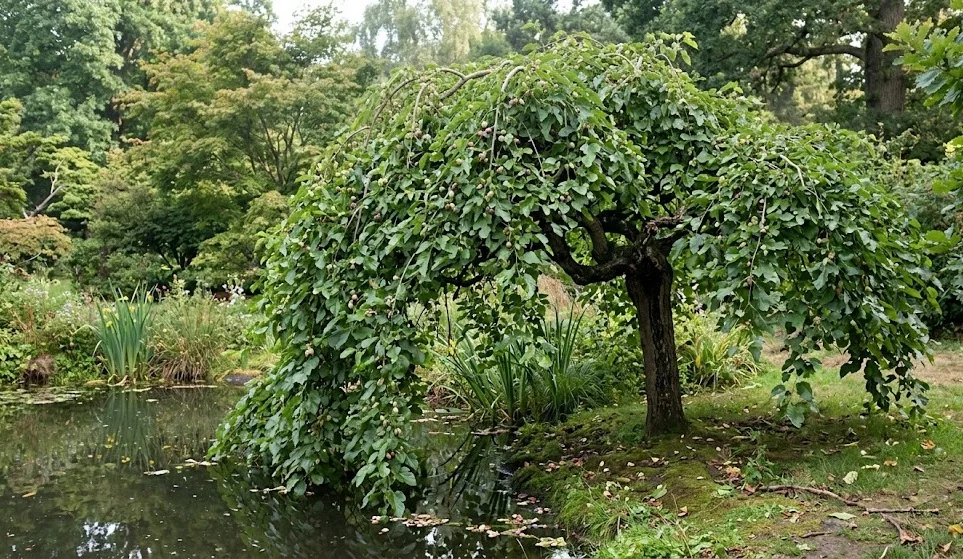
The weeping canopy grows differently from an upright tree crown. Branches naturally arch downward and may eventually reach the ground if left unchecked. This is part of the tree’s appeal, but it can also create dense layers that trap humidity and shade the interior. Pruning keeps the canopy healthy as well as attractive.
A common mistake is cutting the tree into a uniform mushroom shape every year. This may look tidy for a short time, but it often produces congested regrowth and an unnatural outline. Weeping mulberry is most beautiful when the crown has flow, variation, and movement. Selective thinning usually serves that goal better than hard shearing.
Pruning should also respect the graft union. Shoots below the graft may belong to the rootstock and should not be allowed to develop. These upright or vigorous shoots can compete with the ornamental crown. Removing them early protects the intended form of the tree.
Timing and basic pruning principles
Late winter or early spring is usually the best time for structural pruning. The tree is still dormant, and the branch framework is easy to see without leaves. Cuts made at this time support orderly spring growth. It is also easier to identify dead, crossing, or overcrowded branches.
More articles on this topic
Light corrective pruning can be done during the growing season if necessary. Broken shoots, suckers, and branches obstructing paths can be removed when noticed. However, heavy summer pruning may reduce leaf area and stress the tree during hot weather. Major reshaping should usually wait until the dormant season.
Every pruning session should begin with the three basic removals: dead, damaged, and diseased wood. After that, crossing branches and inward-growing shoots can be addressed. Finally, the overall balance of the canopy can be refined. This order prevents unnecessary cuts and keeps the work focused.
Tools must be sharp and appropriate for the branch size. Clean secateurs, loppers, and pruning saws make smoother cuts that heal more efficiently. Crushing or tearing branches creates wounds that are slower to seal. Tool hygiene is especially important if disease is suspected.
Shaping the weeping crown
The crown should be shaped by following the natural direction of the branches. Rather than shortening everything evenly, choose individual branches that are too long, crowded, or poorly placed. Cut back to a suitable side branch or bud where possible. This maintains a softer and more natural outline.
More articles on this topic
Branches that drag on the ground can be shortened or removed, depending on the desired effect. Some gardeners like the canopy to almost touch the soil, while others prefer a raised curtain. Practical access, mowing, air circulation, and garden style all influence the decision. The key is to create intention rather than random trimming.
Inner thinning is often important for older trees. A dense outer shell can shade the centre and lead to dead twigs inside the canopy. Removing selected crowded shoots allows light and air to reach the interior. This reduces disease risk and improves the quality of new growth.
Avoid leaving long stubs after cutting. Stubs often die back and can become entry points for decay. Cuts should be made just outside the branch collar without cutting flush into the trunk or parent branch. Good pruning respects the tree’s natural wound response.
Renovation, suckers, and common mistakes
Neglected weeping mulberries may require gradual renovation. If the canopy is severely tangled, it is better to improve it over two or three seasons rather than removing too much at once. Sudden heavy cutting can stimulate excessive watershoots and weaken the tree’s appearance. A staged approach is safer and more controlled.
Suckers from the base or trunk should be removed as soon as they appear. These shoots are often more vigorous and upright than the weeping crown. If left in place, they can dominate the tree and spoil its form. Removing them while small creates minimal wounds.
Another mistake is pruning at the wrong height without considering future growth. Cutting branches too short may expose the grafted head and create a harsh, knobbed appearance. Cutting only the outer tips every year can also create dense clusters at the ends. Better pruning works throughout the canopy, not just around the surface.
After pruning, the tree should be monitored through the growing season. Healthy regrowth indicates that the pruning intensity was appropriate. Weak response may suggest stress from drought, poor soil, disease, or overcutting. Pruning is not a one-time correction but part of a continuing relationship with the tree.