
Pruning is an essential skill for anyone growing the jasmine nightshade, as this vine can quickly become unmanageable if left to its own devices. Proper cutting techniques not only control the size and shape of the plant but also stimulate the production of new wood and more flowers. A professional approach to pruning combines aesthetic goals with the biological needs of the plant for long-term health. In this article, we will detail how to prune your climber for the best visual and structural results.
The primary reason to prune this specific vine is its incredible vigor during the growing season. It can easily grow several meters in a single year, potentially overwhelming other plants or structural elements in your garden. By intervening at the right times, you can direct this energy where it is most needed and maintain a tidy, professional appearance. Pruning is not about “punishing” the plant, but about guiding it toward its most beautiful and productive form.
Another benefit of regular pruning is the rejuvenation of the plant’s interior structure. Over time, the inner stems of a large vine can become bare and woody as they are shaded out by the outer growth. Thinning out these older branches allows light and air to reach the center, encouraging new shoots to sprout from the base. This keeps the plant looking “full” from the ground up, rather than having a big mass of green only at the very top.
In the following sections, we will cover the timing of pruning, the tools you will need, and the specific techniques for different goals. Whether you want a light trim or a major rejuvenation, the principles remain the same. Mastering these tasks will give you complete control over the jasmine nightshade and ensure it remains a highlight of your garden for years. Let us start by looking at when and why you should pick up your shears.
Timing and goals for professional pruning
The best time for a major pruning session is in the late winter or very early spring, just before the new growth begins. At this stage, the plant is still dormant, so the stress of cutting is minimized and the structure of the stems is clearly visible. You can see exactly where the dead wood is and which branches are crossing or rubbing against each other. Pruning now sets the stage for a flush of healthy, organized growth as soon as the weather warms up.
More articles on this topic
Throughout the summer, you can perform “maintenance pruning” to keep the vine within its designated boundaries. This involves simply snipping off the ends of overly ambitious shoots that are heading in the wrong direction. This light trimming does not harm the plant and actually encourages it to branch out more, creating a denser screen. A professional gardener never waits for the plant to become a problem; they make small adjustments all season long.
Deadheading, or removing the spent flower clusters, is another important task that can be done throughout the blooming period. While the jasmine nightshade is somewhat self-cleaning, removing the old flowers prevents the plant from putting energy into seed production. This keeps the vine’s focus on creating more flower buds, potentially extending the flowering season well into the autumn. It is a simple task that makes a big difference in the overall neatness and performance of the climber.
If you have a very old, neglected plant, you might need to perform a “rejuvenation prune,” where you cut the entire vine back quite hard. This is a more drastic measure but can breathe new life into a specimen that has become a tangled mess of dead wood. The jasmine nightshade is remarkably resilient and will usually respond to this treatment with a burst of vigorous, fresh stems. Knowing when to be gentle and when to be bold is the mark of a true horticultural expert.
Essential tools and cutting techniques
Using the right tools is the first rule of professional pruning and ensures that you do not damage the plant or yourself. You should have a sharp pair of bypass pruners for most of the work, as these provide a clean, “scissor-like” cut that heals quickly. For thicker, woody stems at the base of the plant, a pair of loppers will give you the necessary leverage and reach. Always ensure your tools are clean and sterilized to prevent the spread of diseases between different plants in your garden.
More articles on this topic
When making a cut, you should always aim for a spot about a quarter-inch above a healthy bud or a branching point. Make the cut at a slight angle away from the bud so that rainwater can run off rather than sitting on the cut surface. This simple technique reduces the risk of rot and ensures that the new growth will emerge in the direction you want it to go. A clean, professional cut is much less stressful for the plant’s vascular system than a jagged or crushed stem.
Always remove the “three Ds” first: wood that is dead, damaged, or diseased. This clears the way for you to see the true structure of the plant and prevents these issues from spreading or attracting pests. You should also look for “suckers” emerging from the very base of the plant that might be draining energy from the main vines. By prioritizing these essential cuts, you ensure that every part of the plant you leave behind is healthy and productive.
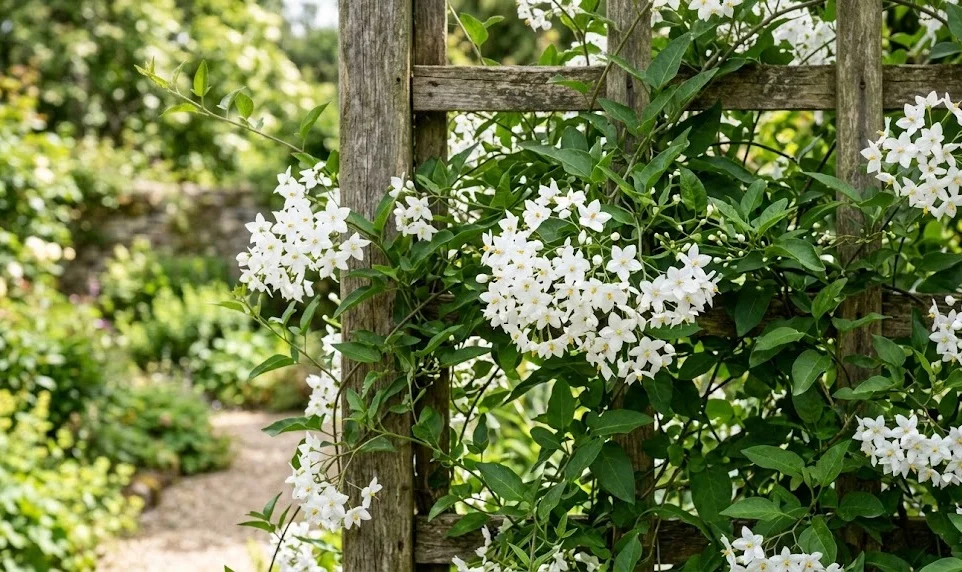
If you are trying to cover a specific area, like a fence or trellis, prune back to a bud that is facing the direction you want the plant to grow. You can “train” the vine by consistently choosing buds that point toward the empty spaces on your support structure. This level of precision allows you to create a living tapestry that is perfectly tailored to your garden’s architecture. Professional pruning is as much an art form as it is a science, requiring a vision for the plant’s future.
Managing growth and encouraging blooms
One of the secrets to a flower-heavy vine is to encourage the growth of “lateral” or side branches. The most prolific blooming often occurs on these shorter side shoots rather than on the long, primary climbing stems. You can encourage lateral growth by “pinching out” the growing tips of the main stems once they have reached the desired height. This breaks the apical dominance and forces the plant to push out new buds from the leaf axils along the stem.
If your jasmine nightshade has become too tall and “bottom-heavy,” you can prune some of the stems back to different heights. This creates a layered effect that ensures there is foliage and flowers at every level of the trellis. This technique is particularly useful if you want to create a privacy screen that is effective from the ground all the way up. A professional gardener thinks in three dimensions to ensure the plant looks its best from every angle.
Be careful not to over-prune during the peak of the summer, as the plant needs its leaves to produce energy through photosynthesis. Removing more than a third of the foliage at once can shock the system and lead to a temporary halt in flower production. If you need to do a major reduction, it is better to do it in stages over several weeks or wait for the dormant season. Balancing your desire for order with the plant’s need for energy is a key part of successful management.
After a major pruning session, it is a good idea to provide the plant with a little extra water and a light feeding to help it recover. The new growth that emerges after pruning is often very tender and attractive to pests like aphids, so keep a close watch for a few weeks. With the right pruning strategy, your jasmine nightshade will remain a vigorous, healthy, and stunningly beautiful part of your garden landscape. Your dedication to professional maintenance will be rewarded with a spectacular show of white stars every year.