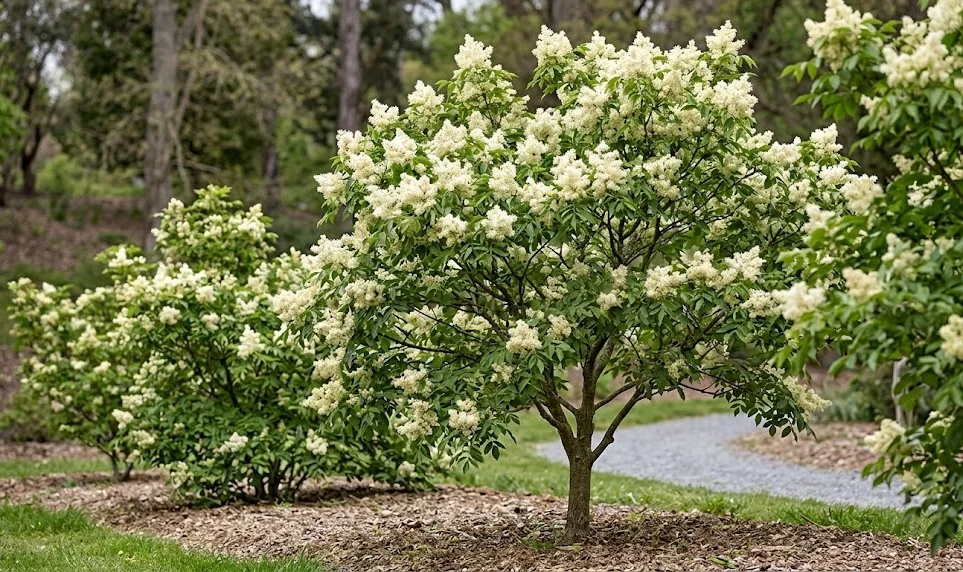

Flowering ash is a graceful, resilient ornamental tree that rewards thoughtful care with fragrant spring bloom, a balanced crown, and dependable performance in gardens where heat, wind, and moderate drought can challenge more delicate species. It is often appreciated for its creamy white flower clusters, relatively modest size, and Mediterranean character, yet it still benefits from careful establishment during its first years. Good care is not complicated, but it should be consistent, especially while the root system is still developing. Once settled, flowering ash becomes a durable tree that can fit beautifully into private gardens, parks, streetscapes, and naturalistic plantings.
Choosing the right position
Flowering ash performs best in a sunny, open position where its crown can develop naturally and where air can move freely through the branches. A site with generous light encourages stronger flowering, denser growth, and a healthier framework over time. Although the tree can tolerate some partial shade, too little sun usually leads to looser growth and fewer blossoms. In ornamental planting, the difference between a merely surviving tree and a truly attractive one often begins with correct placement.
The tree is well suited to warm, bright gardens and can cope with dry summer periods once established. This makes it valuable in regions where long hot spells are becoming more common. However, drought tolerance should not be confused with neglect during the first few seasons after planting. Young trees still need regular attention while their roots are spreading into the surrounding soil.
Good air circulation is especially useful because it helps reduce the risk of fungal problems on leaves and young shoots. Avoid squeezing the tree between walls, dense hedges, or large competing specimens if a natural crown shape is desired. Flowering ash looks most elegant when it has enough space to show its rounded habit and seasonal bloom. Giving it room also makes future pruning easier and less intrusive.
When planning the position, consider the mature size rather than the size of the nursery plant. A young flowering ash may look modest at planting, but it will gradually need space above and below ground. Keep it away from narrow beds, paving edges, and utility lines where long-term conflict could arise. A well-chosen site reduces stress on the tree and prevents unnecessary corrective work later.
More articles on this topic
Soil and root environment
Flowering ash is not an overly demanding tree, but it prefers a well-drained soil that does not remain waterlogged after rain. Heavy, compacted ground can restrict root development and may encourage decline if oxygen is limited around the roots. Before planting, it is worth loosening the surrounding soil rather than only improving the planting hole. Roots establish more successfully when they can move easily beyond the original root ball.
Moderately fertile soil is usually sufficient for flowering ash, and excessive feeding is rarely needed. Very rich or heavily fertilized soil can push soft, vigorous growth that is more vulnerable to stress and may require more pruning. The ideal soil supports steady development without forcing unnaturally fast shoots. A balanced root environment is more important than aggressive fertilization.
In dry gardens, organic mulch can make a significant difference by conserving moisture and moderating soil temperature. A mulch layer also helps protect the upper root zone from summer heat and reduces competition from weeds. It should be spread broadly but kept away from direct contact with the trunk. Mulch piled against the bark can hold moisture in the wrong place and may encourage decay.
If the soil is very alkaline or stony, flowering ash can often still adapt well, which is one reason it is valued in challenging landscapes. The key is avoiding extremes of compaction, stagnant moisture, and severe root competition during establishment. Even tolerant trees develop better when their roots are not forced to struggle from the beginning. Good soil preparation is an investment in decades of healthier growth.
More articles on this topic
Watering through the seasons
The most important watering period is the first two to three years after planting, when the root system is still limited. During dry weather, deep watering is more useful than frequent shallow sprinkling. Water should soak down into the root zone so the tree is encouraged to anchor itself deeply. Shallow watering keeps roots near the surface and can make the plant more vulnerable in hot spells.
In spring, watering supports new shoots, flower formation, and early root activity. If rainfall is regular, additional irrigation may not be necessary, but newly planted trees should still be checked carefully. Soil can dry out faster around a fresh root ball than in the surrounding ground. This difference is easy to miss and can cause stress even when the garden appears generally moist.
During summer, established flowering ash usually copes with moderate drought, but young trees should not be allowed to dry repeatedly. Heat, wind, and reflected sunlight from paving can increase water demand considerably. A slow soak once or twice a week during severe dry periods is often better than a light daily splash. The aim is to maintain resilience, not to keep the soil constantly wet.
By autumn, watering can gradually be reduced as temperatures fall and growth slows. However, if the season is unusually dry, one or two deep waterings before winter can help the tree enter dormancy in better condition. Winter irrigation is normally unnecessary in climates with regular rainfall. The important principle is to respond to real soil conditions rather than watering by habit.
Feeding and nutrient balance
Flowering ash generally does not need heavy feeding when planted in decent garden soil. A light application of compost in spring is often enough to support steady growth and healthy foliage. The compost should be spread over the root area rather than dug deeply into the soil. Deep digging can disturb fine roots that are actively absorbing water and nutrients.
If growth is weak, pale, or sparse, the cause should be examined before applying fertilizer. Poor drainage, drought stress, compacted soil, or planting too deep can all look like a nutrient problem. Fertilizer will not solve these issues and may even add stress if roots are already struggling. Good diagnosis is part of professional plant care.
A slow-release, balanced fertilizer can be used in spring if the soil is genuinely poor. It should be applied modestly, following the product rate rather than the assumption that more will produce better results. Overfeeding can lead to long, soft shoots that are less attractive and less resistant to weather damage. Flowering ash is usually at its best when growth is firm, measured, and naturally shaped.
Late-season nitrogen should be avoided because it can stimulate tender growth before winter. Shoots that do not harden properly are more vulnerable to frost and wind injury. Feeding should support the tree’s rhythm, not disrupt it. In most gardens, soil improvement and sensible watering do more for flowering ash than repeated fertilization.
Pruning for structure and beauty
Flowering ash usually needs only light pruning when it is planted in a suitable place. The main aim is to build a strong, balanced framework while the tree is young. Remove damaged, crossing, or awkwardly angled branches before they become larger structural problems. Small corrections made early are far better than heavy cuts made later.
The best time for routine pruning is generally late winter or early spring, before vigorous new growth begins. At this stage, the branch structure is easier to see, and cuts can heal as the growing season starts. Avoid excessive pruning during hot, dry periods, as this can increase stress. Also avoid unnecessary cutting immediately after planting unless branches are broken or poorly positioned.
Flowering ash should not be repeatedly clipped into a rigid shape if a natural ornamental crown is desired. Its beauty lies in its loose elegance, spring flowers, and balanced canopy. Heavy topping damages the tree’s structure and often causes weak regrowth. A professionally cared-for specimen looks guided rather than forced.
Mature trees require a more conservative approach because large wounds take longer to close and can invite decay. If a substantial limb must be removed, the cut should be clean and correctly placed. It is better to remove a problematic branch completely than to leave long stubs. Careful pruning preserves both the health and the character of the tree.
Common stress signs
Leaf scorch is one of the most common signs of stress in flowering ash, especially during hot, dry weather. Browning leaf edges often indicate that the roots cannot supply enough water to match evaporation from the crown. This may happen because of drought, compacted soil, root damage, or reflected heat. The solution is usually improved watering practice and root-zone protection rather than quick cosmetic pruning.
Sparse flowering may occur when the tree receives too much shade or is under general stress. It can also happen after overly strong pruning, because flower-bearing growth may have been reduced. A young tree may need time before it flowers abundantly. Patience is often necessary, especially during the establishment phase.
Premature leaf drop can be caused by drought, pest pressure, fungal leaf spots, or abrupt changes in growing conditions. Occasional leaf loss late in a difficult summer is not always serious, but repeated early defoliation deserves closer attention. The entire growing environment should be reviewed, including water, soil, exposure, and competition. Treating a single symptom without understanding the cause rarely gives lasting results.
Cracks, wounds, or dieback on branches should be monitored carefully. Dead wood should be removed with clean cuts, and the reason for dieback should be considered. Mechanical damage from mowers or trimmers around the trunk is a frequent and preventable problem. Protecting the base of the tree is a simple step that often prevents long-term decline.
Long-term garden value
Flowering ash brings seasonal interest without demanding the constant care required by many showier ornamental trees. Its spring flowers can soften the garden with a light, airy display, while the foliage provides pleasant shade through summer. The tree’s moderate size makes it easier to integrate into residential landscapes. It is especially useful where a refined but robust tree is needed.
In ecological planting, flowering ash can contribute to a more diverse and resilient garden structure. Its flowers may attract pollinating insects, while the crown can provide shelter and microclimate benefits. Diversity matters because gardens built around only a few species are more vulnerable to pests, diseases, and climate stress. Flowering ash can be part of a thoughtful mixed planting rather than a solitary decorative feature.
The tree also fits well into low-maintenance design when its early care is handled properly. Once established, it typically needs less irrigation than many moisture-demanding ornamentals. This makes it a sensible choice for gardens where water efficiency is becoming more important. Good initial planting and aftercare are what allow this low-maintenance character to emerge.
A well-grown flowering ash has a quiet confidence in the landscape. It does not rely on constant intervention to remain attractive, yet it responds well to intelligent care. With enough light, well-drained soil, sensible watering, and restrained pruning, it can remain handsome for many years. Its real value lies in the balance between ornamental charm and practical toughness.