
Maintaining a snowberry bush requires a blend of observation and minimal intervention to ensure it thrives in a garden setting. You should begin by assessing the health of the stems and the vibrancy of the foliage during the early spring months. This initial check-up helps in identifying any potential issues that may have developed during the colder dormant period of the plant. A well-maintained shrub not only looks better but also supports a wider range of local wildlife throughout the year.
The snowberry is known for its resilience and ability to grow in varied conditions without needing constant attention from the gardener. You will find that once established, the plant manages to maintain its structure and fruit production quite independently. However, providing a little extra care during extreme weather conditions can make a significant difference in its overall appearance. Consistent monitoring ensures that the plant remains a beautiful and healthy part of your landscape for many years.
Focusing on the specific needs of the shrub involves understanding its growth habit and how it responds to the local environment. You should look for signs of vigorous growth, such as new shoots emerging from the base of the plant in the spring. These young stems are the future of the bush and will eventually bear the iconic white berries that define the species. Ensuring these shoots have enough space and light is a key part of the general care routine.
Regularly cleaning the area around the base of the snowberry helps prevent the buildup of pests and diseases. You should remove fallen leaves and debris that might harbor unwanted insects or fungal spores during the damp seasons. This simple practice improves air circulation and allows the plant to breathe more freely near its root system. A clean environment is often the best defense against the most common health problems that affect garden shrubs.
Foundation of snowberry care
Establishing a solid foundation for your snowberry starts with understanding the basic biological needs of this versatile shrub. You should consider the natural habitat of the plant, which often includes woodland edges and moist thickets. Replicating these conditions as closely as possible will encourage the plant to grow with maximum vigor and health. Providing a stable environment is the first step toward a successful gardening experience with this species.
More articles on this topic
The growth cycle of the snowberry follows a predictable pattern that allows for easy planning of maintenance tasks. You will notice that the foliage begins to fill out in late spring, followed by small flowers that attract various pollinators. These flowers are the precursors to the berries, so protecting them from harsh conditions is vital for a good fruit crop. Observing these stages helps you time your interventions, such as mulching or light cleaning, more effectively.
Developing a routine for checking the plant will save you time and effort in the long run. You can incorporate a quick visual inspection into your weekly garden walks to catch any changes in leaf color or stem strength. Early detection of stress or nutrient deficiencies allows for quick corrections before the plant suffers any lasting damage. Being proactive rather than reactive is the hallmark of a truly professional approach to plant care.
Communication with other gardeners or consulting expert resources can provide additional insights into regional care variations. You may find that certain local climate factors require slight adjustments to the standard maintenance protocols used elsewhere. Sharing observations about growth rates and berry density can help you refine your techniques over time. Learning from the collective experience of the gardening community is always a valuable asset for any plant enthusiast.
Soil and site management
The success of your snowberry is deeply connected to the quality and structure of the soil in which it is planted. You should aim for a medium that is well-draining but still capable of retaining a modest amount of moisture. While the plant is famously tolerant of poor soils, giving it a nutrient-rich start will lead to much faster establishment. Testing the soil pH can also be beneficial, as the plant generally prefers neutral to slightly alkaline conditions.
More articles on this topic
Site selection plays a crucial role in how much maintenance the shrub will require throughout its life. You should choose a location that offers protection from the most intense afternoon sun, especially in warmer climates. Although it can handle shade, a spot with dappled light often results in the most impressive display of white berries. Proper spacing from other large plants will also ensure that the snowberry does not have to compete excessively for resources.
Improving the soil structure can be done by incorporating organic matter like compost or well-rotted leaf mold before planting. You should spread these amendments over the surface and gently work them into the top layer of the ground. This process increases the microbial activity in the soil, which in turn helps the plant absorb nutrients more efficiently. A healthy soil ecosystem is the secret to the long-term vitality of any perennial shrub in the garden.
Compacted soil can be a major hurdle for the developing root system of a young snowberry plant. You can prevent this by avoiding heavy foot traffic around the base of the shrub and using mulch to protect the surface. Mulch not only keeps the soil cool but also prevents the surface from hardening into an impenetrable crust. Aerating the ground occasionally if it becomes too dense will allow oxygen to reach the roots, supporting healthy respiration.
Seasonal maintenance routines
Each season brings a specific set of tasks that help keep the snowberry in peak condition throughout the year. You should focus on clearing away dead wood and preparing the ground for new growth as the winter ends. This preparation phase is essential for giving the plant the energy it needs to produce lush foliage and flowers. Taking the time to do this early work sets the stage for a productive and beautiful growing season.
Summer care is primarily about monitoring hydration and ensuring the plant is not under too much heat stress. You might notice the leaves drooping slightly during a heatwave, which is a clear signal that the plant needs a bit of extra attention. Keeping the root zone cool with a thick layer of organic mulch is one of the most effective ways to manage summer conditions. This period is also when you can enjoy the subtle beauty of the small blossoms that will later become berries.
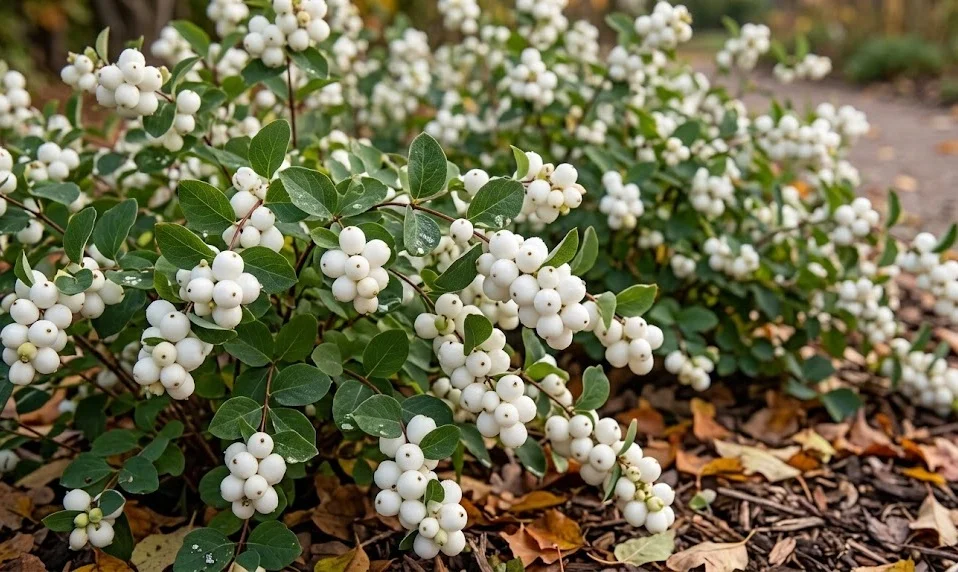
As autumn arrives, the focus shifts toward the spectacular berry display and preparing the plant for the coming dormancy. You should avoid heavy pruning at this time, as the berries are the main attraction and provide food for local birds. The plant begins to slow its metabolic processes, and the foliage may take on subtle yellow or orange hues before falling. It is a time for observation and appreciation of the unique aesthetic that the snowberry brings to the late-season garden.
Winter is the time for structural assessment while the plant is dormant and its skeleton is fully visible. You can easily see the overall shape of the bush and identify any crossing or damaged branches that might need removal later. Protecting the roots with a fresh layer of mulch before the ground freezes is a final act of care for the year. This dormant period is vital for the plant’s health, allowing it to rest and gather strength for the spring.
Enhancing ornamental value
The primary reason many people choose the snowberry is for its unique and striking white fruits that persist into the winter. You can enhance this feature by ensuring the plant has the right balance of nutrients and light during the flowering phase. Healthy flowers lead to a higher quantity of berries, creating that dense, clustered look that is so highly prized in landscape design. Strategic placement in the garden can also highlight the contrast between the white berries and darker evergreen backdrops.
Pairing the snowberry with appropriate companion plants can elevate the visual impact of the entire garden area. You should consider plants with interesting autumn foliage or those that provide a structural contrast to the arching stems of the snowberry. For example, planting it near dark-leaved shrubs makes the bright white berries stand out even more vividly. Creating these visual layers adds depth and professional polish to your outdoor spaces.
Maintaining a pleasing shape through light pruning also contributes to the ornamental appeal of the shrub. You should aim for a natural, flowing form rather than a strictly formal or sheared appearance, as this suits the plant’s character. Removing old, unproductive wood allows the younger, more vibrant stems to take center stage and produce the best fruit. A well-pruned snowberry looks intentional and cared for without appearing overly manipulated or unnatural.
The way you group these shrubs can also change the decorative feel of your property significantly. You might choose to plant them in a row to create a loose, informal hedge that provides seasonal interest. Alternatively, using a single specimen as an accent in a mixed border can draw the eye toward a specific part of the garden. Thinking about the scale and proportion of the plant relative to its surroundings is key to maximizing its beauty.
Wildlife and ecological benefits
One of the most rewarding aspects of caring for a snowberry is seeing the variety of wildlife it attracts to your garden. You will notice that many species of birds rely on the berries as a food source during the late autumn and winter months. While the berries are not the first choice for all birds, they become essential when other food sources are scarce. Providing this habitat is a wonderful way to support local biodiversity and enjoy nature up close.
The small flowers produced in the summer are surprisingly attractive to bees, butterflies, and other essential pollinators. You can often hear the gentle hum of activity around the bush on a warm afternoon when the nectar is most abundant. These insects play a vital role in the health of your entire garden, and the snowberry provides them with a reliable food source. Supporting pollinators is an important part of responsible and ecological gardening in the modern world.
Dense growth within the center of the shrub offers excellent nesting sites and cover for smaller bird species. You are likely to find that robins or finches appreciate the protection from predators provided by the tangled branches. The shelter is also useful during heavy rain or wind, giving birds a safe place to wait out the weather. Creating a garden that functions as a sanctuary for wildlife adds a deeper layer of satisfaction to your hobby.
The roots of the snowberry are also effective at stabilizing soil and preventing erosion on sloped areas of your property. You can use the plant’s natural spreading habit to your advantage if you have a challenging hillside that needs coverage. This ecological function helps protect the integrity of your landscape while adding beauty at the same time. It is a hardworking plant that provides numerous environmental services with very little demand for help.
Common growth challenges
While the snowberry is generally easy to grow, you may occasionally encounter challenges like excessive spreading through suckers. You should be prepared to manage these new shoots if you want to keep the plant contained within a specific area. Simply digging up the unwanted suckers as they appear is usually enough to maintain the desired footprint. Understanding the plant’s natural tendency to colonize will help you manage your garden space more effectively.
Sometimes the shrub may experience a lack of berry production, which can be frustrating for those seeking its ornamental fruits. You should investigate whether the plant is receiving too much nitrogen, which often encourages leaf growth at the expense of flowers. Another possibility is that the plant is too old and needs a rejuvenation prune to stimulate the growth of new, productive wood. Identifying the root cause of the problem is the first step toward finding a professional solution.
In very dense plantings, poor air circulation can lead to minor issues with the foliage, such as spotting or premature dropping. You can alleviate this by thinning out some of the older stems to let more wind and light reach the interior of the bush. This simple act of maintenance often resolves the issue without the need for chemical interventions or treatments. Keeping the plant open and airy is a fundamental principle of good shrub management and long-term health.
Yellowing leaves during the middle of the growing season might indicate that the soil is either too wet or lacking in iron. You should check the moisture levels at the root zone to see if the drainage has become blocked or if the area is being overwatered. If the soil is fine, a light application of a balanced fertilizer with micronutrients may be necessary to restore the green color. Monitoring the foliage carefully allows you to respond to these signals before the plant becomes weakened.
Long-term health strategies
To ensure your snowberry remains healthy for decades, you should adopt a long-term strategy that focuses on soil health and structural renewal. You can achieve this by periodically adding organic matter to the surface of the soil to maintain a rich environment for the roots. This gradual enrichment mimics the natural forest floor and provides a steady supply of nutrients over many years. Thinking ahead about the needs of the plant will prevent it from becoming exhausted as it matures.
A major component of long-term success is the practice of rejuvenation pruning every few years to keep the shrub young. You should aim to remove about a third of the oldest stems right down to the ground level during the dormant season. This encourages the plant to send up fresh, vigorous shoots that will provide the best foliage and berries in the following seasons. Rotating which stems are removed ensures that the bush always has a mix of ages and remains structurally sound.
Observing the overall health of the garden ecosystem will also help protect your snowberry from future problems. You should encourage natural predators like ladybugs and lacewings, which help keep the populations of common garden pests in check. A balanced garden with a variety of plant species is less likely to suffer from major outbreaks of any single pest or disease. Building a resilient environment is the most sustainable way to manage your landscape over the long term.
Finally, keep a simple record of your gardening activities and how the snowberry responds to different treatments. You might note the dates of the first berries or how the plant reacted to a particularly dry summer or cold winter. This personal knowledge becomes an invaluable resource that helps you make better decisions for your garden in the future. Becoming an expert on your own specific patch of land is a rewarding journey that starts with careful observation.