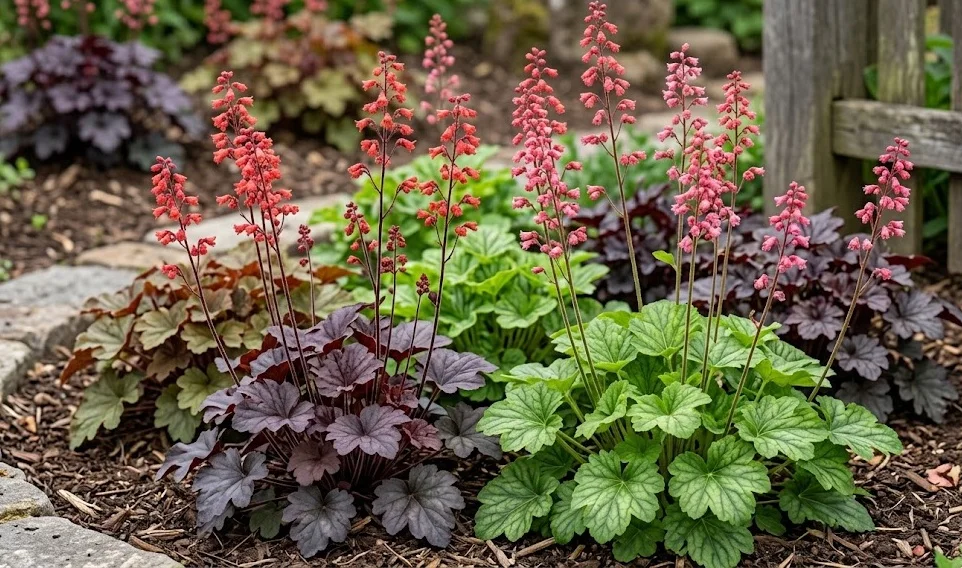

Coral bells are generally dependable perennials, but they can suffer when growing conditions are stressful or poorly balanced. Most problems begin with excess moisture, poor air circulation, drought stress, or weakened crowns. Pests may also appear, especially where plants are crowded, overfed, or growing in containers. Early recognition and careful cultural prevention are more effective than repeated emergency treatments.
Crown and root problems
Crown rot is one of the most serious issues affecting coral bells. It often develops when the crown sits too deep, remains wet, or is covered by mulch. Affected plants may collapse suddenly, and the base can feel soft or discolored. Prevention begins with correct planting depth and free-draining soil.
Root rot can occur in heavy, compacted, or waterlogged soil. The plant may yellow, wilt, or fail to produce strong new leaves. Because the symptoms can resemble drought stress, checking the soil is essential. If the soil smells sour or remains wet for days, drainage is likely part of the problem.
Frost heaving can indirectly contribute to crown damage. During freeze-thaw cycles, shallow-rooted plants may be pushed upward from the soil. Exposed crowns and roots then dry out or become injured. A light winter mulch around, but not over, the crown helps moderate soil movement.
If rot is detected early, healthy sections may sometimes be saved. The plant should be lifted, and soft or diseased tissue removed with clean tools. Firm, healthy divisions can be replanted in fresh, better-drained soil. Severely rotted plants are usually best discarded to protect nearby specimens.
More articles on this topic
Fungal leaf diseases
Leaf spots may appear on coral bells during damp, humid, or overcrowded conditions. They can show as brown, black, or tan marks on the foliage. While minor spotting is often cosmetic, severe infection weakens the plant and reduces ornamental value. Good spacing and clean maintenance reduce the risk.
Powdery mildew can occur when air circulation is poor and plants are stressed. It appears as a pale, powdery coating on leaves and can distort new growth. Although coral bells are not the most mildew-prone perennials, susceptible varieties may suffer in unfavorable sites. Avoiding overhead watering helps limit disease development.
Removing infected leaves is a practical first step. The material should not be left around the crown, because it may harbor spores. Clean pruning improves appearance and reduces disease pressure. Tools should be cleaned if cutting many affected plants.
Fungicides are rarely necessary in well-managed garden plantings. Cultural correction is usually more important than spraying. Improving light, spacing, watering method, and soil drainage often solves the underlying problem. A plant repeatedly affected in the same position may need relocation.
More articles on this topic
Vine weevils and root-feeding pests
Vine weevils can be troublesome for coral bells, especially in containers. Adult insects notch the leaf edges, leaving a distinctive scalloped pattern. The more damaging stage is the larva, which feeds on roots below the soil. A plant may suddenly wilt or detach easily from the potting mix when roots have been eaten.
Container plants should be inspected if they decline without an obvious watering issue. Turning the pot out carefully may reveal pale, curved larvae in the compost. Root damage can be severe before the gardener notices adult feeding marks. Early detection is therefore important.
Biological controls can be useful where vine weevils are persistent. Beneficial nematodes are often applied to moist soil when temperatures are suitable. They target larvae in the root zone and are especially practical in pots. Timing and soil moisture are critical for successful use.
Good hygiene also helps reduce pest pressure. Old potting mix from infested containers should not be reused around susceptible plants. Pots should be cleaned before replanting. Healthy, vigorous coral bells recover better from minor root feeding than stressed specimens.
Slugs, snails, and sap-feeding insects
Slugs and snails may damage young leaves, especially in damp shade. They often chew irregular holes and can spoil fresh spring growth. Mature coral bells are usually less attractive than softer plants, but tender new foliage remains vulnerable. Reducing hiding places around the crown can limit damage.
Hand-picking, barriers, and wildlife-friendly controls can be effective in small gardens. Watering in the morning rather than evening makes the area less inviting overnight. Dense mulch directly against the plant should be avoided. A clean, open crown area discourages many moisture-loving pests.
Aphids occasionally gather on flower stems or tender shoots. They feed on sap and may cause curling or sticky residue. Small populations can be washed off or removed by pruning affected stems. Encouraging beneficial insects often keeps aphids below damaging levels.
Spider mites may appear in hot, dry conditions, particularly on stressed container plants. Leaves can look dull, speckled, or dusty. Increasing humidity around the plant’s environment and improving watering can reduce mite pressure. Severely affected leaves should be removed to encourage fresh growth.
Preventive plant health management
The healthiest coral bells are grown in the right site from the beginning. Good drainage, moderate moisture, and suitable light reduce most disease and pest problems. A plant struggling in the wrong position will always need more intervention. Prevention is both easier and more reliable than rescue.
Regular inspection is part of professional care. Looking beneath leaves, checking the crown, and observing new growth can reveal problems early. Many issues are manageable when detected before they spread. A few minutes of attention during routine watering can prevent major losses.
Avoid excessive fertilization because lush, soft growth attracts pests and disease. Balanced nutrition creates firmer leaves and stronger crowns. Plants that grow steadily rather than rapidly are usually more resilient. This is especially important for ornamental foliage varieties.
When replacing a diseased plant, improve the site before replanting. Simply putting a new coral bells plant into the same poor conditions may repeat the problem. Add drainage material, adjust planting depth, or choose a more suitable exposure. Long-term success depends on correcting causes, not only symptoms.