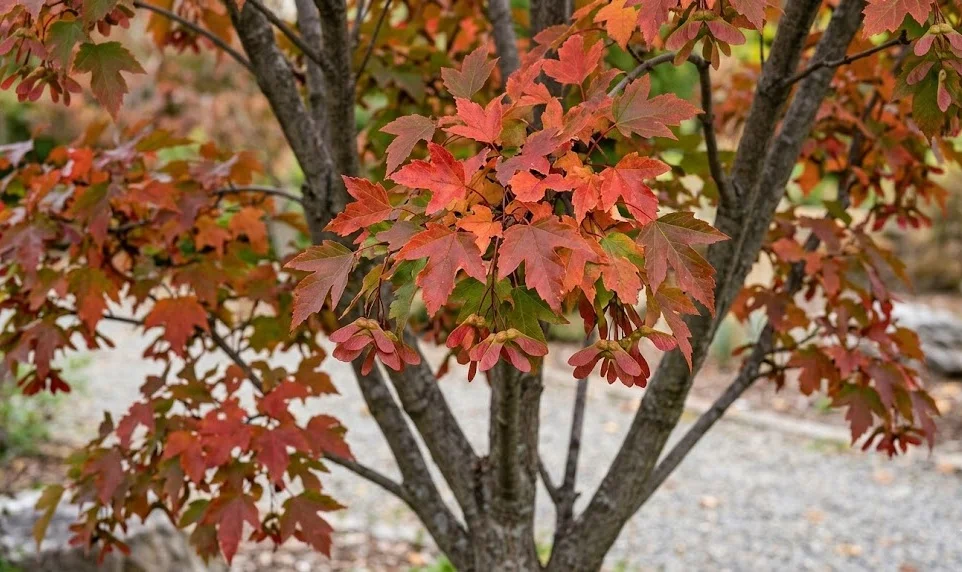

Pruning Amur maple should enhance its natural structure rather than force it into an artificial shape. The plant can be grown as a multi-stemmed shrub, a small tree, or a dense informal hedge, and each form requires a slightly different approach. Correct pruning improves air movement, removes weak branches, and preserves the elegant habit that makes the species valuable in gardens. Cutting back should be measured, because severe pruning can reduce beauty and encourage congested regrowth.
Timing and pruning goals
The best time for most pruning is late winter or early spring before strong new growth begins. At this stage, the branch structure is visible and decisions are easier to make. The plant is also ready to respond with new growth as the season starts. Dead, broken, or hazardous branches can be removed whenever they are noticed.
Pruning goals should be clear before any cut is made. The gardener may want to improve structure, raise the crown, reduce crossing branches, or maintain a hedge. Random cutting often produces an uneven plant and unnecessary wounds. Every cut should have a purpose.
Young plants benefit from light formative pruning. Early correction of weak forks and poorly placed shoots prevents larger problems later. It is better to guide the structure gradually than to repair a neglected plant with heavy cuts. This creates a stronger, more graceful framework.
Mature plants need less frequent but more thoughtful pruning. Large cuts should be avoided unless they are truly necessary. Removing too much canopy at once can stress the plant and spoil its natural form. A conservative approach usually produces the best long-term result.
More articles on this topic
Pruning shrubs, trees, and hedges
A shrub-form Amur maple should retain its natural multi-stemmed character. Pruning should remove dead wood, crowded interior branches, and shoots that rub against each other. Some of the oldest stems may be removed near the base if renewal is needed. This allows younger stems to develop without destroying the overall shape.
Tree-form specimens require gradual crown lifting and structural selection. Lower branches can be removed over several years to expose the trunk. Competing leaders should be corrected early to create a stable crown. The final form should look natural, not abruptly stripped.
Hedge-grown Amur maple can be trimmed more regularly. Even so, an informal shape is healthier than a rigid wall of foliage. The hedge should be slightly wider at the base than at the top so lower leaves receive light. This prevents bare lower sections and keeps the hedge dense.
Cutting tools must be sharp and clean. Ragged cuts heal poorly and invite decay. Hand pruners, loppers, and pruning saws should be matched to branch size. For larger limbs, proper cut placement is essential to protect the branch collar.
More articles on this topic
Cutting back and renovation
Severe cutting back should be used only when necessary. Amur maple can respond with vigorous shoots, but the result may be coarse and crowded. Hard renovation also reduces flowers, seeds, and autumn display for a time. It is better to spread major correction over several seasons.
If a neglected shrub needs renewal, older stems can be removed gradually. Taking out one-third of the oldest stems in a season is often safer than cutting everything down. This keeps enough foliage to support the root system. New shoots can then be selected and trained as they develop.
After storm damage, pruning should focus on safety and clean recovery. Broken branches should be cut back to sound wood or suitable junctions. Torn bark should be trimmed carefully without enlarging the wound unnecessarily. The plant should then be monitored during the growing season.
Post-pruning care is simple but important. The plant should have adequate moisture, mulch, and protection from further stress. Heavy fertiliser is not needed after pruning and may cause excessive soft growth. With careful cutting and steady care, Amur maple maintains its strength, form, and ornamental value.