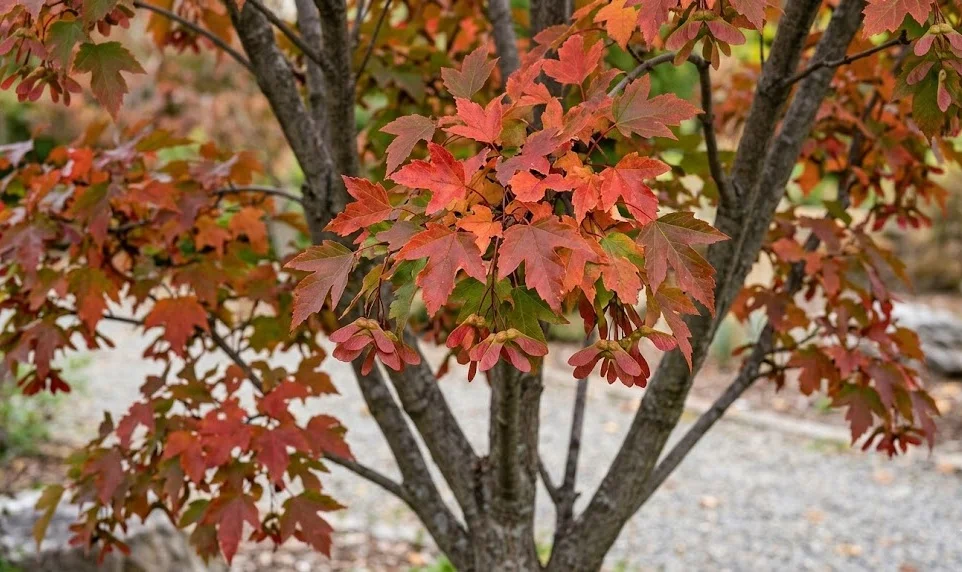

Amur maple develops its best shape, density, and autumn colour when light conditions are chosen carefully. It can tolerate partial shade, but its famous red foliage is strongest when the plant receives generous sunlight. Too much shade makes the crown looser, reduces flowering and seed production, and weakens seasonal colour. At the same time, very hot exposed sites may require careful watering to prevent leaf scorch.
Full sun and autumn colour
Full sun is ideal in many temperate gardens. A site with at least six hours of direct light usually produces dense growth and stronger autumn colour. The leaves receive enough energy to build carbohydrates, which supports both growth and colour development. This is why sunny specimens often look more vibrant in autumn.
Sunlight also affects the shape of the crown. In bright conditions, the plant tends to branch more evenly and form a fuller outline. Shoots are usually sturdier, and the plant is less likely to stretch toward light. This creates a more compact and attractive garden form.
Autumn colour still depends on more than light alone. Moisture, temperature, soil health, and plant genetics all influence the final display. A sunny plant under drought stress may colour poorly or drop leaves early. The best results come from combining good light with consistent root care.
In cooler climates, full sun is usually beneficial throughout the growing season. The plant can use the light without suffering excessive heat stress. In warmer regions, however, afternoon sun may be harsh during summer. Local climate should always guide the final site choice.
More articles on this topic
Partial shade and garden placement
Amur maple can grow successfully in partial shade. Morning sun with afternoon shade is often suitable in hot or dry gardens. This exposure gives the plant enough light for healthy growth while reducing heat stress. It can be especially useful near patios, walls, and reflective surfaces.
Light shade beneath high trees may also be acceptable. The canopy above should be open enough to allow filtered light through the day. Dense shade from buildings or evergreen trees is less suitable. In deep shade, the plant becomes sparse and less colourful.
Partial shade can slightly reduce autumn intensity. The colour may shift toward yellow, orange, or muted red rather than brilliant scarlet. This does not necessarily make the plant unattractive, but expectations should be realistic. Garden design should place it where its seasonal qualities can still be appreciated.
Competition is another issue in shaded sites. Large trees can take water and nutrients from the soil, leaving the maple stressed. If planted near established roots, the young Amur maple needs extra watering during establishment. Mulch is especially helpful in these situations.
More articles on this topic
Managing light-related stress
Leaf scorch can occur when strong sun combines with drought, wind, or restricted roots. The edges of leaves may turn brown, and the canopy may look tired by late summer. This does not always mean the plant receives too much light. Often it means the roots cannot supply enough water for the exposure.
Improving the root zone can reduce light stress. Deep watering, organic mulch, and reduced grass competition help the plant cope with sunny conditions. Soil compaction should be corrected where possible. Healthy roots allow the foliage to use sunlight without excessive damage.
Young plants may need temporary protection after planting. A newly planted specimen moved from nursery conditions into intense sun can wilt or scorch. Careful watering is usually enough, but temporary shade may help during extreme heat. Once established, the plant normally becomes more tolerant.
The best light placement balances beauty and resilience. For the strongest colour, choose sun or light shade. For hot gardens, protect the plant from the harshest afternoon exposure. When light, water, and soil are considered together, Amur maple becomes a dependable and colourful landscape plant.