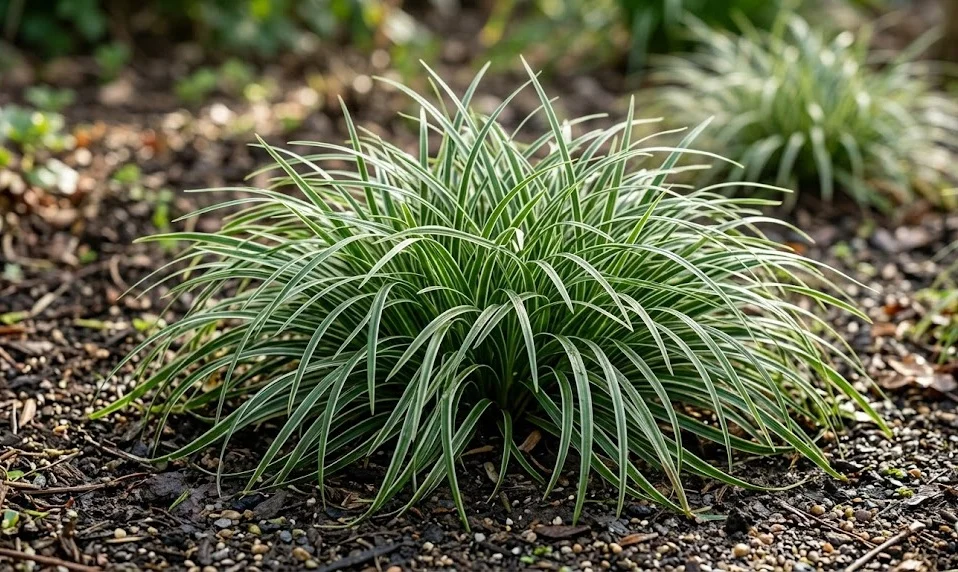

Watering and fertilizing japanese sedge are two fundamental tasks that dictate how well the plant will maintain its lush appearance throughout the year. Because this species is naturally found in moist woodland environments, it has a physiological requirement for consistent hydration that many other grasses do not. You must find a balance that keeps the soil moist without creating the soggy, anaerobic conditions that lead to root decay and overall decline. A thoughtful approach to these two aspects of care will ensure your garden stays vibrant even during the most challenging seasons.
The primary rule for watering this sedge is to maintain a steady level of moisture in the root zone, especially during the active growing periods. You should check the soil regularly by inserting your finger a few centimeters into the ground to feel the actual moisture content. If the top layer feels dry to the touch, it is time to provide a deep and thorough soaking that reaches the entire root system. Consistency is more important than volume, as the plant reacts poorly to the stress of swinging between extreme dryness and extreme wetness.
Watering should ideally be done in the early morning hours to allow the foliage to dry before the cooler evening temperatures arrive. Applying water directly to the base of the plant is better than using overhead sprinklers, as it delivers the moisture exactly where the roots can access it. This method also keeps the leaves dry, which is a proactive way to prevent the development of fungal diseases that thrive on wet foliage. If you use an automated system, ensure it is calibrated to the specific needs of the shaded areas where these sedges typically grow.
During periods of high heat or drought, you may need to increase the frequency of your watering routine to compensate for the higher evaporation rates. Even in the shade, the air can become dry enough to pull moisture out of the leaves faster than the plant can replenish it from the soil. You should watch for a slight loss of luster or a subtle curling of the leaf blades, which are the plant’s first signals that it is thirsty. Acting quickly on these signs will prevent the more permanent damage of leaf tip browning that occurs during severe water stress.
Soil moisture management and mulch applications
Managing soil moisture is not just about adding water; it is also about keeping the water you have already applied from escaping into the atmosphere. The use of organic mulch is perhaps the most effective tool you have for regulating the hydrological environment around your japanese sedge. A layer of mulch five to eight centimeters thick acts as a physical barrier that slows down evaporation and keeps the soil temperature stable. This insulation is particularly valuable during the summer months when the sun can quickly bake the ground, even in partially shaded areas.
More articles on this topic
The choice of mulch can affect the soil chemistry and the way water penetrates the ground over the long term. Shredded leaves or well-aged wood chips are excellent choices because they break down slowly and contribute valuable organic matter to the soil. You should avoid using non-porous materials like plastic or heavy stones, as these can trap heat and prevent the soil from “breathing.” Organic mulches also encourage the presence of earthworms, which create small tunnels that improve water infiltration and aeration within the root zone.
You must be careful to keep the mulch a small distance away from the actual crown of the plant to prevent moisture from being trapped against the stems. If the mulch is piled directly against the base, it can create a humid environment that encourages crown rot or provides a hiding place for slugs. A small “donut” of clear space around the center of the clump allows for better air circulation and keeps the most sensitive parts of the plant dry. This simple adjustment to your mulching technique can save the plant from many common moisture-related health problems.
In garden beds with multiple plants, the collective shade provided by the foliage also helps to maintain soil moisture levels. You will find that as your sedges grow and the mounds begin to touch, the ground beneath them stays damp for much longer than in open areas. This natural canopy effect reduces the overall workload for the gardener and creates a more self-sustaining ecosystem within the garden. Strategic planting that utilizes this principle is a key component of an efficient and water-wise landscape design.
Nutritional requirements for ornamental sedges
Japanese sedge is not a heavy feeder, but it does benefit from a modest amount of supplemental nutrition to maintain its vibrant color and growth. The best way to provide these nutrients is through the regular addition of high-quality organic matter to the soil surface. This slow-release method mimics the natural forest floor, where falling leaves and decaying wood provide a steady stream of minerals. You will find that plants grown in nutrient-rich soil are more resilient to stress and have a much better aesthetic quality overall.
More articles on this topic
If you choose to use a commercial fertilizer, a balanced, slow-release granular formula is usually the best option for ornamental grasses and sedges. You should look for a product with an even ratio of nitrogen, phosphorus, and potassium, such as a standard 10-10-10 or 14-14-14 blend. Applying this fertilizer once in the early spring, just as the new growth begins to appear, is typically enough for the entire year. Avoid high-nitrogen fertilizers that are designed for turf grass, as these can cause the sedge to grow too quickly and become weak.
The application of fertilizer should always be followed by a thorough watering to help the nutrients dissolve and move into the root zone. You should scatter the granules evenly around the base of the plant, being careful not to let them collect in the center of the foliage. Granules that get caught in the leaves can cause chemical burns, especially if they become wet and then sit on the plant tissue. Precision during the application process ensures that the plant gets all the benefits of the fertilizer without any unnecessary risks.
In many cases, a simple top-dressing of compost or leaf mold in the spring is all the fertilization your japanese sedge will ever need. This approach not only provides the necessary minerals but also improves the overall soil structure and enhances its ability to hold water. Using compost is also a more sustainable choice that supports the long-term health of the entire garden ecosystem. You will notice that plants fed with organic matter often have a deeper green color and a more robust growth habit than those fed solely with synthetic chemicals.
Recognizing and correcting nutrient imbalances
Observing the color and texture of the leaves can give you valuable clues about the nutritional status of your japanese sedge. If the foliage starts to look pale or yellowish, it may be a sign of a nitrogen deficiency or a pH imbalance that is locking up available nutrients. You should first check the soil pH to ensure it falls within the preferred range of 6.0 to 7.0 for this species. If the pH is correct but the plant is still pale, a light application of a liquid seaweed or compost tea can provide a quick nutritional boost.
Conversely, an overabundance of nutrients can lead to problems that are just as serious as a lack of food. Too much nitrogen can result in lush, soft growth that is highly attractive to aphids and other sap-sucking insects. It can also make the plant more susceptible to fungal diseases because the cell walls of the new leaves are thinner and easier for pathogens to penetrate. If you notice that your sedge is growing at an unusual rate but looks weak or “floppy,” you should stop all fertilization for at least one full growing season.
Iron deficiency can sometimes occur in alkaline soils, manifesting as yellowing between the veins of the leaves while the veins themselves stay green. You can correct this issue by using a chelated iron supplement or by working some elemental sulfur into the soil to lower the pH over time. It is important to make these adjustments gradually, as sudden shifts in soil chemistry can be stressful for the plant. A slow and steady approach to correcting imbalances is always the safest path for the health of the sedge.
Regularly testing your soil is the most scientific way to manage the fertilization needs of your garden without any guesswork. A professional soil test will tell you exactly what minerals are missing and whether your current maintenance routine is effective. You should aim to test the soil every three to five years to track changes and adjust your fertilization strategy accordingly. This data-driven approach saves you money on unnecessary fertilizers and prevents the buildup of harmful salts in the soil environment.
Seasonal variations in watering and feeding
Your approach to watering and fertilizing must change as the seasons progress to match the plant’s metabolic rate and the local weather. In the spring, the focus is on supporting new growth with consistent moisture and the year’s primary application of nutrients. This is the time when the plant’s energy demands are at their highest as it produces fresh leaves and expands its root system. You should be proactive with watering during any dry spells in the spring to ensure the growth cycle is not interrupted by stress.
As the summer heat intensifies, the goal of watering shifts from supporting growth to ensuring survival and maintaining foliage quality. You will likely find that the plant needs more frequent attention during July and August, even if it is located in a deeply shaded spot. You should avoid any heavy fertilization during the peak of summer, as the plant is already dealing with heat stress and doesn’t need the extra burden of forced growth. Simply keeping the root zone moist and the mulch intact is the most important task during this demanding time of year.
In the autumn, as the temperatures drop and the days shorten, the plant’s water requirements will naturally begin to decrease. You should gradually reduce the frequency of your watering sessions to allow the plant to prepare for the cooler winter months. This is also the time to stop all fertilization entirely, as you do not want to encourage new, tender growth that could be damaged by the first frosts. A slow transition into the dormant period helps the plant harden off its tissues and store energy in its roots for the following spring.
Winter watering is only necessary if you live in a region where the ground does not freeze and there is an extended period without rain. Because the sedge is evergreen, it continues to lose a small amount of moisture through its leaves even during the coldest months. If the soil becomes bone-dry during a winter drought, a light watering on a relatively warm day can prevent the roots from desiccating. However, in most temperate climates, the natural precipitation during winter is more than sufficient to keep the sedge healthy until spring returns.