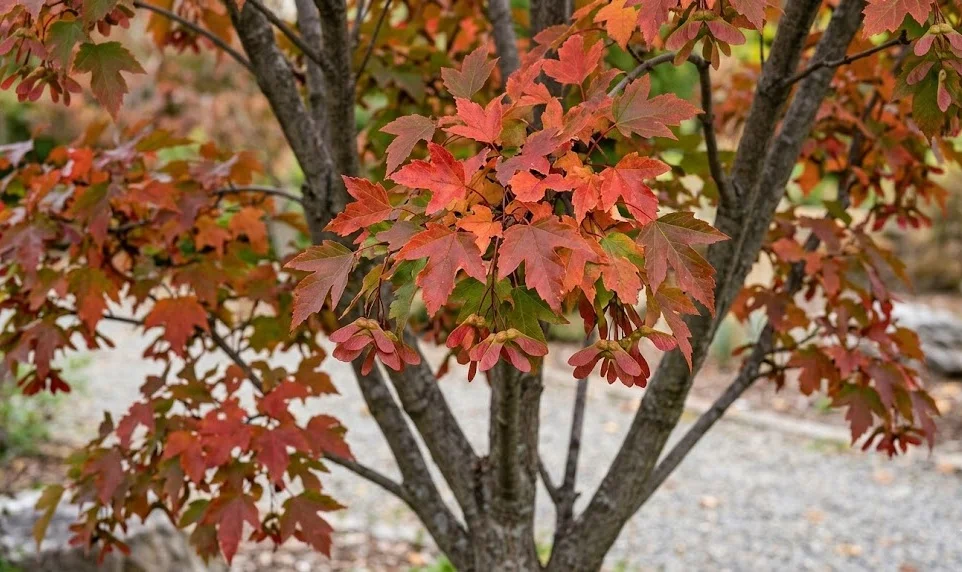

Amur maple is generally a robust ornamental plant, but it can still suffer from diseases, pests, and stress-related disorders when growing conditions are poor. Many problems begin with drought, compacted soil, excessive shade, or weak air circulation rather than with a pathogen alone. Accurate diagnosis is important because the wrong treatment can waste time and make the plant weaker. Healthy soil, correct watering, and regular inspection remain the most reliable forms of protection.
Common disease problems
Leaf spots can appear on Amur maple during wet or humid periods. These spots may be brown, black, or tan, and they often develop first on older or shaded leaves. In many cases, leaf spots are mostly cosmetic and do not seriously harm a strong plant. However, repeated severe infections can reduce vigour over time.
Powdery mildew may develop when air circulation is poor and nights are humid. It appears as a pale, powdery coating on the leaf surface. Although it rarely kills the plant, it can reduce photosynthesis and spoil the appearance of the foliage. Better spacing, selective thinning, and avoiding overhead watering can reduce the risk.
Verticillium wilt is a more serious concern in maples. This soil-borne disease can cause sudden wilting, branch dieback, and uneven decline. Infected branches may show discoloured streaking in the wood when cut. There is no simple cure, so prevention and good plant health are essential.
Canker diseases may affect stressed branches or damaged bark. They often appear as sunken, cracked, or dead areas on stems and branches. Cankers are more likely after drought, frost injury, poor pruning, or mechanical damage. Removing affected wood and improving growing conditions can limit spread.
More articles on this topic
Pest issues to watch for
Aphids may feed on young shoots and tender leaves in spring or early summer. They suck sap and can cause curling, sticky honeydew, and sooty mould. Light infestations are often controlled naturally by ladybirds, lacewings, and other beneficial insects. Strong chemical treatment is rarely needed for minor populations.
Scale insects can be more persistent because they attach to stems and feed under protective coverings. Infested branches may become weak, and sticky honeydew may appear nearby. Dormant-season inspection helps detect scale before populations build. Horticultural oil may be useful when applied at the correct stage.
Spider mites can become troublesome during hot, dry weather. They cause fine speckling, dull foliage, and sometimes delicate webbing on leaves. Drought-stressed plants are more vulnerable to mite outbreaks. Improving moisture conditions and washing foliage with water can reduce pressure.
Borers may attack weakened or damaged trees. Their larvae tunnel into stems or branches, disrupting water and nutrient movement. Symptoms can include branch dieback, holes in the bark, sawdust-like frass, or sudden decline. Keeping the plant vigorous is the best protection against serious borer damage.
More articles on this topic
Stress disorders and misdiagnosis
Not every problem on Amur maple is caused by a pest or disease. Leaf scorch is common during drought, heat, wind, or root restriction. It usually appears as browning along leaf edges or between veins. Treating scorch with pesticides will not help because the cause is environmental stress.
Nutrient deficiency symptoms can also be misleading. Pale leaves may result from high soil pH, poor root growth, waterlogging, or compacted soil. Before fertilising heavily, the root environment should be checked. A soil test can be useful when symptoms persist without an obvious cause.
Early leaf drop often reflects accumulated stress. Dry soil, heat, pest feeding, disease, or transplant shock can all contribute. The timing and pattern of leaf fall help with diagnosis. A plant that drops leaves in late summer after drought may simply be protecting itself.
Mechanical damage should not be overlooked. Lawn equipment can injure bark near the base, opening entry points for decay and disease. Broken branches from wind or snow can also become infection sites. Protective mulch rings and careful pruning reduce these preventable problems.
Prevention through cultural care
Good spacing is an important preventive measure. Dense planting traps humidity and slows leaf drying after rain. Amur maple grows healthier when air moves freely through and around the crown. Selective thinning can improve conditions without destroying the natural shape.
Watering practices strongly influence disease risk. Deep watering at soil level is preferable to frequent overhead irrigation. Wet foliage, especially late in the day, can encourage leaf diseases. Keeping moisture in the soil rather than on the leaves supports both roots and canopy health.
Sanitation also matters in professional garden care. Fallen diseased leaves should be collected and removed from the site. Pruned infected branches should not be left under the plant. Clean tools should be used when removing diseased wood, especially between cuts on suspicious branches.
Plant vigour is the best defence against many problems. A well-watered, properly mulched, correctly planted Amur maple can tolerate minor pest feeding and recover from light disease. Stressed plants, by contrast, often develop repeated issues. Prevention is usually easier and more effective than rescue treatment.
Treatment and recovery
When disease or pest symptoms appear, the first step is careful identification. The pattern of damage, timing, weather, and plant history all provide clues. Random spraying should be avoided because it can harm beneficial insects and fail to address the real cause. Diagnosis should always come before treatment.
Pruning is useful when branches are dead, badly diseased, or structurally compromised. Cuts should be made back to healthy wood or to an appropriate branch junction. Dead material can be removed at any time, but major shaping is best done during dormancy. Diseased material should be disposed of responsibly.
Biological balance should be protected wherever possible. Beneficial insects often control aphids, mites, and small pest populations naturally. Broad-spectrum insecticides can disrupt this balance and cause secondary outbreaks. Targeted, minimal intervention is usually more sustainable.
Recovery depends on correcting the underlying stress. A plant weakened by drought needs water management, not only pest control. A plant suffering from compaction needs soil improvement and protection from traffic. When care focuses on root health and growing conditions, Amur maple often regains strength over several seasons.