
The Indian pokeweed is a striking perennial that brings a touch of the exotic to any temperate garden with its lush foliage and dark berries. While it is often appreciated for its vigorous growth and ornamental appeal, maintaining this plant requires a nuanced understanding of its specific biological needs throughout the growing season. As a gardener, you must balance its desire for expansion with the practical limitations of your landscape to ensure it remains a highlight rather than a nuisance. Successful care involves monitoring soil conditions, managing height, and ensuring the plant has enough resources to produce its characteristic upright flower spikes.
General maintenance and growth habits
Understanding the growth cycle of this perennial is the first step toward successful cultivation in a domestic or agricultural setting. It typically emerges in late spring, rapidly developing thick, succulent stems that can reach impressive heights in a very short amount of time. You will notice that the plant puts a significant amount of energy into its broad, lance-shaped leaves, which provide a dense green backdrop for the later flowers. Keeping a close eye on this initial growth phase allows you to predict how much space the plant will ultimately occupy.
The structural integrity of the plant is generally high, but its rapid growth can sometimes lead to heavy stems that might lean after heavy rains. You should observe the central stalk for any signs of splitting or instability as the season progresses into the summer months. Providing a bit of sheltered space can help protect the large leaves from being torn by high winds, which often happen during summer storms. If the plant is grown in a high-traffic area, you might need to consider its spread to ensure it does not obstruct paths.
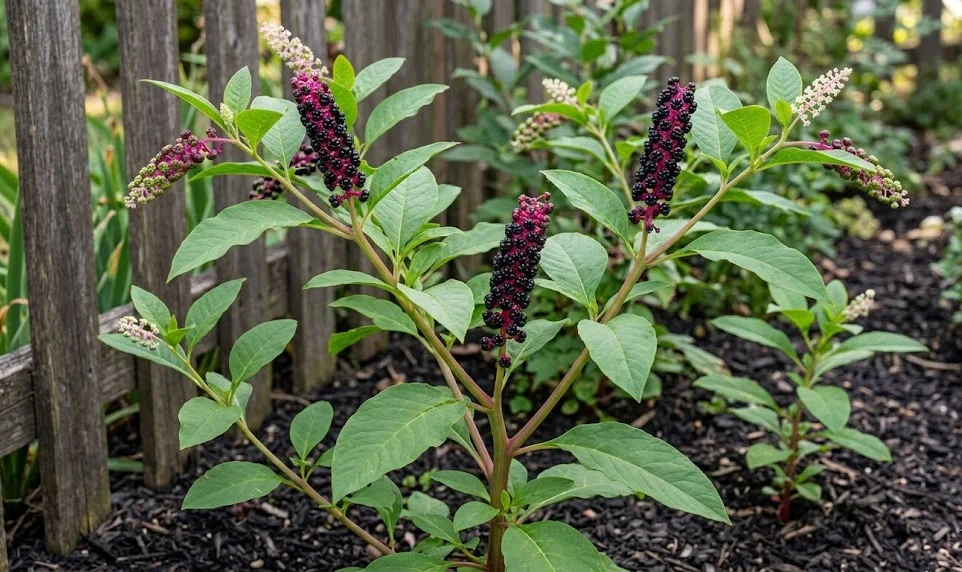
Aesthetic management is another key component of caring for this species, especially when the berries begin to form in late summer. These berries transition from green to a deep, glossy purple-black, creating a visual feast that lasts well into the autumn. However, you should be aware that these berries are heavy and can cause the outer branches to bow toward the ground. Regular observation helps you decide if the plant needs physical support or if the natural drooping adds to its rustic charm.
Finally, long-term care involves recognizing that this plant is a long-lived perennial with a substantial taproot system. Each year, the root system becomes more established, leading to even more vigorous growth in subsequent seasons. You should plan your garden layout with this permanence in mind, as moving an established specimen can be quite difficult. Consistent care over the years will reward you with a magnificent architectural plant that returns reliably every spring.
More articles on this topic
Soil quality and nutrient management
The foundation of a healthy Indian pokeweed lies in the quality of the soil where its deep taproot resides. This species thrives best in soil that is rich in organic matter and capable of retaining some moisture without becoming waterlogged. You should aim for a loamy texture that allows the roots to expand easily while providing the structural support needed for tall stems. Testing your soil pH can be helpful, as the plant prefers slightly acidic to neutral conditions for optimal nutrient uptake.
Organic amendments such as well-rotted compost or leaf mold can significantly improve the soil structure around your plants. Applying a layer of mulch in the spring helps to regulate soil temperature and keeps the root zone cool during the heat of July. This practice also prevents the soil from crusting over, which can hinder the emergence of new shoots from the crown. By maintaining a living soil environment, you encourage beneficial microbial activity that supports the plant’s overall vigor.
Nutrient availability is crucial during the peak growing months when the plant is producing its large leaves and flower racemes. While the Indian pokeweed is not an overly demanding feeder, it does respond well to a balanced supply of nitrogen, phosphorus, and potassium. You should avoid over-fertilizing with high-nitrogen products late in the season, as this can lead to soft, leggy growth that is more susceptible to frost damage. Instead, focus on building soil fertility over time through consistent organic additions.
Drainage is the final piece of the soil puzzle, as the fleshy roots can be prone to rot if kept in standing water. If your garden has heavy clay soil, you might consider planting on a slight mound or incorporating grit to improve aeration. Observe how the area behaves after a heavy downpour to ensure that water moves away from the crown within a reasonable timeframe. Proper drainage ensures that the plant remains healthy throughout the winter dormancy period when the roots are most vulnerable.
More articles on this topic
Managing the environmental footprint
One of the most important aspects of caring for Indian pokeweed is managing its potential to spread within your garden and beyond. The seeds are highly attractive to birds, which can lead to new seedlings appearing in unexpected locations far from the parent plant. You should be proactive in identifying and removing unwanted seedlings while they are still small and easy to pull. This prevents the plant from becoming invasive in areas where it was not intended to grow.
Controlling the seed production is a practical way to keep the plant’s environmental footprint in check without sacrificing its beauty. You can choose to remove the flower spikes once they have finished blooming but before the seeds have fully matured and hardened. This technique, known as deadheading, is particularly effective for those who want the architectural look of the plant without the risk of mass self-seeding. It also directs more of the plant’s energy back into the root system for next year’s growth.
The plant’s physical size also requires careful consideration of its impact on neighboring species in your garden beds. Because it grows so large and broad, it can easily shade out smaller perennials or delicate annuals if not positioned correctly. You should plan for a clearance zone around the plant to ensure that all members of your garden community receive adequate light and air circulation. Regular thinning of the outer leaves can also help mitigate competition for resources with nearby plants.
Understanding the toxicity of the plant is a critical part of responsible care, especially in family gardens or areas with pets. All parts of the Indian pokeweed, particularly the roots and mature berries, contain compounds that can be harmful if ingested. You should wear gloves when handling the plant, especially during pruning, to avoid any potential skin irritation from the sap. Educating yourself and others about the plant’s properties ensures a safe and enjoyable gardening experience for everyone involved.
Seasonal transition and observation
As the growing season moves from the heat of summer into the cooler days of autumn, the Indian pokeweed undergoes visible changes. You will see the stems often take on a reddish or purplish hue, which adds another layer of interest to the late-season landscape. This is the time to observe the plant for any signs of stress that might have accumulated during the peak summer months. Addressing these issues now can help the plant prepare for its upcoming period of winter rest.
Autumn care focuses on preparing the plant for the end of its annual cycle and ensuring the site remains tidy. Once the first hard frost hits, the succulent foliage will typically collapse and turn brown, indicating that the plant is entering dormancy. You should decide whether to cut the stems back immediately or leave them for a bit of winter structure and bird food. Many gardeners prefer to clear the debris to prevent any lingering pests from overwintering in the dead material.
Keeping a gardening journal can be an invaluable tool for tracking the performance of your Indian pokeweed over several years. Note the dates when it first emerges, when it starts to flower, and when the berries reach their peak color. These observations help you fine-tune your care routine and anticipate the needs of the plant in future seasons. It also allows you to compare its growth with local weather patterns, providing insights into its resilience.
The transition to winter is a natural part of the plant’s life, and your care during this time is minimal but significant. Ensuring that the crown is protected and the soil is not overly saturated will set the stage for a successful spring. By respecting the natural rhythms of the plant, you create a sustainable environment where it can flourish. This holistic approach to care ensures that the Indian pokeweed remains a healthy and vibrant part of your horticultural collection.
Optimizing the aesthetic value
To truly appreciate the beauty of the Indian pokeweed, you should consider its placement as a focal point in the landscape. Its sheer size and architectural form make it an excellent candidate for the back of a border or as a standalone specimen. You can enhance its appearance by surrounding it with plants that offer contrasting textures, such as fine-leafed grasses or delicate ferns. This contrast highlights the bold, tropical look of the pokeweed’s foliage and stems.
Lighting also plays a significant role in how the plant is perceived throughout the day in your garden. When the low sun of late afternoon hits the translucent berries and stems, the plant can appear to glow from within. Positioning it where it can catch this “golden hour” light can transform a simple garden corner into a dramatic scene. You should experiment with different viewing angles to find the most visually impactful spot for your plant.
Color coordination within the garden can also elevate the status of the Indian pokeweed from a wild-looking plant to a curated masterpiece. The deep purple of the berries pairs exceptionally well with late-summer yellows and oranges, such as those found in Rudbeckia or Helenium. You can create a sophisticated palette by leaning into the dark tones of the stems and fruit. This intentional design approach ensures that the plant is integrated harmoniously into your overall garden vision.
Regular grooming is the final touch for maintaining a high aesthetic standard for your Indian pokeweed. This includes removing any yellowing lower leaves that might detract from the plant’s lush appearance as the season wears on. You should also check for any broken or damaged stems after storms and prune them back to maintain a clean silhouette. A little bit of attention to detail goes a long way in keeping the plant looking its best from spring through fall.
Long-term health strategies
Maintaining the long-term health of an Indian pokeweed involves more than just reactive care; it requires a proactive strategy. Every few years, you should assess the overall vigor of the plant and determine if the soil is becoming depleted. While the plant is hardy, it will eventually benefit from a fresh application of organic matter to keep the root environment healthy. Keeping the soil biology diverse and active is the best defense against long-term decline.
Root health is especially important for a perennial that relies so heavily on a central storage organ. Avoid digging too close to the base of the plant once it is established, as this can damage the crown and invite disease. If you notice a decrease in the number of stems or the size of the leaves, it may be a sign that the root system is struggling. Providing a consistent environment with minimal disturbance is key to the longevity of the specimen.
Water management over several years also contributes to the plant’s overall stamina and resistance to environmental stress. While the plant can tolerate short periods of drought once established, chronic water stress will weaken it over time. Developing a deep-watering routine that encourages roots to grow further into the subsoil will make the plant more resilient. This long-term approach to hydration pays off during exceptionally hot or dry summers.
Finally, staying informed about the local ecological status of the plant is part of a professional care routine. Check with local agricultural extensions to see if there are any emerging pests or diseases affecting the Phytolacca genus in your region. Being an informed gardener allows you to take preventative measures before a problem becomes widespread. Your commitment to ongoing education ensures that your garden remains a healthy and thriving ecosystem.
Professional tips for the home gardener
As a professional tip, always remember that the Indian pokeweed is a plant that rewards patience and observation. Do not be alarmed if it takes a year or two for a young plant to reach its full size and produce a significant crop of berries. The first few seasons are primarily focused on root development, which provides the foundation for the explosive growth seen later. Once the plant feels at home, it will quickly become a dominant and impressive feature.
One clever trick for managing the plant’s height is to perform a light pruning in early summer if you find it is growing too tall for its space. This can encourage a slightly more branched and compact habit, though it may delay flowering by a week or two. However, for most enthusiasts, the natural towering height of the plant is its most desirable trait. Balancing the natural form of the plant with the constraints of your garden is an art in itself.
If you are interested in using the plant for floral arrangements, the dark berries can be a stunning addition to late-season bouquets. Just be sure to handle the cut stems carefully to avoid staining your hands or clothing with the potent juice from the fruit. The stems should be placed in water immediately to prevent the large leaves from wilting, which they are prone to do once cut. These arrangements bring the unique beauty of the pokeweed from the garden into the home.
Lastly, consider the wildlife value of the Indian pokeweed as part of your broader gardening philosophy. While humans should avoid consuming the plant, many songbirds rely on the berries as a vital energy source before their autumn migration. Watching the birds feast on the dark fruit adds an extra dimension of joy to the gardening experience. By caring for this plant, you are supporting a small but important part of the local biological network.