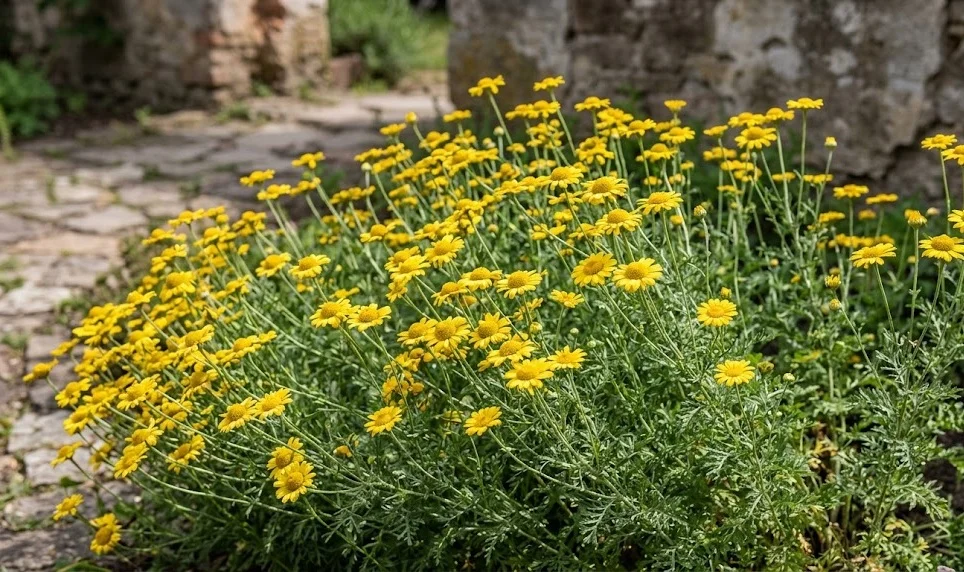

Maintaining the health of golden marguerite requires a vigilant eye for the various diseases and pests that can affect this perennial species. While it is generally a hardy and resilient plant, it is not entirely immune to environmental stressors or biological invaders. You should focus on preventative care, as a healthy plant is much more capable of defending itself against potential threats. By understanding the common issues, you can intervene early and preserve the beauty of your garden display.
Fungal infections are perhaps the most frequent disease challenges you will encounter when growing this member of the aster family. Powdery mildew is a common sight, appearing as a white, flour-like dust on the surface of the leaves and stems. It usually thrives in conditions where the days are warm and the nights are cool and humid. While it may not kill the plant immediately, it can significantly reduce its vigor and aesthetic appeal over time.
To prevent fungal issues, you should ensure that your plants have plenty of space for air to circulate freely around them. Avoid watering the foliage directly, as damp leaves are the primary entry point for many different types of fungal spores. If you notice infected leaves, you should remove and dispose of them immediately to prevent the disease from spreading further. In severe cases, a fungicide may be necessary, but cultural controls are always the preferred first line of defense.
Root rot is another serious fungal condition that is almost always caused by poor drainage or excessive watering by the gardener. The first sign is often a sudden wilting of the entire plant, followed by yellowing and a soft, mushy crown. If you suspect root rot, you should dig up the plant to inspect the root system for dark, slimy, or foul-smelling roots. Preventing this condition starts with choosing the right planting site and being mindful of the soil’s moisture levels.
Common insect pests
Aphids are small, sap-sucking insects that are frequently found on the tender new growth and flower buds of golden marguerites. You will often see them clustered together in green or black groups, causing the leaves to curl or become distorted. They excrete a sticky substance called honeydew, which can then attract ants or lead to the growth of sooty mold. A strong blast of water from a garden hose is often enough to dislodge these pests without harming the plant.
More articles on this topic
Slugs and snails can be a nuisance, particularly in the spring when the young shoots are first emerging from the dormant crown. They can consume large amounts of foliage in a single night, leaving behind jagged holes and shiny slime trails as evidence. You can manage these pests by removing hiding places like large rocks or debris from around the base of the plant. Using organic slug pellets or beer traps are also effective ways to protect your vulnerable new growth.
Spider mites are tiny pests that can become a problem during hot, dry spells in the middle of the summer. They are often difficult to see with the naked eye, but their presence is revealed by fine webbing and a stippled, yellow appearance on the leaves. These mites thrive in dusty conditions, so occasionally rinsing the foliage can help keep their populations under control. Increasing the humidity around the plant can also deter these pests, though you must be careful not to trigger fungal issues.
Leaf miners are the larvae of certain flies that tunnel through the internal tissues of the leaves, leaving behind distinctive winding white trails. While the damage is usually mostly cosmetic, a heavy infestation can weaken the plant and reduce its ability to photosynthesize effectively. You can control leaf miners by simply picking off and destroying the affected leaves as soon as you notice the trails. In most healthy garden ecosystems, natural predators will keep the leaf miner population from becoming a significant problem.
Preventative strategies and garden hygiene
The best way to manage diseases and pests is to prevent them from entering your garden in the first place. You should always inspect any new plants thoroughly before introducing them to your established beds and borders. Look for signs of insects, spots on the leaves, or any unusual growth patterns that might indicate a hidden problem. Quarantining new arrivals for a week or two can give you time to ensure they are healthy and pest-free.
More articles on this topic
Keeping your garden tools clean is a vital part of professional garden hygiene that many people often overlook in their daily routines. You should disinfect your pruning shears and trowels regularly, especially after working with a plant that shows signs of disease. A simple solution of rubbing alcohol or diluted bleach can effectively kill many common pathogens that cling to metal surfaces. This simple habit prevents you from accidentally spreading diseases from one part of the garden to another.
Removing dead or decaying plant material throughout the growing season reduces the number of hiding places for pests and diseases. Fallen leaves and spent flower heads can harbor fungal spores and insect eggs over the winter months if left on the ground. You should aim for a tidy garden environment where air can flow and light can reach all parts of the plant. This proactive approach creates a less hospitable environment for many of the common problems discussed here.
Crop rotation is a concept usually associated with vegetables, but it can also be applied to perennials in a modified way. If a particular spot in your garden consistently suffers from soil-borne diseases, you should avoid replanting the same species there. Moving your golden marguerites to a new location every few years during division can help break the life cycles of certain pathogens. Diversity in your planting schemes also helps prevent any single pest from becoming a dominant force in your landscape.
Biological and organic controls
Encouraging natural predators is one of the most effective and sustainable ways to manage pest populations in any garden setting. Ladybugs, lacewings, and hoverflies are all voracious consumers of aphids and other small, soft-bodied insects. You can attract these beneficial bugs by planting a variety of flowering species that provide them with pollen and nectar. Avoiding broad-spectrum chemical pesticides is crucial, as these products often kill the “good bugs” along with the “bad” ones.
Neem oil is a popular organic treatment that can be used to manage both fungal diseases and insect infestations on your plants. It works by interfering with the hormonal systems of insects and preventing fungal spores from germinating on the leaf surface. You should apply it in the early morning or late evening to avoid harming bees and to prevent the sun from burning the oil-coated leaves. Regular applications may be necessary to achieve the best results during a persistent outbreak.
Insecticidal soaps are another low-impact option for controlling pests like aphids, spider mites, and whiteflies. These soaps work on contact by breaking down the outer shell of the insect, causing it to dehydrate and die quickly. It is important to cover both the tops and bottoms of the leaves thoroughly for the treatment to be effective. Because these soaps have no residual effect, you may need to repeat the application every few days until the pests are gone.
Homemade remedies, such as a simple baking soda spray, can sometimes help manage mild cases of powdery mildew on foliage. Mixing a tablespoon of baking soda with a gallon of water and a drop of dish soap creates an environment that inhibits fungal growth. You should test any homemade solution on a small part of the plant first to ensure it doesn’t cause any adverse reactions. These gentle methods are often sufficient for maintaining the health of a well-cared-for golden marguerite.
Recovering from an infestation or disease
If your plant has suffered a significant setback due to pests or disease, the first step is to remove all affected parts. You should cut back diseased stems and clear away any fallen leaves that might contain spores or insect eggs. Providing the plant with optimal growing conditions, such as proper light and water, will help it focus its energy on recovery. Avoid heavy fertilization during this time, as excessive new growth can sometimes be more attractive to pests.
Sometimes, the best course of action is to give the plant a fresh start through rejuvenation pruning or division. If the damage is extensive but the roots are still healthy, cutting the plant back to the ground can stimulate a flush of clean growth. This allows you to monitor the new foliage closely from the very beginning and intervene quickly if problems reappear. Replanting healthy divisions in a new, clean location is another effective way to save a valued specimen.
Observation and patience are your best allies when a plant is in a state of recovery from a health crisis. You should check the plant daily for signs of new growth or the return of the original problem that caused the distress. It may take several weeks or even a full season for the plant to return to its former glory in the garden. Remembering that plants have natural healing mechanisms will help you stay calm and focused on the long-term goal.
Finally, take the time to reflect on why the problem occurred in the first place and what you can do differently next time. Was the plant stressed by drought, or was the air circulation too poor in that particular corner of the yard? Learning from every challenge will make you a more resilient and knowledgeable gardener for all the species you grow. Your golden marguerites will eventually thrive again under your improved and more informed care.