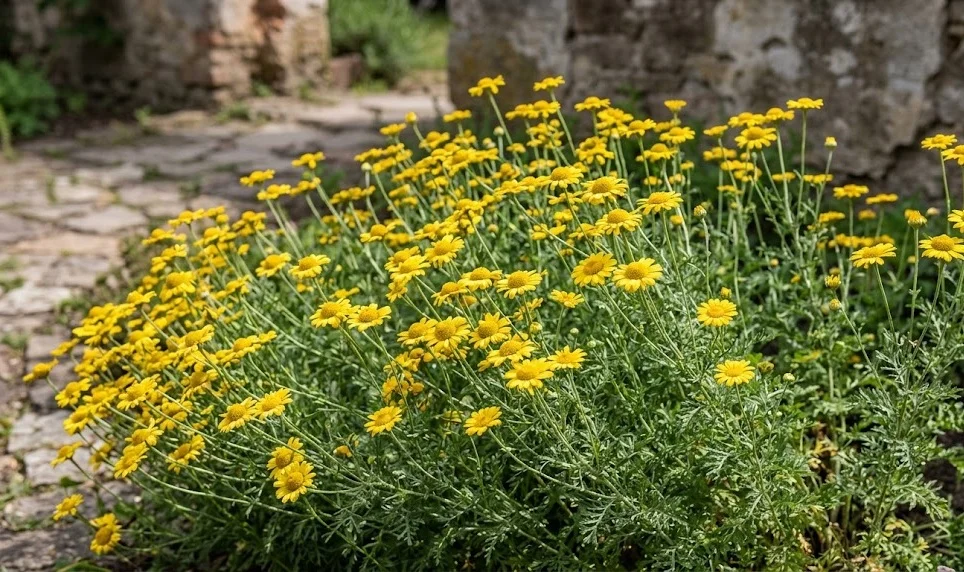

Understanding the light requirements of golden marguerite is essential for any gardener who wants to see this plant reach its full potential. This species is an absolute sun-lover, naturally evolved to thrive in wide-open spaces where it receives unfiltered solar energy for the majority of the day. You should aim to provide at least six to eight hours of direct sunlight to ensure the stems remain strong and the flowers are plentiful. Without adequate light, the plant will quickly lose its characteristic compact shape and vibrant coloration.
When a golden marguerite is planted in a spot that is too shaded, it will exhibit a behavior known as etiolation. This means the stems will become long, thin, and weak as the plant literally stretches itself toward the nearest light source. You will notice that the foliage becomes less dense and the overall structure of the plant may collapse under its own weight. Furthermore, the number of flower buds will decrease significantly, leaving you with a disappointing display of yellow blooms.
The intensity of the light is just as important as the duration when it comes to the health of this particular perennial. Morning sun is excellent, but it is the strong midday and afternoon sun that truly fuels the heavy flowering process. In northern climates, you can hardly give this plant too much sun, as the light levels are generally lower than in its native range. However, in extremely hot southern regions, a tiny bit of dappled shade during the hottest part of the day might be tolerated, though not preferred.
Reflected light from light-colored walls or fences can also be used to boost the total amount of energy the plant receives. This can be a clever trick for gardeners who have slightly less than ideal sunny spots in their landscape. You should be careful, however, as reflected heat can sometimes become too intense and scorch the delicate, fern-like foliage. Finding the “sweet spot” where the light is abundant but not damaging is the goal of every professional horticulturist.
Phototropism and plant orientation
Like many flowering species, golden marguerite exhibits phototropism, which is the tendency of the plant to grow toward the light. If the light source is only coming from one side, you will see the entire clump leaning in that direction over time. To maintain a balanced and symmetrical shape, you should ensure that light reaches all sides of the plant equally. This is particularly important when planting near tall structures or larger shrubs that might cast long shadows.
More articles on this topic
In a mixed border, you should position the golden marguerite so that it is not overshadowed by its taller neighbors as the season progresses. Taller perennials like delphiniums or sunflowers can quickly create a “canopy” that robs the shorter marguerites of their needed solar energy. Planning your garden layout with the final height of all plants in mind will prevent these light-related conflicts later in the summer. A tiered planting strategy is often the most effective way to manage light distribution in a crowded flowerbed.
The direction your garden faces will play a major role in the quality of light available for your plants throughout the year. A south-facing garden is the “gold standard” for sun-loving species like the golden marguerite, providing consistent and intense light. West-facing spots are also good, though the afternoon heat can be quite intense, requiring you to monitor soil moisture more closely. North-facing areas are generally too dark and should be avoided for this particular species if you want healthy growth.
Seasonal changes in the sun’s path will also affect how much light reaches different parts of your garden. A spot that is sunny in June might be in deep shade by September as the sun sits lower in the sky and shadows lengthen. You should observe your garden at different times of the year to understand these shifting patterns of light and shadow. This long-term observation will help you choose the most reliable permanent homes for your light-hungry perennials.
Light and flower production
The relationship between light intensity and the production of yellow pigment in the flowers is quite direct for the golden marguerite. Plants grown in full sun will produce flowers with a much deeper and more saturated golden hue than those in partial shade. The sun provides the energy needed for the complex chemical processes that create these beautiful colors in the petals. If you want that iconic “burst of sunshine” look in your garden, you must give the plant the sunshine it requires.
More articles on this topic
Light also acts as a signal for the plant to begin the transition from vegetative growth to reproductive flowering. The increasing day length in late spring triggers the development of flower buds deep within the plant tissues. If the light levels are too low, this signal may be weak or absent, leading to a plant that stays green all summer but never blooms. Consistent light ensures that the natural internal clock of the plant stays on track for a timely and profive display.
The duration of the flowering season is also influenced by the amount of light the plant receives on a daily basis. Golden marguerites in full sun tend to have a more concentrated and intense period of bloom, followed by a quicker secondary flush if deadheaded. In contrast, shaded plants may have a few scattered flowers over a longer period, but they never achieve the “mass effect” of a sun-drenched specimen. Maximizing light exposure is the best way to ensure your garden is filled with color for the longest possible time.
Finally, consider the role of light in keeping the foliage healthy and resistant to common fungal diseases like powdery mildew. Sunlight helps dry the leaves quickly after rain or dew, which removes the moisture that fungi need to germinate and spread. The UV rays in natural sunlight also have a mild sanitizing effect on the surface of the plant tissues. By providing plenty of light, you are not just improving the beauty of your golden marguerite, but also its fundamental health and longevity.