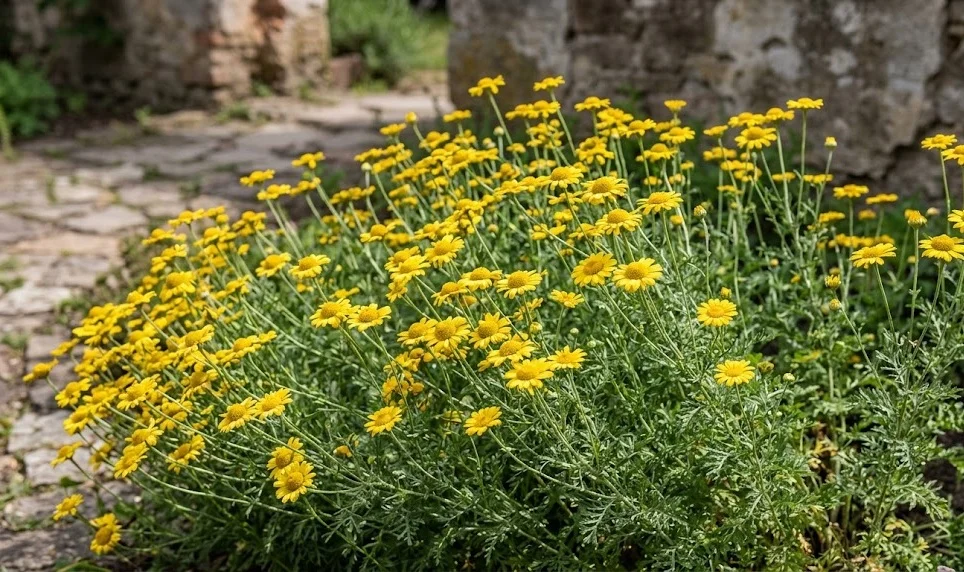

Care of golden marguerite involves creating a balance between neglect and structured maintenance to mimic its natural meadow habitat. You should prioritize well-drained soil and ample sunlight to ensure the plant does not succumb to root rot or leggy growth. Providing these basic conditions will lead to a dense mound of fern-like foliage topped with golden blooms. This plant is a favorite for those who want a burst of color without constant intervention in the garden.
Many gardeners appreciate this species for its ability to thrive in poor soils where other perennials might struggle to survive. You will find that it is particularly suited for rock gardens or borders that receive intense afternoon sun. It is important to avoid heavy clay soils that retain too much moisture during the winter months. A sandy or gravelly substrate is often the best choice for maintaining a healthy root system throughout the year.
The foliage of this plant is just as attractive as its flowers, offering a fine texture that contrasts well with broader-leaved neighbors. If you notice the center of the plant becoming thin or woody, it is a sign that the specimen needs rejuvenation. Regular inspection of the leaves can help you identify any potential issues before they become significant problems for the whole patch. Maintaining a tidy appearance requires a bit of effort but pays off with a much longer flowering season.
As a member of the aster family, this perennial is known for its resilience and ability to attract various beneficial pollinators. Honeybees and butterflies are frequent visitors to the bright yellow discs, making it an excellent addition to any biodiversity-focused landscape. You should consider the overall design of your flowerbed to give this plant enough space to spread its wings. Its cheerful presence can serve as a focal point or a reliable filler in mixed perennial borders.
Soil and environment management
The success of your gardening efforts depends largely on the chemical and physical properties of the ground. Golden marguerite prefers a pH level that is neutral to slightly alkaline for optimal nutrient uptake. If the soil is too rich in organic matter, the plant may grow too quickly and fall over. You should avoid adding heavy amounts of compost to the planting hole to maintain a sturdy growth habit.
More articles on this topic
Proper drainage is the most critical factor for the long-term health of this specific daisy variety. You can improve heavy soil by mixing in significant amounts of horticultural grit or coarse sand. This prevents the roots from sitting in stagnant water, which is a common cause of plant failure. Observation after heavy rain will tell you if the chosen spot is suitable for this drought-tolerant species.
Air circulation is another environmental factor that is often overlooked by novice gardeners. Planting your marguerites too close together can lead to stagnant air and increased humidity around the foliage. This environment promotes the development of powdery mildew and other fungal pathogens. Giving each plant enough room to breathe will significantly reduce the need for chemical treatments later.
Microclimates within your garden can also influence how well the plant performs over the seasons. A south-facing slope or a spot near a heat-retaining wall can provide the warmth this plant loves. However, you should be mindful of extreme heat, which might cause the flowers to fade more quickly than usual. Finding the perfect balance of heat and light is a rewarding challenge for any enthusiast.
Seasonal maintenance routines
Spring is the time when you should begin your active care routine by clearing away any debris from the previous year. New shoots will appear from the base of the plant as the soil begins to warm up. You can lightly rake the area to remove dead leaves without damaging the emerging green growth. This early attention sets the stage for a productive and healthy growing season ahead.
More articles on this topic
As the stems begin to elongate in late spring, you might consider providing some light support. While the stems are generally sturdy, heavy rain or strong winds can sometimes flatten the entire clump. Small brushwood supports or metal rings can be placed around the plant to keep it upright. This practice ensures that the flowers remain visible and the foliage stays off the damp ground.
Summer care is primarily focused on maintaining the bloom cycle through consistent deadheading of spent flowers. Removing the faded heads prevents the plant from putting all its energy into seed production. This encourages the development of new buds and keeps the plant looking fresh and vibrant. You will notice that the flowering period can be extended by several weeks with this simple habit.
Late autumn is the period for preparing the plant for its winter rest in the garden. You should cut back the stems to a few inches above the ground once the first frosts have arrived. This prevents the plant from catching the wind and becoming dislodged during winter storms. Leaving a small amount of stubble also helps you remember where the plant is located during the dormant season.
Sustaining plant vigor
Golden marguerite is a relatively short-lived perennial that usually lasts about three to four years in peak condition. You will notice a decline in flowering and a thinning of the foliage as the plant ages. To keep your garden display looking its best, it is necessary to plan for replacement or rejuvenation. Understanding this natural life cycle allows you to manage your garden more effectively over time.
Division is the most common method used to restore vigor to an old and tired specimen. You should dig up the entire clump every two or three years in early spring or autumn. Discard the woody, unproductive center and replant the healthy outer sections of the root ball. This process not only rejuvenates the plant but also provides you with new specimens for other areas.
You should also keep an eye on self-seeding, as this plant can be quite prolific in the right conditions. While some gardeners enjoy the natural look of random seedlings, they can eventually crowd out the parent plant. Thinning out these volunteers will ensure that only the strongest individuals are allowed to mature. This selective approach maintains the quality and appearance of your garden beds.
A balanced approach to maintenance will prevent the plant from becoming overly stressed by environmental changes. Stress can make the plant more susceptible to pests and reduce its overall aesthetic appeal. By monitoring the soil moisture and light levels, you can intervene before the plant shows signs of distress. A proactive gardener is always one step ahead of potential problems in the landscape.
Deadheading and flower management
The process of deadheading is not just about aesthetics; it is a vital part of the plant’s biology. When you remove a dying flower, you are signaling to the plant to continue its reproductive efforts. This results in a continuous flush of yellow daisies that can last from June until the end of August. It is a meditative task that allows you to spend more time observing your garden closely.
You should use sharp, clean snips to cut the flower stems back to the next set of leaves. Cutting too high leaves unsightly sticks poking out of the foliage, which can ruin the visual effect. Precise cuts also heal faster and reduce the risk of infection entering the plant tissues. Taking the time to do this correctly will result in a much tidier and healthier specimen.
If the plant becomes too leggy or floppy mid-season, you can perform a more drastic cutback. Reducing the height of the entire clump by half in July can stimulate a second wave of growth. While this might temporarily remove the flowers, the resulting foliage will be much more compact and attractive. This technique is often called the “Chelsea Chop” and works wonders for many summer perennials.
Watching the behavior of the flowers can also provide clues about the general health of the plant. If the blooms are smaller than usual or the color is pale, it might indicate a lack of nutrients or water. Healthy golden marguerites should have bright, uniform petals and a deep yellow center. Paying attention to these details will help you become a more intuitive and successful gardener.
Managing water and nutrients
During the first year after planting, you must ensure that the root system is well-established through regular watering. Even though the plant is drought-tolerant, it cannot withstand total dryness until it has anchored itself. You should water deeply but infrequently to encourage the roots to grow down into the soil. This creates a more resilient plant that can handle dry spells in the future.
Once established, the golden marguerite requires very little supplemental water in most temperate climates. Excessive watering is actually more harmful than a lack of water, as it can lead to fungal issues. You should only consider watering during prolonged periods of extreme heat and drought. Checking the soil moisture a few inches below the surface is the best way to determine the need.
Fertilization should be kept to a minimum to prevent the plant from becoming soft and weak. A light application of a balanced granular fertilizer in early spring is usually more than enough. Avoid high-nitrogen feeds, as these promote lush leaf growth at the expense of sturdy stems and flowers. Natural soil fertility is often sufficient for this rugged species in most garden settings.
Organic mulches can be beneficial, but they must be applied with care around the base of the plant. A thin layer of bark or gravel can help suppress weeds and keep the soil temperature stable. However, you should ensure the mulch does not touch the stems, as this can cause crown rot. Maintaining a clear zone around the center of the plant is a professional tip for success.
Enhancing garden aesthetics
Golden marguerite is a versatile plant that fits into many different garden styles and color schemes. Its bright yellow hue pairs beautifully with purple flowers like lavender or salvia for a classic contrast. You can also create a warm-toned border by planting it alongside orange and red perennials. The fine foliage provides a soft backdrop that makes neighboring plants stand out more vividly.
Consider the height and spread of the plant when deciding on its permanent position in the border. It typically reaches about two feet in height, making it an ideal choice for the middle of a flowerbed. You should plant it in groups of three or five to create a more impactful and natural-looking mass. This grouping technique is a common practice among professional landscape designers.
The flowers are also excellent for cutting and bringing indoors for fresh floral arrangements. They have a decent vase life and a pleasant, herbal scent that is not too overpowering. Cutting flowers for the house acts as a form of deadheading, which benefits the plant in the long run. It is a wonderful way to enjoy the fruits of your labor both inside and outside the home.
Finally, remember that gardening is a continuous learning process with every plant you grow. Observing how the golden marguerite responds to your specific garden conditions will teach you more than any book. Don’t be afraid to experiment with different positions or care techniques to see what works best. Your garden will reward your curiosity and dedication with a spectacular display of golden light.