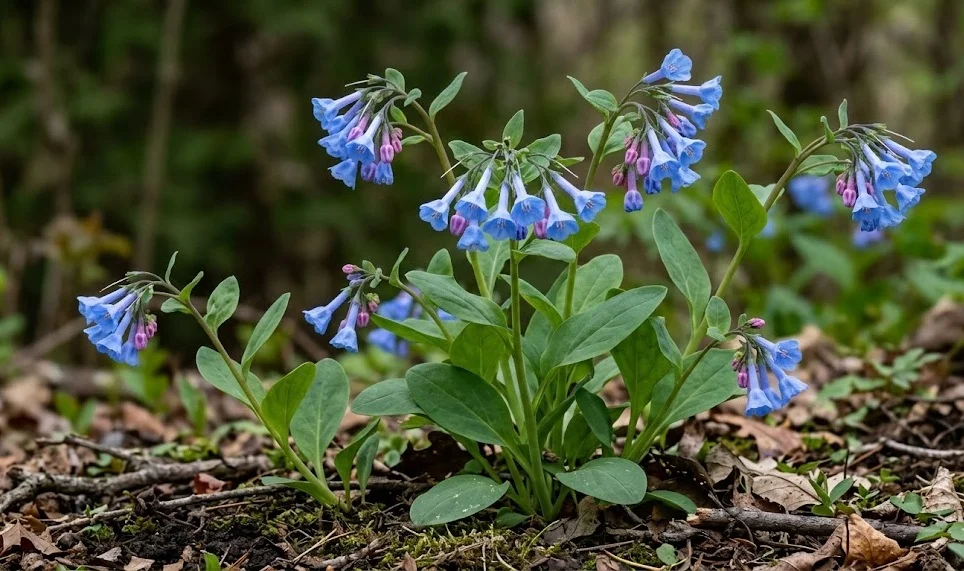

Virginia bluebells need a balanced approach to water and nutrition rather than constant intervention. Their woodland origins make them happiest in soil that remains evenly moist during spring but does not stay saturated for long periods. Feeding should support healthy roots and foliage without forcing soft, weak growth. The most effective care comes from building good soil and responding to the plant’s changing needs through the year.
Understanding moisture needs
Water is most important while Virginia bluebells are actively growing in spring. The plants produce leaves, stems and flowers in a relatively short period, so dry conditions can interrupt this process quickly. Soil should feel cool and slightly moist below the surface rather than dusty or cracked. Consistent moisture supports fuller foliage and a longer-lasting floral display.
The roots do not tolerate permanent saturation well. Waterlogged soil limits oxygen around the roots and can encourage decay. This is especially risky in heavy soil or low-lying areas where rain collects. Improving drainage is usually more useful than trying to compensate with extra fertiliser.
Established plants are often more resilient than newly planted ones. Once a clump has developed a broad root system, it can cope with brief dry periods more effectively. Newly planted specimens need closer attention because their roots have not yet explored the surrounding soil. Water deeply when the weather is dry during their first spring and early summer.
The goal is to encourage roots to grow into the soil rather than remain near the surface. Deep watering at longer intervals is generally better than frequent light sprinkling. A thorough soak allows moisture to move down to the active root zone. It also reduces the risk of shallow roots that dry out quickly in warm weather.
More articles on this topic
Seasonal watering practices
In late winter and early spring, natural rainfall may provide most of the moisture the plants need. Check the soil during dry spells, especially where trees intercept rainfall before it reaches the ground. A woodland bed can look damp on the surface while the soil beneath remains dry. Inspecting below the mulch gives a more accurate picture of root-zone moisture.
As flowering begins, water more carefully if rain is scarce. The plant is using energy quickly and benefits from stable conditions. Direct water towards the soil rather than soaking the flowers and leaves repeatedly. Keeping foliage dry when possible can reduce the chance of leaf spotting in humid weather.
After flowering, continue watering while the leaves are still green and functioning. This stage is important because the plant is sending stored energy back into its roots. Allowing the soil to become extremely dry too early can reduce next year’s performance. Once the foliage has faded completely, watering can become much less frequent.
During summer dormancy, avoid treating the planting area like a constantly irrigated flower bed. The roots appreciate moderate soil moisture but do not need heavy watering. A thick organic mulch often keeps the soil stable enough without regular irrigation. In prolonged drought, an occasional deep watering may still be helpful, particularly for young plants.
More articles on this topic
Feeding without overstimulating growth
Virginia bluebells are not heavy feeders. Their natural preference is for soil enriched gradually with decaying organic material rather than frequent applications of strong fertiliser. Compost and leaf mould provide a slow, balanced source of nutrients. They also improve the physical structure of the soil, which is just as important as nutrient content.
Apply a light layer of mature compost around the plants in autumn or early spring. This should sit on the soil surface like a woodland leaf layer rather than being dug deeply into the root zone. Soil organisms will gradually carry nutrients downward. This approach avoids disturbing the roots and supports long-term fertility.
High-nitrogen fertilisers should be used cautiously. Too much nitrogen can produce large, soft leaves and weak stems without improving flowering. It may also encourage nearby weeds and vigorous companion plants to dominate the area. A modest, balanced organic feed is usually enough where the soil is already healthy.
If plants look consistently weak, investigate the site before increasing fertiliser. Poor drainage, excessive shade, dry soil or root competition may be the real cause. Adding fertiliser to a stressed plant does not solve these underlying issues. Correcting the growing environment usually produces a more durable improvement.
Mulching and soil building
Organic mulch acts as a quiet but powerful feeding system for Virginia bluebells. As the mulch breaks down, it adds small amounts of nutrients to the soil over time. It also improves moisture retention and protects the surface from temperature extremes. This closely resembles the natural woodland conditions where the plant evolved.
Leaf mould is especially suitable because it creates a soft, moisture-holding layer without becoming overly rich. Shredded autumn leaves, well-rotted bark and fine compost can also be used. Spread mulch in a thin, even layer around the plants. Keep it away from the central crown to prevent trapped moisture and decay.
Mulching should be renewed when the previous layer has mostly decomposed. In many gardens, this means adding material once a year. The exact amount depends on soil type, rainfall and the needs of surrounding plants. A light annual application is better than an occasional heavy layer that buries the crowns.
The soil beneath trees often becomes poorer and drier over time because roots absorb moisture and nutrients. Regular organic mulching helps counter this gradual competition. It does not eliminate tree-root pressure, but it makes the planting area more resilient. Over several seasons, the difference in plant vigour can be substantial.
Correcting water and nutrient problems
Wilting during spring is often caused by lack of water, especially in sandy soils or under thirsty trees. Check the soil before watering because wilt can also occur when roots are damaged by saturation. If the ground is dry several centimetres below the surface, water deeply and allow the moisture to soak in slowly. Repeated shallow watering rarely corrects the problem fully.
Yellow leaves before the normal summer dormancy period may suggest stress. Dryness, compacted soil, poor drainage and nutrient imbalance can all contribute. Look for patterns across the bed rather than judging a single leaf. A plant growing poorly in one small area may be reacting to local root competition or a drainage issue.
Overfeeding can be recognised by unusually lush but floppy growth. The plant may produce broad leaves while flowering becomes less impressive. Stop applying concentrated fertiliser and focus instead on light compost mulches. The plant usually regains a more balanced form after the soil settles.
A consistent seasonal routine is more valuable than reacting dramatically to small changes. Water during dry spring weather, maintain mulch, avoid heavy feeding and let the foliage complete its natural cycle. This simple method supports healthy roots and dependable flowering. Virginia bluebells respond best to steady conditions rather than frequent correction.