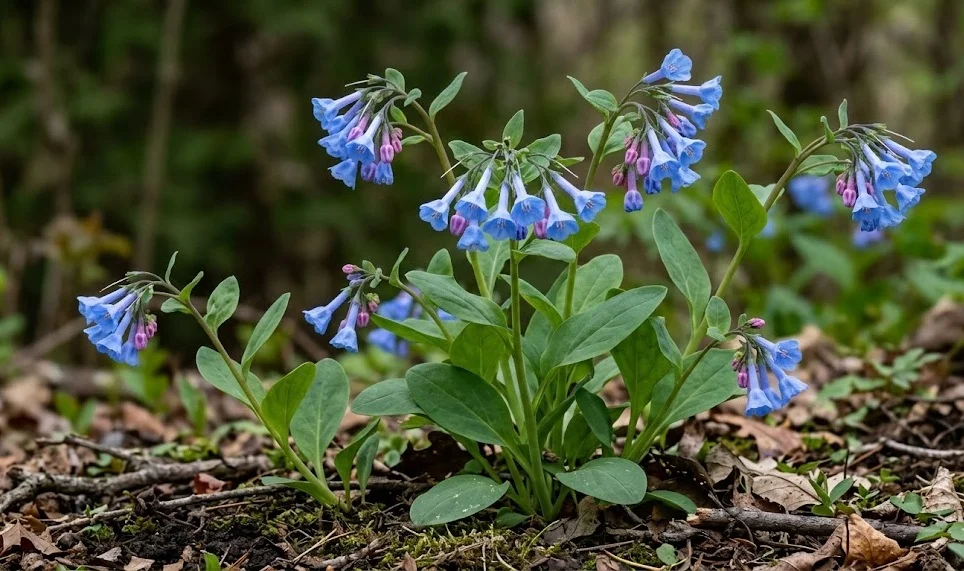

Planting Virginia bluebells well is the foundation for a long-lived, low-maintenance display each spring. These woodland perennials respond best when their roots are placed in cool, organic-rich soil that does not dry out quickly after rain. They do not need constant handling, but they benefit from careful preparation before planting begins. A thoughtful start gives them the best chance to establish into healthy, dependable clumps.
Preparing the planting area
Choose a location that offers partial shade and protection from intense summer heat. The ideal position often lies beneath deciduous trees, along the edge of a shrub border or beside a north- or east-facing wall with filtered light. Spring sunlight is useful because it supports flowering before the canopy closes overhead. By summer, the plants appreciate shade as they begin their dormant period.
Prepare the soil deeply rather than simply making a small planting hole. Loosen the ground to a depth that allows roots to move easily into the surrounding soil. Mix in mature compost, leaf mould or well-rotted organic material to improve moisture retention. Avoid using fresh manure, which can be too strong and may disturb the balance of the soil.
Remove persistent weeds before planting, especially deep-rooted perennial weeds. Virginia bluebells are not aggressive competitors during their first year. Weeds can quickly take moisture and nutrients from developing roots. A clean planting area allows the young plants to establish without unnecessary competition.
Check drainage before planting, particularly in heavy clay ground. The soil should hold moisture but should not remain saturated for long periods after rainfall. If water sits in the planting area, incorporate coarse organic matter and consider raising the bed slightly. Good drainage is especially important during winter, when cold, wet soil can damage roots.
More articles on this topic
Planting bare-root and container-grown plants
Container-grown Virginia bluebells can usually be planted in autumn or early spring, depending on local weather and soil conditions. Autumn planting gives roots time to settle before spring growth begins. Spring planting is also successful when plants are kept well watered during their first active season. Avoid planting during frozen ground, severe drought or very hot weather.
Before planting, soak the root ball briefly if it feels dry. This helps the roots begin growing into the surrounding soil more quickly. Remove the plant from its container carefully and loosen any tightly circling roots without tearing them apart aggressively. A root system that spreads outward will establish more evenly than one left compressed in its original shape.
Set the plant at the same depth it was growing in the pot. Planting too deeply can slow emergence, while planting too shallowly may expose roots to drying conditions. Firm the soil gently around the base to remove large air pockets. Water thoroughly after planting so the soil settles naturally around the roots.
Spacing depends on the intended effect and the size of the plants. For a natural-looking drift, leave enough room for each clump to expand without immediate crowding. A spacing of roughly 25 to 35 centimetres usually allows the plants to form a connected display over time. Closer planting can create faster visual impact, but it may require earlier thinning if conditions are especially favourable.
More articles on this topic
Propagating through division
Division is a reliable method for increasing established Virginia bluebells, although it should not be done every year. Mature clumps can be divided when they have become dense or when new plants are needed for another part of the garden. The best time is usually in early autumn, after dormancy has begun, or in very early spring before active growth becomes advanced. Working during these quieter stages reduces stress on the foliage and flowering stems.
Lift the clump carefully with a garden fork rather than cutting straight down with a spade. The roots can spread wider than expected, especially in loose woodland soil. Shake off only enough soil to see the main divisions clearly. Avoid exposing roots to sun and wind for long periods while working.
Separate the clump into generous sections rather than tiny fragments. Each division should have a healthy share of roots and at least one visible growth point or firm crown. Small divisions may survive, but they often take longer to recover and flower again. Larger pieces settle more quickly and maintain the character of the original planting.
Replant divisions immediately into prepared soil. Water them well and apply a light mulch to help maintain moisture. They may produce a reduced display during the first season after division, which is normal. With steady moisture and minimal disturbance, they usually regain strength quickly.
Growing Virginia bluebells from seed
Seed propagation is slower than division but can be rewarding in a naturalistic garden. Fresh seed generally gives the best results because viability can decline when seed is stored for long periods. Allow some flowers to form seedheads if self-sowing is desired. Seedlings may appear near the parent plants when soil conditions are suitable.
Collect seed when the capsules begin to dry and split. Handle the seed carefully because it is small and can be easily lost in garden debris. Sow it as soon as possible in trays or a prepared outdoor bed. Freshly sown seed is more likely to follow the natural seasonal pattern needed for germination.
Use a loose, moisture-retentive seed compost or finely prepared garden soil. Cover the seed lightly because it should not be buried deeply. Keep the surface evenly moist without making it muddy or waterlogged. Place seed trays outside in a sheltered position so they experience natural temperature changes.
Seed-grown plants require patience. They may take several years to reach flowering size, depending on growing conditions. During this early stage, protect them from slugs, drying soil and competition from weeds. Once they develop strong roots, they can be transplanted into their permanent positions with much greater confidence.