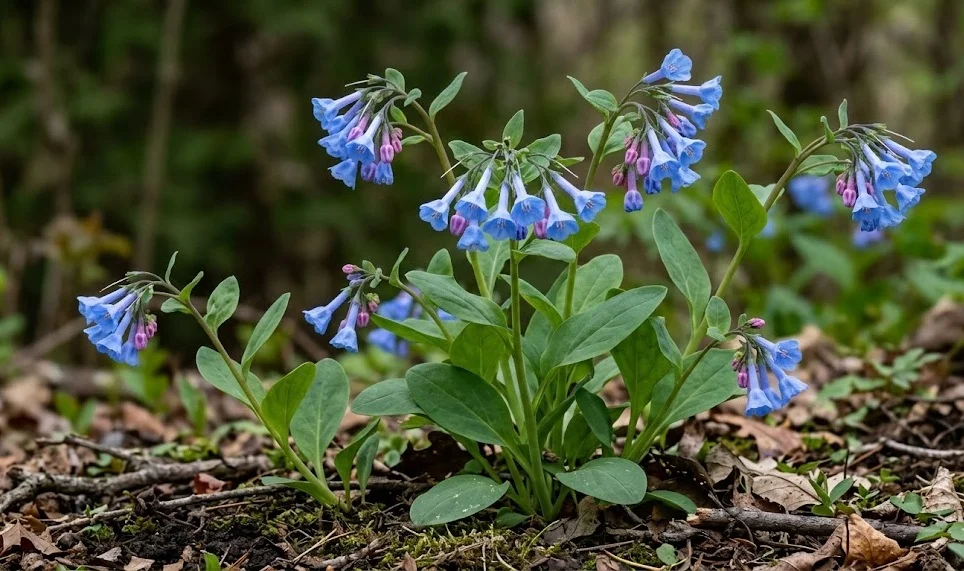

Virginia bluebells perform best in bright, filtered spring light followed by cooler shade as the season progresses. Their growth pattern is closely linked to woodland conditions, where sunlight reaches the ground before deciduous trees produce a full canopy. Too much intense summer sun can shorten their active season and dry the soil around the roots. The right light balance encourages sturdy stems, rich foliage and a generous spring display.
The ideal spring light pattern
The best location usually receives morning sun, dappled light or open shade during early spring. At this stage, Virginia bluebells need enough light to build foliage and produce flowers before the surrounding canopy becomes dense. Light filtered through bare branches is particularly suitable. It is bright enough for strong growth but gentle enough to avoid overheating the soil.
Deciduous woodland edges often provide nearly perfect conditions. The plants receive good light while trees are still leafless, then gain shade once warmer weather arrives. This seasonal transition mirrors their natural habitat. Gardens that recreate this pattern often produce the most dependable plants.
Too little spring light can lead to stretched stems and fewer flowers. A deeply shaded position beneath evergreen trees may not allow enough energy for good flowering. Leaves may become pale or sparse, and the plant may decline gradually over several seasons. Moving the clump to a brighter but still protected position can make a noticeable difference.
Full sun is usually unsuitable in warm climates or dry soils. Strong afternoon heat can cause leaves to wilt, flowers to fade quickly and the plant to enter dormancy early. Full sun may be tolerated only where the soil remains consistently moist and the climate is cool. Even then, some protection from the hottest part of the day is beneficial.
More articles on this topic
Adapting light conditions to the garden
North- and east-facing borders are often useful for Virginia bluebells because they avoid the harshest afternoon sun. A north-facing position may work well if it still receives reflected or filtered spring light. East-facing beds are especially valuable because they offer gentle morning sunshine. South- and west-facing beds require more careful shading and deeper moisture-retentive soil.
Shrubs can be used to create a suitable light filter. Open-branched deciduous shrubs allow spring sunlight through while shading the ground later in the season. Dense evergreen shrubs are less suitable because they create constant darkness and often dry the soil beneath them. Choose planting partners that do not produce heavy root competition.
The changing height of nearby plants also affects available light. Tall perennials that emerge early can shade bluebells before flowering is complete. In mixed borders, keep vigorous early growers far enough away to avoid crowding the spring display. Later-emerging companions are generally a better choice.
Observe the site at different times of day before planting. A location that looks shaded at midday may receive intense morning or late-afternoon sun. Likewise, a bed that appears bright in winter may become very dark after trees leaf out. These seasonal changes are especially important for spring ephemerals such as Virginia bluebells.
More articles on this topic
Managing light through the seasons
Do not try to maintain maximum light all year. Virginia bluebells naturally benefit from reduced summer light as they move into dormancy. The growing season is concentrated in spring, so that is when light availability matters most. Summer shade helps keep the soil cooler and protects dormant roots from extreme heat.
Pruning nearby shrubs can improve spring light if flowering becomes weak. Remove only selected branches rather than opening the canopy drastically. Sudden exposure to intense sunlight can create a new stress problem. The goal is gentle filtration, not a fully exposed bed.
When trees mature, the amount of spring light may gradually decrease. This can happen over several years and may not be obvious at first. If clumps begin flowering less strongly, compare current canopy density with earlier seasons. Minor pruning, soil improvement or relocation of a small section may restore better conditions.
Good light management works together with soil care. A brighter site usually needs more moisture, while a shadier site may require careful drainage. Neither light nor water should be considered alone. Virginia bluebells thrive when both are balanced according to the seasonal rhythm of the garden.