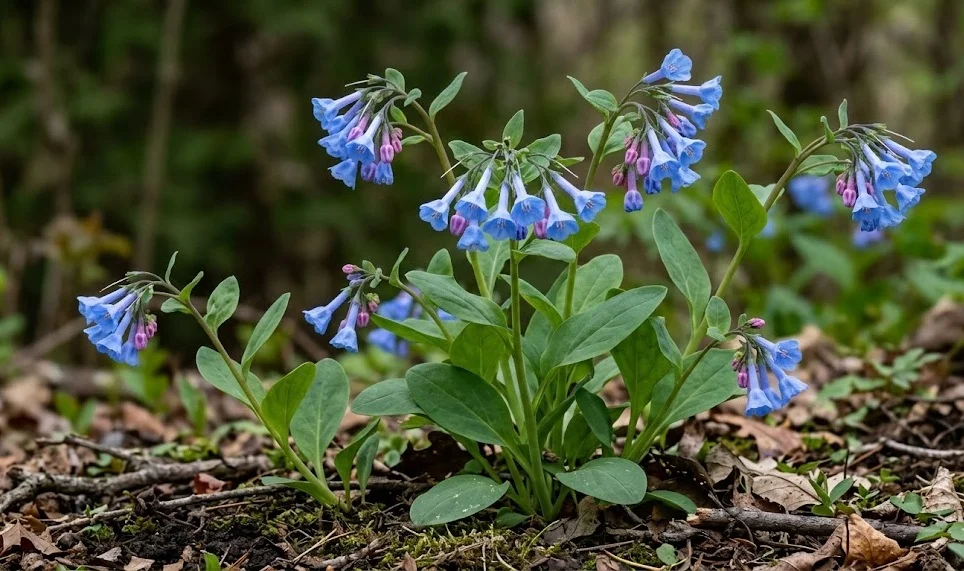

Virginia bluebells need very little pruning, but correct timing makes a real difference to their long-term health. Their leaves play an important role after flowering by sending stored energy back into the root system. Cutting them down too early can reduce the strength of the plant in the following spring. The aim is to tidy the planting without interrupting the natural cycle of growth and dormancy.
Knowing what should be removed
The most important rule is to leave green foliage in place after the flowers fade. Even when the leaves begin to look slightly tired, they are still feeding the underground roots. Removing them immediately after flowering may make the border look neater, but it can weaken future growth. Wait until the leaves have yellowed or browned naturally before cutting them back.
Spent flower stems can be removed earlier if a tidier appearance is desired. This is optional rather than essential. Leaving the stems in place allows seedheads to develop, which may encourage gentle self-sowing in suitable conditions. Removing them directs the plant’s energy away from seed production, although the difference is usually modest in a healthy clump.
Damaged or diseased leaves can be removed whenever necessary. Brown, heavily spotted or rotting foliage should not be left around the crown. Use clean, sharp scissors or secateurs and cut close to the base without damaging nearby shoots. Dispose of badly affected material away from the planting area.
Avoid cutting into the soil or pulling at fading stems aggressively. The crown and roots may be close to the surface, especially in recently planted clumps. A gentle cut is safer than tearing foliage away by hand. This small amount of care prevents accidental root damage during a sensitive stage.
More articles on this topic
Timing the main cutback
The main cutback usually happens in late spring or early summer, once the foliage has completed its natural decline. The exact timing depends on weather, soil moisture and the amount of shade. In cooler gardens, leaves may remain green for longer. In hot or dry conditions, dormancy may begin earlier.
Look for foliage that has turned mostly yellow, soft or dry. At this stage, the plant has generally finished transferring energy to its roots. Cut the stems back near ground level without exposing or disturbing the crown. Leave the surrounding mulch in place if it is clean and not excessively wet.
Do not be tempted to cut back simply because the leaves are sprawling across nearby plants. Instead, consider using companion plants that emerge later and gradually cover the fading foliage. Ferns, hostas and hardy geraniums are particularly useful for this purpose. This creates a more natural transition and reduces the need for early cutting.
If the weather remains unusually wet, check the fading foliage for signs of decay. Soft, blackened leaves can harbour disease if they remain pressed against the crown. Remove these damaged sections promptly while leaving healthy green leaves intact. This balanced approach keeps the planting clean without weakening the plant unnecessarily.
More articles on this topic
Hygiene, renewal and companion management
Clean tools are important when removing diseased material. Wipe blades between plants if leaf spots or rot have been present. This reduces the chance of transferring fungal spores from one clump to another. Good hygiene is especially useful in crowded woodland borders.
Old mulch can be refreshed after the foliage has been cut back. Remove only compacted, wet or diseased material, then add a thin fresh layer of leaf mould or compost. Keep the mulch away from the exact centre of the dormant crown. This supports soil health while reducing the risk of winter rot.
Pruning nearby companion plants may be more important than pruning the bluebells themselves. Vigorous plants can shade emerging shoots or smother them with dense foliage. Trim or divide aggressive companions in autumn or late summer, when the bluebells are dormant. This gives the spring plants room to emerge without disturbance.
Virginia bluebells respond best to a light touch. Their natural form is seasonal, and their disappearing foliage is part of that rhythm rather than a flaw to be corrected. Careful removal of spent or diseased growth is enough for most gardens. With patient timing and clean maintenance, the plants will return each spring with healthy leaves and graceful flowers.