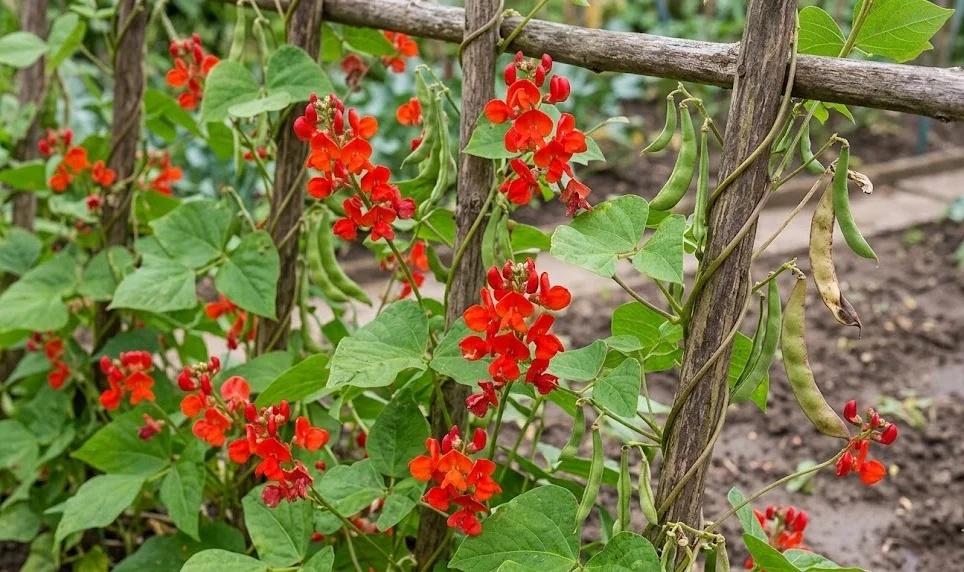

Scarlet runner beans need bright growing conditions to produce strong vines, abundant flowers, and a reliable crop of pods. They are more tolerant of cool conditions than many warm-season beans, but they still rely on light to fuel rapid vertical growth. Too little light leads to weak stems, sparse flowering, and poor pod set. The best results come from matching the plant’s light exposure to the local climate and season.
In cooler regions, scarlet runner beans usually perform best in full sun. Long hours of direct light help warm the soil, strengthen stems, and encourage flowering. Plants grown in too much shade often climb well but produce leaves rather than pods. A sunny position also helps foliage dry after rain, reducing disease risk.
In hot climates, the situation can be more nuanced. Very intense afternoon sun combined with heat and dry soil may cause flower drop. In those conditions, morning sun with light afternoon shade can be beneficial. The aim is to provide enough light for photosynthesis while reducing heat stress during the harshest part of the day.
Structures and nearby plants should be considered before planting. A trellis placed against a north-facing wall in a cool region may not provide enough light. A bean arch under open sky may receive excellent exposure from several angles. Observing the site before sowing prevents avoidable disappointment.
Full sun, partial shade, and heat stress
Full sun generally means at least six hours of direct light per day. Scarlet runner beans can grow with this level of exposure when water is adequate and temperatures are not extreme. The plants often become dense and productive under these conditions. Regular harvesting then helps maintain flowering.
More articles on this topic
Partial shade is not automatically a problem. Light shade for part of the day can protect flowers during hot weather. This is especially useful in gardens where afternoon temperatures rise sharply. However, deep shade under trees or buildings usually reduces yield.
Heat stress and light stress can look similar but require different responses. Leaves may droop during hot afternoons even when the plant receives enough water. Flowers may drop because temperatures are too high, not because light is insufficient. Checking soil moisture and observing recovery in the evening helps interpret symptoms.
Shade cloth can be useful during extreme heat. It should reduce stress without creating dark, stagnant conditions. Temporary shading is often better than planting permanently in a poor-light site. Once heat moderates, full exposure may again produce stronger flowering.
Light and flowering performance
Flowering depends on the plant having enough energy reserves. Light drives photosynthesis, and photosynthesis supports the production of flowers, nectar, and pods. If light is limited, the plant may prioritize stem extension as it searches for better conditions. This can create tall but unproductive vines.
More articles on this topic
Dense planting can create self-shading. Even in a sunny garden, overcrowded runner beans may shade their own lower leaves and flowers. Proper spacing and strong vertical support reduce this problem. A well-arranged trellis exposes more foliage to useful light.
Pollinator access also improves in open, bright positions. Bees and other insects are more likely to visit flowers that are visible and accessible. Dense shade and tangled foliage can reduce flower visitation. Good light therefore supports both plant energy and pollination.
Light affects pod quality as well as flowering quantity. Plants growing in balanced light often produce straighter, better-filled pods. Shaded plants may produce fewer pods or pods that develop slowly. Strong but not excessive exposure gives the crop its best chance of consistent production.
Managing light through the season
The amount of available light changes as the season progresses. A site that is sunny in spring may become shaded by trees in midsummer. Conversely, a hot exposed site may be ideal early but stressful later. Seasonal observation is valuable when planning where to place supports.
Supports can be positioned to improve light capture. A north-south row often gives both sides of the plants more even exposure over the day. An east-west row may create more shade on one side. The best orientation depends on the garden layout and climate.
Companion planting should not block light from the beans. Low-growing herbs, flowers, or vegetables can work well at the base if they do not compete heavily. Tall crops placed too close can reduce flowering and airflow. Scarlet runner beans should be treated as the vertical crop in the design.
At the end of the season, declining light naturally slows growth. This is normal and should not be mistaken for a care failure. Late flowers may not have enough time to form mature pods. Regular harvesting earlier in the season makes better use of the strongest light period.