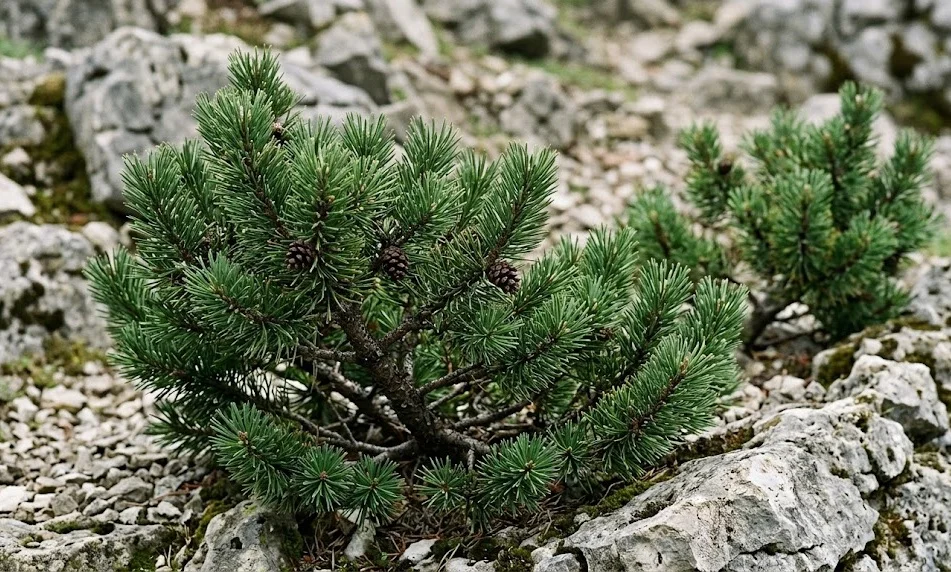

Pruning a dwarf mountain pine is an art form that allows you to guide the plant’s development and maintain its stunning architectural shape. Unlike many other garden shrubs, pines require a specific technique and timing to avoid causing permanent damage or unsightly gaps. You must approach the task with a clear plan and the right tools, focusing on enhancing the natural beauty of the evergreen. When done correctly, pruning not only controls the size of the plant but also promotes a denser, healthier canopy.
The most important thing to remember is that pines do not typically sprout new growth from old, leafless wood. This means that if you cut a branch back too far, it will likely never recover its foliage, leaving a permanent hole in the mound. You should focus your efforts on the new growth, specifically the emerging shoots known as “candles.” This “candling” technique is the professional standard for managing the size and density of a dwarf mountain pine.
Timing is the most critical factor in successful pine pruning, and it usually happens in the late spring or early summer. You should wait until the candles have finished growing in length but before the new needles have fully expanded. This window of opportunity is relatively short, so you must keep a close watch on your plant as the season progresses. Pruning at the wrong time of year can stress the plant and reduce its ability to prepare for winter.
This article will guide you through the technical steps of pruning, from simple maintenance to more significant size control. You will learn the difference between structural pruning and aesthetic grooming, and how to use your tools safely and effectively. By mastering these techniques, you can keep your dwarf mountain pine looking its best for decades. Let’s explore the professional secrets of pine maintenance.
Timing the trim for maximum success
As mentioned, the “candling” period is the golden window for pruning your dwarf mountain pine. In most regions, this happens sometime in May or June, depending on the local weather and the specific cultivar. You can easily identify the candles as the long, upright, and somewhat sticky new shoots at the ends of the branches. They look like little green candles standing up from the foliage, which is where they get their name.
More articles on this topic
You should perform your pruning when the candles are at their full length but still soft and pliable. If you wait until they have hardened into wood, the plant will not be able to set new buds for the following year’s growth as effectively. If you prune too early, the candles may continue to grow, making your work less effective at controlling the size. Observing the candles daily during late spring will help you find the perfect moment to act.
For simple density management, you can just pinch or cut the candles back by half or two-thirds of their length. This stops the outward growth of that branch and encourages the plant to put its energy into filling out the interior. It results in a much tighter, more compact mound of foliage that is very aesthetically pleasing. This is a low-stress way to manage the plant’s growth without the need for heavy cutting.
If you are looking to maintain the plant at a very specific size, you can remove the entire candle on the strongest branches while leaving them on the weaker ones. This helps balance the growth of the plant and prevents it from becoming lopsided over time. Professional gardeners often use this technique to maintain the perfect symmetry of their evergreens. Remember, the goal of this seasonal trim is to work with the plant’s natural rhythms, not against them.
Pruning for density and health
Beyond size control, pruning is a vital tool for maintaining the inner health of your dwarf mountain pine. Over time, the outer foliage can become so dense that it prevents light and air from reaching the center of the plant. You should periodically perform “thinning cuts” to remove a few small branches from the interior. This allows the plant to breathe and reduces the risk of fungal infections and pest infestations.
More articles on this topic
Removing dead, damaged, or diseased wood is a task that can and should be done at any time of the year. You should always use sharp, sterilized shears to make clean cuts back to a healthy side branch or the main trunk. Dead wood provides a perfect entry point for pests and can mar the appearance of an otherwise beautiful plant. Keeping your pine clean of dead material is a fundamental part of professional maintenance.
If two branches are rubbing against each other, you should choose one to remove to prevent bark damage. Rubbing branches can create wounds that invite disease and weaken the structural integrity of the plant. By making these small adjustments early on, you prevent larger problems from developing as the plant matures. A well-pruned pine has a balanced structure where every branch has the space and light it needs to thrive.
Always step back and look at the plant from several different angles before making any significant cuts. It is very easy to get “tunnel vision” when you are working up close and accidentally remove too much from one side. Pruning is a subtractive process; you can always take more off later, but you can never put a branch back on. Patience and a thoughtful approach will ensure that your pruning enhances the plant’s beauty rather than detracting from it.
Professional tools and techniques
Investing in high-quality pruning tools is a must for anyone serious about caring for evergreens. A pair of sharp bypass pruners is the most versatile tool for most tasks on a dwarf mountain pine. Bypass pruners work like scissors, making a clean, precise cut that heals quickly and minimizes the risk of crushing the stem. You should also have a small folding saw for any branches that are too thick for the pruners.
Keeping your tools clean and sharp is just as important as having the right ones in the first place. You should wipe your blades with rubbing alcohol or a mild bleach solution between plants to prevent the spread of disease. A dull blade will tear the wood rather than cutting it, which leaves the plant much more vulnerable to infection. Taking a few minutes to maintain your tools is a professional habit that pays off in the health of your garden.
When making a cut, always prune just above a healthy bud or a side branch. This ensures that the plant can continue to grow from that point and helps the wound heal more quickly. You should avoid leaving “stubs,” which are long sections of branch with no growth on them, as they will just die back and become an eyesore. A clean, angled cut is the hallmark of a skilled and careful gardener.
Finally, remember that the dwarf mountain pine is a slow-growing plant, so you don’t need to be aggressive with your pruning. In many cases, a few minutes of light grooming once a year is all that is required to keep it in peak condition. Enjoy the process of shaping your plant and watching it respond to your care over the seasons. With the right techniques and a gentle touch, your pine will remain a stunning and healthy feature of your landscape for many years to come.