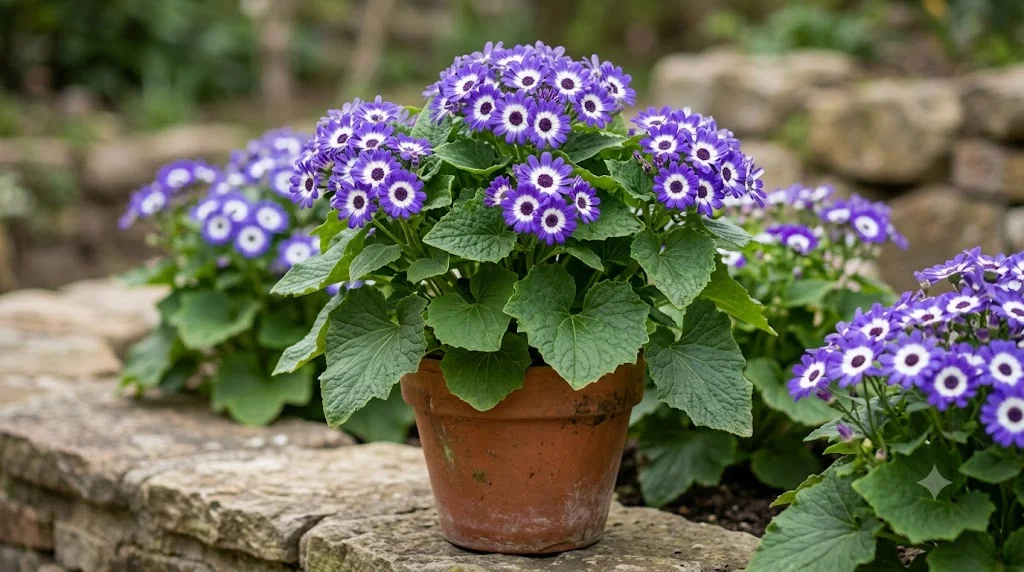

Cineraria needs abundant light to maintain compact growth and support its large number of flower buds. At the same time, its soft leaves and cool-growing habit make it sensitive to intense direct sunshine. The best exposure is bright, filtered, and relatively cool throughout most of the day. Light must therefore be evaluated together with temperature rather than considered as a separate factor.
Providing bright but gentle light
An east-facing window is often an excellent position for cineraria. It supplies useful morning sunlight before the day becomes hot. This exposure supports flower development without placing the leaves under prolonged heat stress. A thin curtain can be used if even the morning sun becomes intense.
A bright north-facing room may also suit the plant, particularly in spring or in locations with unobstructed windows. The plant should be placed close enough to the window to receive substantial daylight. Moving it several metres into the room can reduce light more dramatically than expected. Human vision adapts to dim interiors, but plants respond to the actual intensity reaching their leaves.
South- and west-facing windows require greater caution. Direct afternoon sun through glass can overheat the foliage and growing medium. Filter the light with a translucent curtain or position the plant slightly away from the glass. Monitor leaf temperature and wilting rather than relying only on the window’s orientation.
Outdoor placement can be beneficial during mild weather when the plant is protected from frost. Choose a sheltered position with bright shade or gentle morning sun. Avoid exposed patios where the container becomes hot and dries rapidly. Acclimatize the plant gradually before leaving it outside for long periods.
More articles on this topic
Recognizing excessive or insufficient light
Sun-scorched leaves may develop pale, bleached, or dry brown patches. Damage is often concentrated on the side facing the window. The affected tissue does not recover, although healthy new leaves can still develop. Move the plant to filtered light before additional damage appears.
Excessive light is particularly harmful when combined with high temperature and dry compost. Leaves may wilt even though the roots still contain some moisture. Flower edges can become dry, and buds may open and fade rapidly. Reducing heat exposure is often as important as reducing light intensity.
Insufficient light produces a different pattern of symptoms. Leaf stalks and flower stems may stretch toward the window, creating an open and unbalanced plant. Buds can develop slowly or fail to open fully. The foliage may remain dark green yet lack the compact strength of a well-lit specimen.
Rotate the pot gradually if growth leans strongly toward one side. This distributes light more evenly across the canopy. Large, sudden changes in orientation are unnecessary and can disturb a plant already carrying many buds. A small turn every few days is usually adequate.
More articles on this topic
Adjusting light through the seasons
Winter sunlight is generally weaker and may be tolerated for longer periods. A position that is safe in January can become too hot by late spring. Reassess the plant’s exposure as the sun rises higher and daylight length increases. Seasonal adjustment prevents an initially suitable windowsill from becoming damaging.
Clean windows allow more useful light to reach the plant during dull months. Dust on leaves also reduces light absorption, but cineraria foliage should not be rubbed aggressively. Remove loose dust gently with a soft brush if necessary. Avoid leaf-shine products, which can mark the textured foliage and interfere with natural gas exchange.
Supplemental grow lighting can support young plants or overwintered specimens in dark rooms. Use a purpose-designed horticultural lamp positioned at an appropriate distance. Excessively close lighting can create heat or bleaching, while distant lighting provides little benefit. A regular daily schedule is preferable to irregular illumination.
Light management should always be coordinated with watering. Brighter conditions increase moisture use, while dull cool weather slows it. The same watering interval will not remain appropriate throughout the year. Observing both the plant and its growing medium produces more reliable results than following a fixed routine.