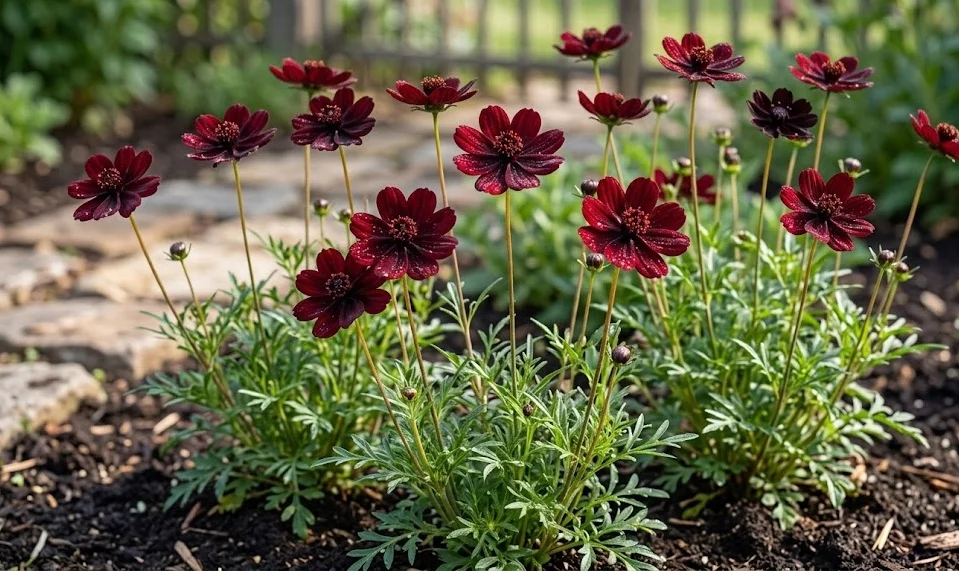

Chocolate cosmos is not a difficult plant, but its tuberous roots and soft summer growth can suffer when conditions become too wet, crowded, or stressed. Most disease and pest problems are easier to prevent than cure. Good drainage, careful watering, air movement, and regular inspection form the backbone of plant protection. When problems are caught early, they can usually be managed without harsh intervention.
Root rot and crown problems
Root rot is the most serious threat to chocolate cosmos. It usually develops when the tuberous roots sit in cold, wet, poorly aerated soil. The plant may wilt even though the soil is moist, which can confuse gardeners into watering more. Once rot advances into the crown, recovery becomes difficult.
Prevention begins with drainage. The plant should never be grown in soil that remains saturated after rain. Containers must have effective drainage holes, and compost should be open enough to allow air movement. A raised bed or mound can be useful in gardens with heavy soil.
The crown should not be buried too deeply. Deep planting traps moisture around the most vulnerable part of the plant. Mulch should also be kept away from direct contact with the crown. This simple detail can make a significant difference during damp weather.
If rot is suspected, the plant should be lifted or removed from the pot for inspection. Healthy tubers are firm, while rotting areas are soft, dark, and often unpleasant-smelling. Small affected areas may be cut away with sterile tools if enough healthy tissue remains. Severely infected plants are usually best discarded to prevent further problems.
More articles on this topic
Powdery mildew and leaf diseases
Powdery mildew may appear as a pale, powdery coating on leaves, especially during warm days, cool nights, and dry roots. It is often associated with stress rather than simply wet foliage. Crowded planting and poor air movement make the problem worse. Although it may not kill the plant quickly, it reduces vigor and spoils appearance.
Consistent watering helps reduce mildew risk. Plants that dry out repeatedly are more vulnerable, particularly in containers. Water should be directed at the soil so roots receive moisture efficiently. Wetting the leaves is less useful and can contribute to other foliar issues.
Good spacing is another important preventive measure. Chocolate cosmos should not be squeezed tightly among vigorous neighbors. Air should move through the stems and around the base of the plant. Removing yellowing or congested foliage also helps reduce disease pressure.
If mildew appears, affected leaves can be removed when practical. The plant’s growing conditions should then be corrected rather than relying only on sprays. Better watering, improved spacing, and reduced stress often slow the problem. Severe repeated mildew may indicate that the site is too enclosed or dry for the plant.
More articles on this topic
Aphids and sap-feeding insects
Aphids can gather on tender shoots, buds, and young stems. They feed by sucking sap, which can distort growth and weaken flower development. Sticky honeydew may appear on leaves and attract sooty mold. Early detection makes control much easier.
Small colonies can often be removed by hand or with a firm spray of water. Beneficial insects such as ladybirds, hoverfly larvae, and lacewings also help control aphids naturally. Avoiding unnecessary broad-spectrum insecticides protects these allies. A balanced garden usually manages minor aphid outbreaks without drama.
Soft, nitrogen-rich growth is more attractive to aphids. This is another reason to avoid overfeeding with high-nitrogen fertilizers. Strong, steady growth is less vulnerable than lush, weak growth. Feeding practices therefore influence pest pressure as well as flowering.
In containers, plants should be inspected frequently because pests can build up quickly in sheltered patio conditions. New purchases should also be checked before being placed beside established plants. Aphids often arrive on young nursery growth. Removing them early prevents a small issue from becoming a persistent infestation.
Slugs, snails, and young shoots
Slugs and snails may damage young chocolate cosmos shoots, especially in spring. New growth emerging from the crown is tender and can be eaten overnight. This is particularly frustrating because the plant may be slow to replace damaged shoots in cool weather. Protection is most important during the early growth stage.
Keeping the area around the plant tidy reduces hiding places. Dense weeds, fallen leaves, and wet debris create perfect shelter for slugs and snails. Gravel mulch or open soil around the crown can make access less comfortable for them. However, mulch choices should still support good root conditions.
Physical barriers can help in pots and raised beds. Copper tape, sharp grit, or container placement on clean surfaces may reduce damage. Evening inspections after rain are also effective. Hand-picking remains one of the most direct methods for small gardens.
Organic slug control products can be considered where pressure is high. They should be used carefully and according to instructions. The wider garden ecology should always be considered, especially where pets, birds, and beneficial wildlife are present. Prevention and monitoring are usually better than heavy repeated treatment.
Integrated plant health management
The healthiest chocolate cosmos plants are grown with prevention in mind from the beginning. Correct soil, good light, moderate feeding, and sensible watering reduce most problems. Stressed plants are always more vulnerable to pests and diseases. Strong cultivation is therefore the first form of plant protection.
Regular inspection should become part of routine care. Looking closely at shoots, buds, leaf undersides, and the crown can reveal early signs of trouble. Problems found early are easier to correct with simple actions. Waiting until the plant declines severely limits the available options.
Sanitation also matters. Dead leaves, faded stems, and diseased material should not be left to accumulate around the base. Tools should be clean when pruning, dividing, or removing infected tissue. If disease has been severe, contaminated compost should not be reused for sensitive plants.
A balanced response is usually best. Not every insect requires treatment, and not every blemished leaf signals disaster. The aim is to keep the plant vigorous enough to flower well and recover from minor stress. With attentive care, chocolate cosmos can remain healthy and attractive through a long growing season.