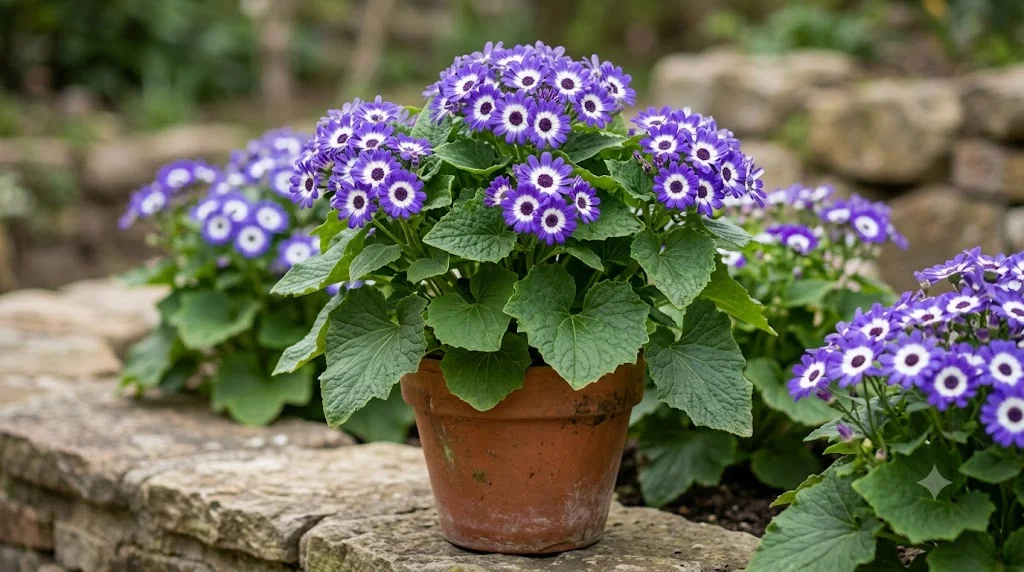

Cineraria is prized for its dense clusters of daisy-like flowers and unusually vivid range of colors. Although it is commonly sold as a temporary indoor flowering plant, careful treatment can extend its display considerably. The plant performs best in cool, bright surroundings where its roots remain evenly moist without becoming waterlogged. Understanding this preference for coolness and consistency is the foundation of successful cineraria care.
Understanding the natural growth pattern
Cineraria develops a compact rosette of broad, softly textured leaves before producing its flower stems. Healthy plants form a full canopy that supports numerous buds above the foliage. The flowering period usually occurs during the cooler part of the year, which reflects the plant’s dislike of excessive heat. Once temperatures rise sharply, flowering often declines and the leaves may lose their fresh appearance.
Most commercially grown cinerarias are bred to provide an intense but relatively concentrated flowering display. They are not naturally long-lived houseplants in the way that many tropical foliage species are. Growers usually manage temperature, light, nutrition, and moisture very carefully to bring them into bloom at the desired time. This explains why a newly purchased plant can deteriorate quickly when moved into a warm living room.
A healthy specimen should have firm leaves, numerous unopened buds, and flowers that show no signs of browning. Plants with many closed buds generally provide a longer display than those already in full bloom. The foliage should be free from pale patches, sticky deposits, webbing, or distorted new growth. Checking the plant carefully before purchase can prevent many later problems.
Cineraria responds poorly to sudden environmental changes, especially abrupt increases in temperature. Moving it directly from a cool shop or greenhouse into a heated room can cause rapid wilting. A gradual transition to its permanent position reduces stress and helps the roots maintain water uptake. Stable conditions are more valuable than repeatedly moving the pot in search of a perfect location.
More articles on this topic
Choosing the best position
A bright position with filtered or indirect light is usually ideal for cineraria. An east-facing window often provides gentle morning sunlight without the intense heat associated with afternoon exposure. A north-facing window can also work when the room is naturally bright. The plant should not be placed in a dark corner, because insufficient light weakens stems and reduces the life of the flowers.
Direct midday sunlight can overheat the leaves and dry the potting mixture rapidly. Strong sun through glass may also scorch the foliage, particularly when water droplets remain on the leaves. A thin curtain can soften excessive light while maintaining adequate brightness. The aim is to provide abundant light without allowing the plant itself to become hot.
Keep cineraria away from radiators, heating vents, fireplaces, and frequently used cooking areas. Warm air causes faster moisture loss from both leaves and growing medium. It can also shorten the flowering period by accelerating flower development and senescence. Even a well-watered plant may wilt when exposed to constant heat.
Good air circulation is useful, but cold draughts should be avoided. A sealed, humid corner encourages fungal diseases, while a strong draught causes rapid temperature fluctuations. Leave enough space around the foliage for air to move naturally. Avoid crowding the plant among many other pots, especially when their leaves remain wet after watering.
More articles on this topic
Maintaining suitable temperatures
Cineraria flowers last longest in cool conditions, ideally between approximately 10 and 18 degrees Celsius. Night temperatures near the lower end of this range are generally beneficial. Daytime temperatures may rise moderately, but prolonged warmth above 20 degrees Celsius often shortens the display. A cool conservatory, enclosed porch, or bright stairwell can therefore be more suitable than a heated lounge.
Temperature management becomes particularly important after the first flowers open. Heat encourages rapid opening of remaining buds but also causes older blooms to fade sooner. A cooler position allows the buds to develop more gradually. This slower pace can extend the decorative period by several weeks.
The plant must still be protected from frost, despite its preference for cool air. Temperatures close to freezing can damage the soft leaves and flower stems. When cineraria is placed outdoors in early spring, it should be brought inside before a cold night. A sheltered position does not always provide adequate protection during a sudden frost.
Daily temperature fluctuations should remain moderate whenever possible. A windowsill that becomes hot in sunlight and very cold at night can place the plant under repeated stress. Check the actual conditions around the leaves rather than relying only on the room thermostat. Glass surfaces, draughts, and direct sunshine can create a small climate that differs considerably from the rest of the room.
Managing water and humidity
Cineraria has a relatively high water requirement while actively growing and flowering. Its broad leaves lose moisture quickly, and the dense root system can dry out a small pot within a short time. Check the growing medium regularly by touching the upper layer with a finger. Water when the surface begins to feel slightly dry, before the entire root ball becomes dehydrated.
Apply water slowly until a small amount drains from the bottom of the container. This method moistens the root ball more evenly than adding frequent small splashes. Empty the saucer or decorative outer pot after drainage is complete. Roots left standing in water are vulnerable to oxygen deprivation and decay.
Repeated wilting weakens cineraria even when the leaves appear to recover after watering. Severe dryness can damage fine roots, cause buds to abort, and produce brown leaf edges. Once the root ball becomes extremely dry, water may run around it instead of soaking into it. In that situation, the pot can be stood briefly in shallow water until the medium absorbs moisture, then allowed to drain thoroughly.
Moderate humidity helps prevent excessive moisture loss from the foliage. However, frequent misting is usually unnecessary and can encourage fungal spotting on hairy leaves. A tray containing damp gravel may raise humidity around the plant without wetting its foliage. The base of the pot must remain above the water level so that drainage holes are not submerged.
Feeding during growth and flowering
A newly purchased flowering cineraria usually contains enough nutrients to support its immediate display. Heavy feeding at this stage is rarely necessary and may create excessive salt levels in the compact root ball. If the plant remains healthy for several weeks, a dilute flowering-plant fertilizer can be applied occasionally. Use no more than half the concentration recommended for general houseplants.
Fertilizers with moderate nitrogen and sufficient potassium support balanced growth and flower quality. Excess nitrogen encourages large, soft leaves at the expense of sturdy flowering stems. It may also make the plant more susceptible to aphids and fungal disease. Feeding should therefore remain controlled rather than generous.
Always apply liquid fertilizer to moist growing medium. Fertilizing a dry root ball can injure the roots because dissolved salts become concentrated around them. Water normally first when the plant is dry, then feed at a later watering. This simple precaution greatly reduces the risk of root damage.
Stop or reduce feeding when flowering ends and growth slows. A declining seasonal plant cannot be restored merely by applying additional fertilizer. Yellow leaves may result from root stress, excessive heat, or overwatering rather than nutrient deficiency. The cause should be identified before any feeding program is adjusted.
Grooming and routine maintenance
Remove faded flowers regularly to keep the plant attractive and reduce the risk of decay. Pinch or cut each spent flower stem close to its base without damaging nearby buds. Decaying petals can trap moisture among the leaves and encourage grey mould. Frequent light grooming is safer than allowing a large amount of dead material to accumulate.
Yellowing leaves should also be removed when they detach easily or show clear signs of deterioration. Use clean scissors when stems are too firm to pinch off neatly. Do not tear healthy tissue, because ragged wounds take longer to dry. Disinfect tools before and after working on a plant with suspicious spots or mould.
Inspect the underside of the leaves at least once a week. Aphids, whiteflies, and spider mites can become established before they are obvious from above. Look for sticky residue, fine webbing, pale stippling, or clusters of small insects. Early intervention is far more effective than attempting to control a severe infestation on a densely foliaged plant.
Rotate the container slightly every few days if light reaches it mainly from one direction. This encourages more even growth and helps prevent flower stems from leaning toward the window. Avoid rotating the plant dramatically after buds have formed, because repeated changes can stress sensitive growth. Small, gradual adjustments are sufficient.
Extending the flowering period
Choose a plant with a high proportion of unopened but well-developed buds. Buds should be plump and show a hint of their mature color. Very small green buds may fail to open if the plant encounters poor light or heat stress. A mixture of open flowers and mature buds usually offers the best balance between immediate impact and longevity.
Cool nights are among the most effective ways to preserve the display. The plant can be moved to a cooler bright room overnight when the temperature difference is not extreme. Avoid locations where the temperature falls below the plant’s safe range. Consistency remains important even when using cooler conditions strategically.
Promptly remove damaged flowers, because decaying petals release moisture and can affect neighboring blooms. Avoid touching healthy petals unnecessarily, as bruised tissue may brown sooner. When watering, direct the flow toward the growing medium rather than over the flower heads. Dry flowers generally remain attractive longer than repeatedly wetted ones.
Eventually, the flowering cycle will naturally come to an end. Some plants can be maintained after flowering, but renewed blooming under ordinary household conditions is uncertain. Cineraria is therefore best appreciated as a cool-season flowering plant rather than treated as a permanent indoor specimen. Excellent care can lengthen its display, but it cannot completely override the plant’s natural seasonal rhythm.