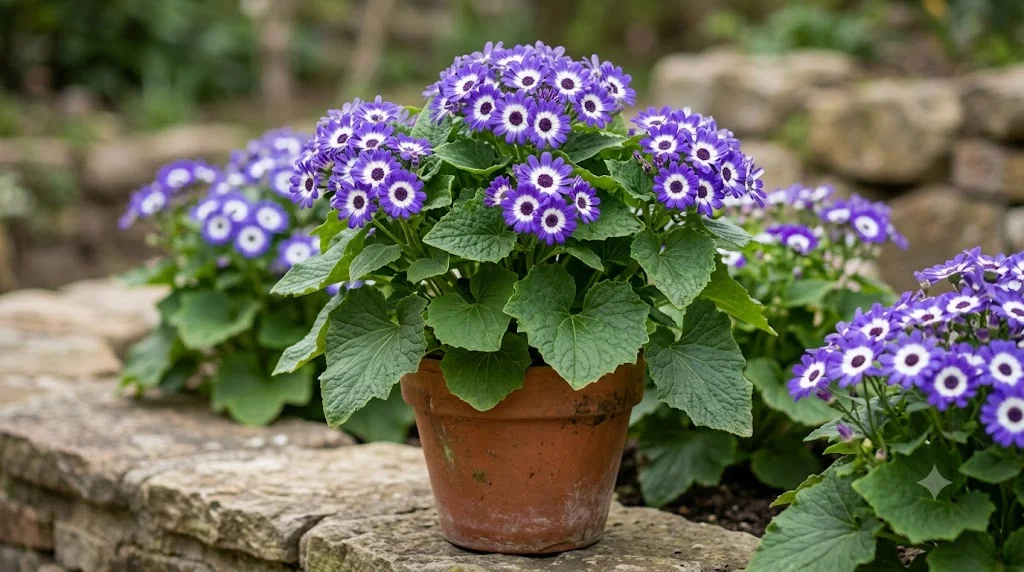

Cineraria is usually grown as a seasonal flowering plant, and keeping it beyond its main display can be challenging. It is sensitive to frost, dislikes warm dry rooms, and may not flower as strongly in a second season. Nevertheless, a healthy plant can sometimes be maintained in a cool, bright, frost-free environment. Realistic expectations and disciplined moisture management are essential throughout the winter period.
Deciding whether a plant is worth keeping
Assess the plant immediately after flowering begins to decline. A specimen with healthy leaves, firm stems, and clean roots has the best chance of surviving. Plants affected by severe pests, extensive mould, or crown rot are poor candidates. Attempting to overwinter a badly weakened plant can also expose other plants to infection.
Consider whether an appropriate cool space is available. A heated living room is generally too warm and dry for prolonged maintenance. A bright conservatory, enclosed porch, cool greenhouse, or frost-free spare room is more suitable. The location should remain ventilated without being exposed to freezing draughts.
It is also important to accept that survival does not guarantee another spectacular display. Commercial cinerarias are produced under carefully controlled greenhouse schedules. Household light levels and temperature patterns may not reproduce those conditions. The plant can remain alive yet develop unevenly or fail to set many buds.
Keeping a plant can still be worthwhile as a horticultural experiment. It provides an opportunity to observe seasonal changes and refine cool-growing techniques. The process is more successful when the plant is treated according to its needs rather than expected to behave like a tropical houseplant. Careful monitoring is more important than frequent intervention.
More articles on this topic
Preparing the plant after flowering
Remove spent flower stems by cutting them near their base. This prevents decaying tissue from remaining among the leaves. Do not cut deeply into the crown or remove healthy foliage without reason. The remaining leaves are needed to support the roots through photosynthesis.
Inspect the entire plant for pests and disease before moving it to a wintering area. Pay particular attention to leaf undersides, soft shoots, and the centre of the crown. Treat minor infestations promptly and isolate the plant until control is confirmed. A clean plant is easier to maintain in confined winter quarters.
Trim only leaves that are yellow, damaged, or infected. Severe cutting back can weaken a plant that is already adjusting after flowering. Use clean, sharp scissors to produce smooth wounds. Allow cut surfaces to dry in good air circulation.
Repot only when drainage is poor, roots are severely congested, or the compost has deteriorated. Unnecessary repotting creates additional stress at a time when growth may be slowing. When repotting is essential, use a slightly larger container and an open, moisture-retentive compost. Keep the crown at its original level.
More articles on this topic
Managing winter conditions
Maintain a cool but frost-free temperature, generally within a range of about 8 to 15 degrees Celsius. Avoid placing the plant beside heaters or in rooms that become hot during the day. Excessive warmth encourages weak growth and increases pest activity. A steady cool environment supports a more controlled resting phase.
Provide as much bright indirect light as possible during short winter days. A position near clean glazing is useful, provided that cold glass does not touch the leaves. Turn the pot occasionally to maintain balanced growth. Supplemental lighting may be beneficial in very dark locations.
Water less frequently than during full flowering, but do not allow complete desiccation. Cool conditions slow water use, and the compost may stay moist for many days. Check below the surface before each watering. Apply enough water to moisten the root ball, then drain the container thoroughly.
Do not maintain high humidity by constantly misting the foliage. Wet leaves in a cool room are vulnerable to fungal infection. Moderate surrounding humidity and gentle air movement are preferable. Increase ventilation on mild days without exposing the plant to a sudden cold draught.
Encouraging renewed growth
As daylight increases, watch for fresh leaves emerging from the crown. New growth indicates that the roots remain active and the plant is responding to seasonal change. Increase watering gradually rather than making an abrupt change. The compost should remain evenly moist as leaf production accelerates.
Begin feeding only after clear new growth is established. Use a dilute balanced fertilizer at extended intervals. Strong early feeding may produce soft leaves before the root system is ready to support them. Increase nutrition cautiously if the plant remains compact and healthy.
Continue providing cool conditions while flower buds develop. Warm spring rooms can cause weak stems and a shortened flowering period. Bright light and moderate temperatures support stronger growth. Protect the plant from late frost if it is moved outdoors temporarily.
If the plant becomes sparse, diseased, or persistently weak, disposal may be the most sensible option. Not every cineraria responds successfully to overwintering. Starting again with a fresh plant or seed-grown seedlings often produces a better display. Overwintering should therefore be viewed as possible but not reliably repeatable.