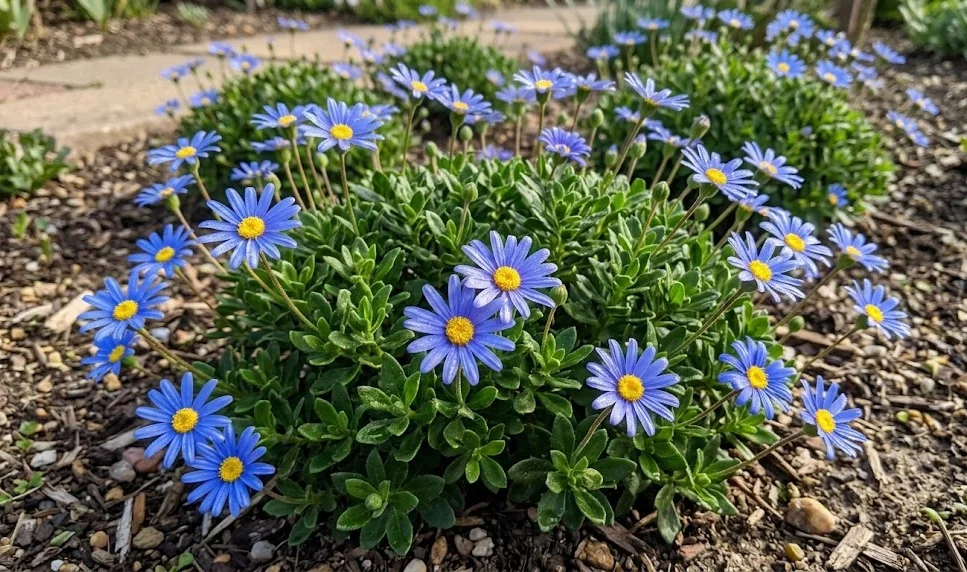

Pruning is a vital horticultural practice that helps maintain the shape, health, and productivity of the blue daisy. While many novice gardeners are hesitant to cut back their plants, a professional knows that regular trimming is the key to a bushier and more floriferous specimen. By removing old or damaged growth, you encourage the plant to direct its energy into new, vigorous shoots. A well-pruned blue daisy not only looks better but is also much more resilient to environmental stresses and pests.
The most frequent type of pruning you will perform is deadheading, which involves removing the faded flowers before they can turn to seed. This simple task tricks the plant into thinking it hasn’t completed its reproductive cycle, prompting it to produce even more blooms. It is a continuous process that should be done every few days throughout the entire growing season. Using a sharp pair of snips allows you to make clean cuts that heal quickly and minimize the risk of infection.
Beyond deadheading, there are times when a more significant structural pruning is required to keep the plant from becoming leggy or overgrown. This usually happens in the early spring or after a particularly heavy flush of flowers in midsummer. Cutting back the stems by a few centimeters can stimulate the growth of lateral buds, leading to a much denser and more compact shape. This habit is especially important for plants grown in containers where space is limited and appearance is paramount.
Understanding the timing and the technique of pruning is what separates an expert from an amateur. You should always aim to cut just above a set of healthy leaves or a dormant bud to ensure that the new growth emerges exactly where you want it. Cleanliness is also essential, so make sure to sterilize your tools before and after working on each plant. With a little practice, pruning will become a rewarding part of your regular garden maintenance routine.
Deadheading for continuous and vibrant blooms
Deadheading is perhaps the most impactful maintenance task you can perform to extend the flowering season of your blue daisies. When a flower fades and begins to form seeds, the plant shifts its hormonal balance toward maturation rather than growth. By removing these spent blooms, you interrupt this process and signal the plant to continue producing new flower buds. This can extend the blooming period by several weeks or even months in favorable weather conditions.
More articles on this topic
To deadhead correctly, you should follow the flower stem down to the first set of healthy leaves and make your cut there. Avoid leaving long, unsightly stubs, as these can become entry points for rot or disease as they wither. If the plant is covered in many small flowers, you can sometimes use your fingers to pinch off the old blooms, though scissors are always more precise. The goal is to keep the plant looking fresh and to prevent the energy drain associated with seed production.
In addition to encouraging more flowers, deadheading also improves the overall aesthetic appeal of your garden display. A plant covered in dried, brown seed heads can look neglected and messy, detracting from the beauty of the fresh blue blossoms. Regularly spent flowers also reduce the risk of grey mold, which often starts on decaying plant tissues during periods of high humidity. Keeping your plants tidy is a simple way to maintain their health and your garden’s professional appearance.
Don’t be afraid to be aggressive with your deadheading, especially during the peak of summer when the plant is most active. Even if you accidentally remove a few young buds, the plant will quickly replace them with new growth. You will soon find that a few minutes of work each week results in a much more spectacular and long-lasting floral show. It is one of the most satisfying tasks in the garden, as you can see the immediate improvement in the plant’s appearance.
Annual structural pruning and shaping
Once a year, usually in the early spring, your blue daisy will benefit from a more thorough structural pruning. This is the time to remove any stems that were damaged by winter cold or that have become excessively woody and unproductive. You can cut the entire plant back by about one-third or even one-half of its height to encourage a fresh start for the new season. This drastic-sounding measure actually rejuvenates the plant and prevents it from becoming too sparse in the center.
More articles on this topic
When shaping the plant, aim for a balanced, mounding form that allows light and air to reach all parts of the foliage. If certain stems are growing much faster than others and ruining the symmetry, don’t hesitate to trim them back to match the rest. This creates a much more professional and “manicured” look that is highly desired in formal garden beds and containers. Shaping is best done when the plant is just starting its first flush of spring growth.
You should also look for any stems that are crossing or rubbing against each other, as these can create wounds that invite pests and disease. Removing these problematic branches improves the structural integrity of the plant and ensures that the remaining stems have plenty of room to expand. A well-structured plant is better able to withstand the weight of its flowers and the force of summer winds. Think of this annual pruning as a way to set the foundation for the entire year’s growth.
If your plant has become particularly large and unruly over several years, you might need to be even more bold with your cuts. The blue daisy is remarkably resilient and will usually respond to heavy pruning with a burst of healthy new growth. However, always make sure to leave some green foliage on the stems, as cutting back into old, bare wood can sometimes be too much for the plant to handle. Balancing rejuvenation with the plant’s current health is the mark of an experienced gardener.
Rejuvenating leggy plants and tool hygiene
In the middle of summer, some blue daisies can start to look “tired” or leggy, with long stems and few flowers at the tips. This is often a sign that the plant needs a mid-season rejuvenation prune to spark a secondary flush of growth. You can shear the top few centimeters of the entire plant, removing the spent flowers and the tips of the stems all at once. While the plant might look a bit bare for a week or two, it will soon bounce back with a dense layer of fresh leaves and buds.
This mid-season trim is also a great time to apply a bit of liquid fertilizer to support the new growth that will follow. The combination of pruning and feeding acts as a “reset button” for the plant, giving it the energy it needs to finish the season strong. You will often find that this second round of flowers is just as impressive as the first one in the spring. Rejuvenation is an essential strategy for maintaining a professional garden display throughout the entire summer.
The importance of using clean, sharp tools for all your pruning tasks cannot be overstated in a professional context. Dull blades can crush the stems instead of cutting them, creating jagged wounds that take much longer to heal and are more susceptible to infection. You should sharpen your shears regularly and clean them with a disinfectant between different plants. This simple habit prevents the accidental spread of viral and fungal diseases across your entire garden collection.
After you have finished pruning, always take the time to clear away the clippings from around the base of the plant. Leaving decaying plant material on the soil can attract pests and provide a breeding ground for various pathogens. Composting the healthy green waste is a great way to recycle the nutrients, but any diseased material should be disposed of in the trash. A tidy workspace is the final step in a professional pruning routine that ensures the long-term health of your blue daisies.