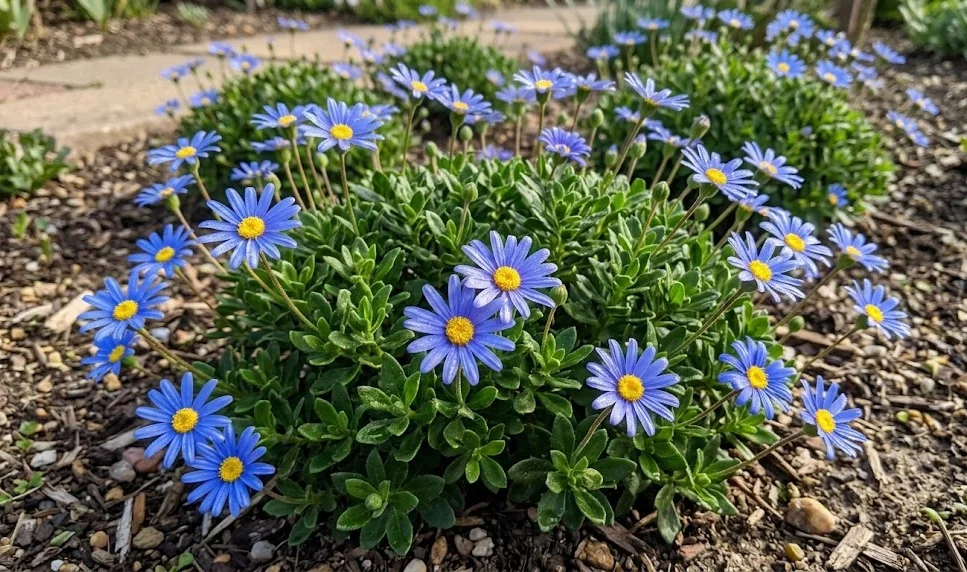

Proper hydration and nutrition are the twin pillars of a successful gardening strategy for the blue daisy. While this plant is known for its resilience, it still requires a consistent approach to its water and nutrient needs to perform its best. Finding the right balance is essential, as both neglect and over-indulgence can lead to health problems. By mastering these two elements, you will be rewarded with a lush, green plant that is covered in striking blue blossoms all season long.
The primary rule of watering this species is to allow the top layer of soil to dry out between applications. This prevents the roots from sitting in stagnant water, which is the most common cause of plant failure. You should aim to water the soil directly rather than the foliage to minimize the risk of fungal leaf diseases. Early morning is the most effective time to water, as it allows any accidental moisture on the leaves to evaporate quickly.
As the weather heats up, you will need to increase the frequency of your watering sessions to keep up with the plant’s needs. However, always check the soil moisture with your finger before adding more water to be sure it is truly necessary. Potted plants will naturally require more frequent attention than those growing in the ground because their roots have a limited volume of soil. Observant gardeners will soon learn to recognize the subtle drooping of the leaves that signals a need for a drink.
Fertilization is equally important, as it provides the fuel needed for the plant to produce its signature blue flowers. A balanced, slow-release fertilizer applied in the spring can provide a steady stream of nutrients for several months. During the peak blooming period, you can supplement this with a liquid feed to give the plant an extra boost. Understanding what your plant needs and when it needs it is the mark of a truly professional gardener.
Fundamentals of hydration and soil moisture
Watering a blue daisy is not just about the amount of liquid you provide, but also about the method and timing. A deep watering that reaches the entire root zone is much more beneficial than a shallow, frequent sprinkling. This encourages the roots to grow deeper into the soil, making the plant more drought-tolerant in the long run. You should watch how the water absorbs into the ground to ensure it isn’t just running off the surface.
More articles on this topic
Environmental factors like wind and sun intensity will drastically change how quickly the soil loses its moisture. On windy days, the evaporation rate from the leaves and the soil surface increases significantly, requiring a bit more attention. Conversely, during a period of cloudy or rainy weather, you should pull back on your watering schedule to avoid over-saturation. Nature often provides enough hydration, and your job is to fill in the gaps when the weather is dry.
Using a layer of organic mulch around the base of the plant can help regulate the soil moisture and temperature. This protective layer acts as a barrier, slowing down evaporation and keeping the roots cool during the heat of the day. Be careful not to pile the mulch directly against the stem, as this can trap moisture and cause the base of the plant to rot. A well-mulched garden bed is much easier to manage and requires less frequent intervention from the gardener.
If you are growing your daisies in containers, the type of material the pot is made from will also affect its water needs. Terracotta pots are porous and allow moisture to escape through the walls, which is great for drainage but means you’ll need to water more often. Plastic or glazed ceramic pots retain moisture for much longer and are better suited for those who cannot check their plants every day. Tailoring your watering routine to the specific environment of your plant is the key to its happiness.
Seasonal patterns of irrigation
The water requirements of the blue daisy change significantly as it moves through its various growth stages and the seasons. In the spring, when the plant is putting on new growth, it needs consistent moisture to build its cellular structure. This is the period when the plant is most active, so you should ensure it never stays dry for too long. A steady supply of water during this time will lead to a much larger and more robust plant by early summer.
More articles on this topic
When summer arrives and the temperatures peak, the plant enters a high-stress phase where it loses water rapidly through transpiration. During this time, you may need to water your outdoor containers every single day, especially if they are in full sun. It is helpful to set up a regular routine so that the plant doesn’t experience extreme cycles of wilting and recovery. This consistency helps the plant maintain its flower production even during a heatwave.
In the autumn, as the growth slows down and the air becomes cooler, you should gradually reduce the amount of water you provide. The plant’s metabolic rate decreases, meaning it doesn’t need nearly as much hydration to sustain itself. Overwatering in the late season can be particularly dangerous as the soil stays wet for longer due to the cooler temperatures. Preparing the plant for winter means letting the soil dry out more thoroughly between each watering session.
During the winter months, if the plant is being kept in a sheltered or indoor location, its water needs are minimal. You should only provide enough water to keep the root ball from drying out completely, perhaps once every few weeks. Dormant plants are very susceptible to root rot if they are kept in wet soil while they aren’t actively growing. Understanding these seasonal shifts is what separates a novice from an expert gardener.
Essential nutrients for flowering and health
Like all flowering plants, the blue daisy requires a specific mix of macronutrients and micronutrients to thrive and bloom. Nitrogen is necessary for healthy, green foliage, but too much of it can lead to a plant that is all leaves and no flowers. Phosphorus is the key nutrient for bloom development and root strength, making it vital during the flowering season. Potassium helps with overall plant resilience and its ability to withstand environmental stresses like drought or disease.
Beyond the big three, there are several micronutrients like iron, magnesium, and calcium that play supporting roles in the plant’s health. A deficiency in any of these can lead to yellowing leaves or stunted growth, even if the plant is being watered correctly. Using a high-quality, balanced fertilizer ensures that these trace elements are present in the correct proportions. Many expert gardeners prefer using organic options because they improve the soil structure while feeding the plant.
The timing of your fertilization is just as important as the type of nutrients you use. Starting your feeding program in the early spring gives the plant a head start as it wakes up from its winter rest. You should avoid fertilizing during periods of extreme heat or when the plant is already stressed from a lack of water. Applying fertilizer to a thirsty plant can actually cause the roots to burn, leading to more harm than good.
As the growing season winds down in the late summer, you should stop adding heavy fertilizers to the soil. This encourages the plant to start slowing its growth in preparation for the winter months ahead. Forcing a plant to continue growing with late-season nitrogen can make it more susceptible to frost damage. A well-planned nutrient schedule follows the natural rhythm of the plant’s life cycle.
Choosing the right fertilizer for your garden
With so many products on the market, choosing the right fertilizer for your blue daisy can seem overwhelming at first. For most situations, a balanced, water-soluble fertilizer with an N-P-K ratio like 10-10-10 or 20-20-20 is a safe and effective choice. These are easy to apply and provide an immediate boost of nutrients that the plant can absorb through its roots. You can simply mix it into your watering can according to the instructions on the package.
If you prefer a more “set it and forget it” approach, slow-release granular fertilizers are an excellent alternative. These are usually applied to the surface of the soil once or twice a year and break down slowly over several months. This provides a steady, low-level supply of nutrition that prevents the peaks and valleys of a liquid feeding schedule. This method is particularly useful for large garden beds where individual feeding might be too time-consuming.
Organic fertilizers, such as seaweed extract or fish emulsion, are also highly recommended for those looking for a more natural approach. These products often contain a wide range of micronutrients and beneficial bacteria that improve the long-term health of your soil. While they might not provide the same rapid growth as synthetic options, they build a much more sustainable environment for your plants. Many professional landscapers use a combination of both organic and synthetic products to get the best of both worlds.
Always read the label carefully and follow the recommended dosage to avoid over-fertilizing your plants. Too much fertilizer can lead to a buildup of salts in the soil, which can eventually become toxic to the delicate root system. If you notice a white, crusty buildup on the surface of your potting soil, it may be a sign that you need to flush the soil with clean water. Moderation is the key to maintaining a healthy and productive garden.
Signs of nutrient deficiency and common mistakes
One of the best ways to improve your gardening skills is to learn how to read the signals your plants are sending you. If the leaves of your blue daisy are starting to turn pale yellow while the veins remain green, it could be a sign of iron deficiency. Stunted growth and a lack of flowers often indicate that the plant is not receiving enough phosphorus. Addressing these issues early can prevent long-term damage and keep your plant on the path to success.
Over-fertilizing is a common mistake that can lead to “leggy” growth where the stems become long and weak. This happens when the plant grows too fast for its structure to support it, often due to an excess of nitrogen. These weak stems are much more likely to break in the wind or become a target for pests like aphids. If your plant looks unusually lush but has very few flowers, you should probably reduce your feeding frequency.
Another frequent error is fertilizing the plant when the soil is completely bone-dry. This can cause a high concentration of nutrients to come into direct contact with the roots, leading to chemical burns. You should always ensure the plant is well-hydrated before applying any type of liquid or granular fertilizer. This simple step protects the sensitive root hairs and ensures the nutrients are distributed evenly throughout the soil.
Lastly, don’t forget that the pH of your soil can affect how well your plant can actually use the nutrients you provide. If the soil is too alkaline or too acidic, some minerals become “locked” and are no longer available for the roots to absorb. If you’ve been fertilizing regularly but the plant still looks unhealthy, it might be time to check the pH levels. A holistic approach to plant health is the only way to achieve professional-level results.