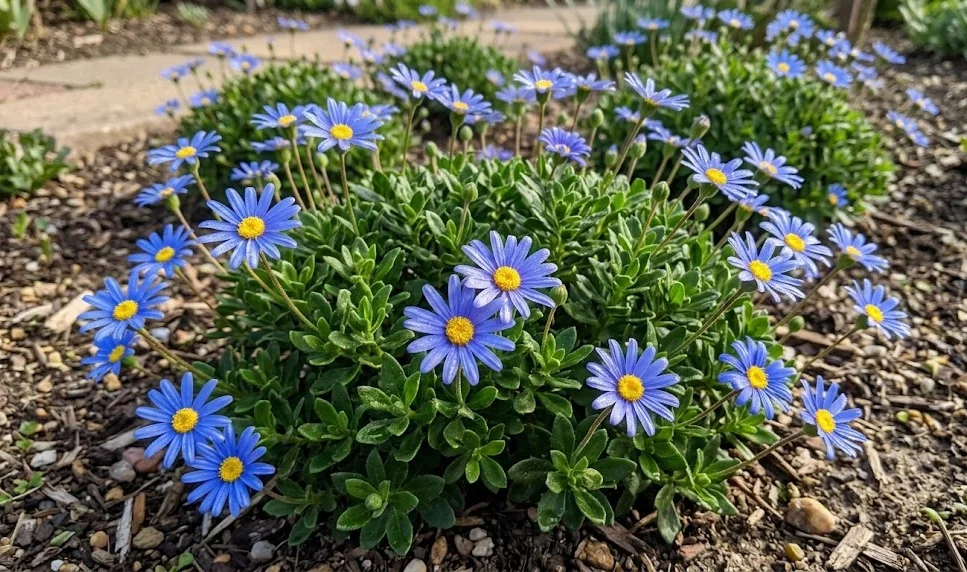

The relationship between the blue daisy and the sun is one of the most important factors in its overall health and productivity. Like many plants originating from South Africa, it is naturally adapted to environments with high light intensity and long days. Without enough solar energy, the plant will struggle to produce its vibrant blue flowers and may become weak and leggy. Understanding how to manage light exposure is a fundamental skill for anyone looking to achieve professional results with this species.
The ideal situation for a blue daisy is a location that receives full sun for at least six to eight hours each day. This level of light provides the energy needed for photosynthesis and triggers the production of the pigments that give the flowers their unique color. In a garden setting, this usually means an open, south-facing position that is not shaded by buildings or large trees. The more light the plant receives, the more compact and floriferous it will generally be.
While the plant loves the sun, there is a subtle balance to be struck when it comes to extreme heat and light. In very hot climates, the intense midday sun can sometimes lead to wilting or a decrease in flower production during the height of summer. In these cases, providing a bit of filtered shade during the hottest part of the afternoon can actually be beneficial. Observant gardeners will watch how the plant responds to the movement of the sun throughout the day and adjust its position if necessary.
Light also plays a critical role in the timing of the plant’s flowering cycles throughout the year. The blue daisy is often responsive to the changing length of the days, blooming most heavily when the light is most abundant. This means that your brightest summer months will always be the peak of the floral display. By prioritizing light in your garden design, you are giving your plants the best possible chance to shine.
Optimal sun exposure and its benefits
Full sun exposure does more than just help the plant grow; it directly influences the structural integrity of the stems and leaves. Plants grown in bright light tend to have shorter internodes, which results in a much denser and more attractive mounding habit. This compact growth is not only more aesthetically pleasing but also makes the plant more resistant to wind and rain. A sun-drenched plant is a strong plant that can better support the weight of its numerous blossoms.
More articles on this topic
The intensity of the blue color in the ray florets is also a direct product of the light levels the plant receives. High light levels stimulate the production of anthocyanins, the pigments responsible for the striking azure hues. If you notice your flowers looking pale or washed out, it is often a sign that the plant needs a brighter location. Moving a struggling plant into more sun can often result in a dramatic improvement in its appearance within just a few weeks.
Sunlight also acts as a natural sanitizer for the garden, helping to keep the foliage dry and reducing the risk of fungal infections. The UV rays from the sun can inhibit the growth of many common pathogens that thrive in damp, shaded areas. This is why plants in full sun often look much cleaner and healthier than those tucked away in the shadows. Providing adequate light is one of the most effective forms of natural pest and disease control.
For those growing in containers, the ability to move the pots to follow the sun is a major advantage. As the angle of the sun changes with the seasons, a spot that was sunny in May might be in deep shade by September. Being able to shift your plants allows you to maximize their light exposure throughout the entire growing season. This flexibility is key to maintaining a consistent and professional-looking display of flowers from spring until autumn.
Effects of insufficient light on growth
When a blue daisy doesn’t get enough light, it will quickly start to show signs of distress that are easy for an expert to recognize. The most common symptom is “etiolation,” where the stems become long, thin, and weak as the plant tries to reach toward a light source. This leads to a floppy, unattractive appearance and makes the plant much more prone to breaking. You will also notice that the distance between the leaves becomes much larger, making the plant look sparse.
More articles on this topic
The production of flowers is usually the first thing to suffer when the light levels drop below the required minimum. The plant will prioritize survival and foliage growth over the energy-intensive process of blooming. You might see a few scattered flowers, but they will be smaller and less vibrant than those grown in full sun. In deep shade, the plant may stop blooming entirely, leaving you with nothing but a collection of weak green stems.
Lack of light also weakens the plant’s overall immune system, making it much more vulnerable to pests and diseases. Aphids and other sap-sucking insects are often more attracted to the soft, weak growth of shade-grown plants. Furthermore, without the sun to dry out the leaves, fungal spores have a much easier time establishing themselves on the foliage. A plant in the shade is a plant that is constantly struggling against its environment.
If you find that your chosen planting spot is too dark, it is usually best to move the plant as soon as possible. While some plants can adapt to lower light levels, the blue daisy is not one of them and will never truly thrive in the shade. Even a move of just a meter or two can sometimes make a significant difference in the amount of light the plant receives. Taking action early will prevent the plant from becoming permanently stunted or disfigured.
Managing intense heat and afternoon shade
In some regions, the problem isn’t a lack of light, but rather an excess of heat that often accompanies the intense summer sun. When temperatures climb into the mid-thirties, the blue daisy may enter a semi-dormant state to conserve its internal moisture. During these periods, you might notice the flowers closing up or the leaves curling slightly to reduce their surface area. This is a natural defense mechanism, but it can be managed to keep the plant looking its best.
Providing a location that gets full morning sun but is protected from the harshest afternoon rays can be the perfect solution in hot climates. The morning sun is bright enough to trigger blooming, but the air is still cool enough that the plant doesn’t become overly stressed. By the time the afternoon heat arrives, the plant is in the shade and can focus on maintaining its hydration. This balance allows for a much longer and more consistent blooming period in southern regions.
Using light-colored containers or planting in the ground can also help keep the root system cooler during heatwaves. Dark pots can absorb an incredible amount of heat, which can cook the delicate roots and cause the plant to wilt even if the soil is wet. Mulching the soil surface with light-colored materials like gravel can also reflect some of the heat away from the base of the plant. These small adjustments can make a big difference in how well your blue daisies handle the height of summer.
Always remember that the light requirements of the plant are closely linked to its need for water. A plant in full, intense sun will transpire water much faster than one in partial shade and will need to be checked more frequently. If you can provide the right amount of light along with the necessary hydration, your blue daisies will be the star of your garden. Professional light management is about understanding the local climate and making the necessary adjustments for the health of the plant.