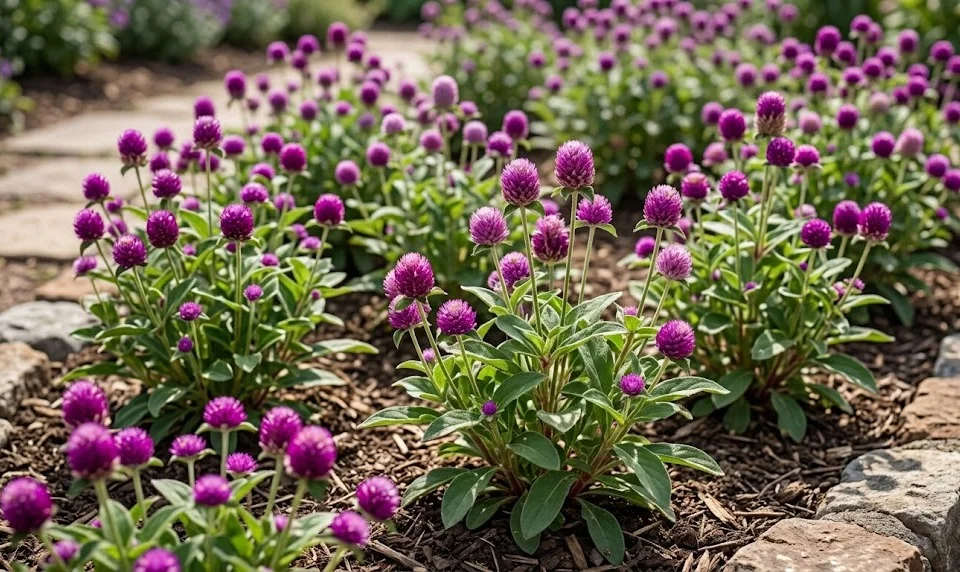

Pruning and trimming the globe amaranth is a simple yet effective way to manage its shape and encourage more flowers. Many gardeners mistakenly believe that annuals do not require any cutting, but this species responds remarkably well to a little strategic maintenance. By removing spent blooms and thinning out dense growth, you can keep the plant looking fresh and vibrant all summer long. A proactive approach to pruning also helps prevent the plant from becoming too top-heavy and falling over.
The primary goal of trimming is to stimulate the production of new side shoots, which will eventually carry their own flower heads. When you remove a stem, the plant redirects its growth hormones to the lower buds, resulting in a bushier and more compact form. This is particularly useful if your plants have become a bit tall and spindly due to competition or slightly lower light levels. A quick trim can completely transform the appearance of a bed of globe amaranth in just a few weeks.
Deadheading, or the removal of faded flowers, is another essential part of the pruning process for any serious gardener. While the bracts of this species are very long-lasting, they do eventually lose their luster and begin to turn brown. Removing these old heads prevents the plant from putting its energy into seed production and encourages it to keep blooming. This simple task can significantly extend the overall flowering season and keep the garden looking neat.
Using the right tools and techniques will ensure that your pruning efforts are successful and do not damage the plant. Always use clean, sharp bypass pruners or garden snips to make clean cuts that heal quickly. Avoid tearing the stems or using dull tools, as this can create entry points for pests or diseases. A professional approach to even the simplest tasks will always yield the best results in the long-term health of your garden.
Techniques for encouraging bushiness
To create a truly impressive, bushy plant, you should start your pruning efforts while the globe amaranth is still relatively young. When the seedling is about six inches tall, you can pinch off the very top growing point of the main stem. This might feel counterintuitive, but it forces the plant to develop multiple branches from the base rather than just one single stalk. This early intervention is the secret to getting those full, rounded mounds of color that look so professional in landscape designs.
More articles on this topic
As the plant continues to grow, you can repeat this pinching process on the side branches to further increase its density. Just make sure to leave enough foliage on the plant so that it can continue to photosynthesize and grow. Each time you pinch a stem, you are essentially doubling the number of potential flowers that the plant can produce. It is a small investment of time that pays off with a much more dramatic floral display later in the season.
If you have missed the early window for pinching, you can still achieve a similar effect on more mature plants. You can cut back about one-third of the overall height of the plant to encourage a flush of new growth from the interior. This is a great way to rejuvenate a plant that has become a bit “leggy” or open in the center. The plant is quite resilient and will quickly produce new leaves and buds to fill in the gaps.
Always make your cuts just above a pair of leaves or a visible node, as this is where the new growth will emerge. Avoid leaving long stubs of stem, as these can die back and look unsightly while also providing a home for pests. By paying attention to the anatomy of the plant, you can guide its growth in a way that is both aesthetically pleasing and healthy. Precision in pruning is a hallmark of an expert gardener who understands the biology of their plants.
Mastering the art of deadheading
Deadheading is a continuous task throughout the summer that keeps your globe amaranth looking its absolute best. Because the flowers are so durable, it can sometimes be difficult to tell exactly when they are “spent” and ready to be removed. Look for signs that the bracts are beginning to lose their vibrant color or are starting to feel very dry and brittle. If the center of the flower head is starting to elongate and show seeds, it is definitely time to cut it off.
More articles on this topic
When deadheading, do not just remove the flower head itself; instead, cut the stem back to the next set of leaves or a side bud. This encourages the plant to branch out from that point and produce a brand-new flower on a sturdy stem. If you only remove the head, you will be left with a series of unattractive, leafless sticks poking out of the foliage. Taking that extra inch or two off the stem makes a huge difference in the overall look of the plant.
If you are growing globe amaranth for cut flowers, your harvesting routine actually acts as a form of deadheading. By cutting the fresh blooms for your indoor arrangements, you are performing the same service for the plant. This is one of the reasons why these plants often look so much better in a cutting garden than in a neglected border. The more you take from the plant, the more it is motivated to produce in order to complete its life cycle.
During the peak of the season, you might find that you need to do a quick deadheading session once a week. It doesn’t take long and can be a very relaxing way to spend a few minutes in the garden in the evening. Keeping a small bucket or bag with you to collect the clippings will make the cleanup process much faster and more efficient. Consistency is key to maintaining a high-quality floral display from early summer all the way until the first frost.
End of season rejuvenation
As the summer draws to a close, you might find that the plants have become quite large and perhaps a bit messy. This is a good time for a final, light rejuvenation pruning to keep them looking tidy through the autumn months. You can remove any damaged or crossing stems and thin out the center of the plant to improve air circulation. This helps prevent any late-season fungal issues and keeps the remaining flowers as the main focus.
If you live in a region where the autumns are long and mild, this late pruning can trigger one last flush of blooms. The cooler temperatures often make the flower colors even more intense, providing a spectacular finale to the growing season. It is worth the effort to keep the plants maintained even as other parts of the garden begin to go dormant. The globe amaranth is a loyal performer that will stay with you as long as the weather permits.
For those who want to save seeds, you should leave a few of the best flower heads on the plant to fully mature and dry out. These should be the ones that were produced mid-season and show the best characteristics of the variety. Marking these specific stems with a piece of string or a tag will ensure you don’t accidentally deadhead them during your routine maintenance. Once they are completely dry, you can harvest them and store the seeds for next year.
Finally, once the first hard frost has finally ended the plant’s life, the remaining stems can be cut all the way to the ground. If the plants were healthy, you can add the material to your compost pile, but if there were any disease issues, it is best to dispose of them. Clearing the area in the late autumn prepares the bed for its winter rest and for the new life that will begin in the spring. Pruning is truly the beginning and the end of the gardening cycle, ensuring health and beauty at every stage.