
Caring for Japanese andromeda requires a thoughtful approach that respects its natural habitat in the mountain forests of East Asia. This evergreen shrub is celebrated for its elegant drooping clusters of flowers and its striking foliage that changes color throughout the seasons. To ensure your specimen remains healthy and vibrant, you must pay close attention to the specific acidity of the soil and the moisture levels in the ground. Developing a consistent routine will help the plant establish a strong root system and produce the spectacular blooms it is known for.
The first step in long-term care involves monitoring the environmental conditions surrounding your plant to prevent unnecessary stress. These shrubs prefer a stable environment where they are protected from harsh winds that can dry out their broad evergreen leaves during the winter months. You should observe how the plant reacts to the changing seasons, as its water and nutrient needs will fluctuate significantly between the spring growth spurt and winter dormancy. Providing a layer of organic mulch around the base of the plant is one of the most effective ways to regulate soil temperature and retain moisture.
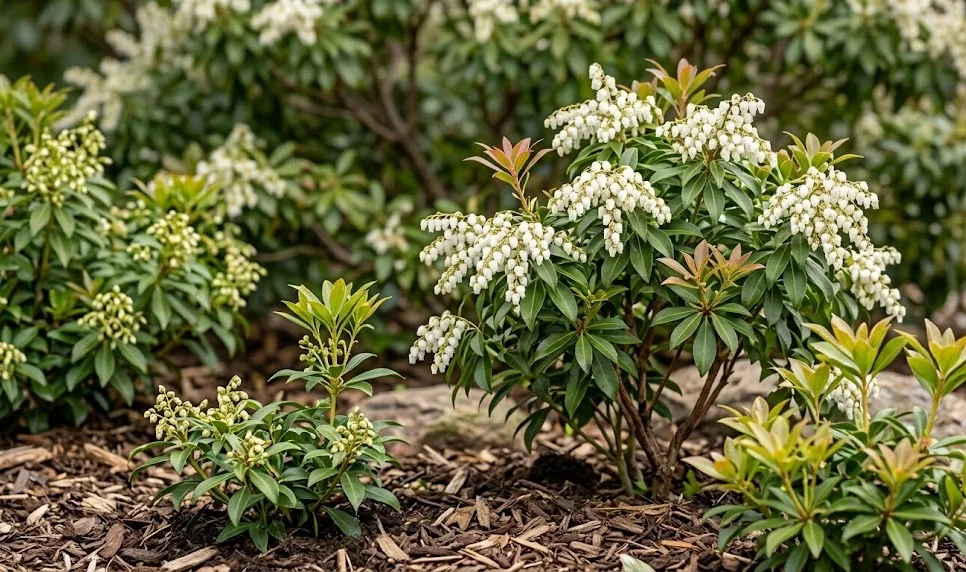
Understanding the life cycle of this plant allows you to anticipate its needs before problems arise in the garden. In early spring, the plant prepares to bloom, and this is when it requires the most support in terms of hydration and available nutrients. As the flowers fade, the new foliage emerges in brilliant shades of bronze, red, or pink, depending on the specific variety you have chosen. This transition period is critical because the soft new growth is particularly sensitive to environmental extremes and requires a gentle hand in management.
Consistency is the hallmark of professional gardening, especially when dealing with ericaceous plants like the Japanese andromeda. You should keep a garden journal to track the timing of blooms and any changes in leaf color that might indicate a shift in soil pH. While these plants are relatively slow-growing, they reward the patient gardener with a dense, architectural form that adds structure to the landscape. By focusing on the fundamental needs of the plant, you create a resilient specimen that can withstand the test of time and provide beauty for many years.
Optimal soil conditions and acidity levels
The foundation of health for this shrub lies in the chemistry and structure of the soil in which it is planted. It is an acid-loving plant, meaning it thrives in soil with a pH level between 4.5 and 5.5, which allows it to absorb essential micronutrients. If the soil becomes too alkaline, the plant will quickly show signs of distress, most notably through the yellowing of leaves known as chlorosis. You must ensure that the soil is rich in organic matter, such as peat moss or leaf mold, to maintain the necessary acidity and drainage.
More articles on this topic
Soil texture is just as important as its chemical composition when you are aiming for professional results. The roots of this plant are relatively shallow and delicate, meaning they need a loose, airy medium to expand without resistance. Heavy clay soils should be avoided or heavily amended because they trap water and can lead to the suffocation of the root system. A well-structured soil will feel spongy to the touch and will allow excess water to move through while keeping the roots sufficiently hydrated.
Testing your soil regularly is a professional habit that prevents many common issues before they manifest physically. You can use a simple home testing kit or send a sample to a laboratory to get an accurate reading of the current pH and nutrient levels. Based on these results, you might need to add elemental sulfur or specialized acidifying fertilizers to bring the environment into the ideal range. Neglecting the soil health is the most common reason for the failure of these shrubs in domestic gardens.
Maintaining the organic content of the soil is an ongoing process that extends beyond the initial planting phase. Over time, the organic matter decomposes and is used by the plant and soil microorganisms, which can lead to a drop in the quality of the soil structure. You should top-dress the area with fresh compost or aged pine bark every year to replenish these vital components. This practice not only feeds the plant but also encourages a healthy soil biome that protects the roots from pathogens.
Managing seasonal transitions and growth cycles
As winter gives way to spring, the Japanese andromeda undergoes a dramatic transformation that requires careful observation. The flower buds, which formed in the previous autumn, begin to swell and eventually open into delicate, honey-scented blossoms. During this period, you should ensure the plant has access to steady moisture, as any period of drought can cause the flowers to drop prematurely. This is also the time when the plant begins to move nutrients from its storage tissues to the tips of its branches.
More articles on this topic
The emergence of new foliage following the bloom cycle is one of the most decorative phases of the plant’s life. These young leaves are often highly pigmented and provide a second wave of visual interest after the flowers have faded. However, this soft growth is very attractive to certain insects and is vulnerable to late spring frosts that can blacken the tender tips. You must be prepared to provide temporary cover if a sudden temperature drop is predicted after the growth has started.
Midsummer brings its own set of challenges, primarily related to heat and potential water loss through the large surface area of the leaves. While the plant is no longer actively growing new stems, it is busy setting the buds for the following year’s floral display. Stress during the summer months can lead to poor flower production in the spring, so keeping the plant cool and hydrated is a priority. Deep, infrequent watering is better than shallow daily sprays, as it encourages the roots to grow deeper into the cooler layers of the soil.
In the autumn, the plant begins to harden off its wood in preparation for the cold months ahead. You will notice the flower buds becoming more prominent, hanging like small green or reddish beads from the ends of the branches. This is a period of slowed metabolism, but the plant is still active beneath the surface, strengthening its root system. Reducing nitrogen input during this time is important to prevent a flush of new growth that would not survive the winter frosts.
Mulching and moisture retention strategies
Mulching is perhaps the most critical maintenance task you can perform to ensure the longevity of your Japanese andromeda. A thick layer of organic mulch acts as a protective blanket, shielding the shallow roots from the drying effects of the sun and wind. Ideally, you should use acidic materials like pine needles, shredded pine bark, or composted oak leaves for this purpose. This layer should be about three to four inches deep, extending out to the drip line of the shrub’s canopy.
The benefits of mulching go far beyond simple moisture retention and temperature regulation in the garden. As the mulch breaks down, it continuously contributes to the acidity of the soil, which is vital for the plant’s health. It also serves as a barrier that prevents weeds from germinating and competing with the shrub for water and nutrients. You must be careful not to pile the mulch directly against the stem of the plant, as this can encourage rot and provide a hiding place for rodents.
Watering routines should be adjusted based on the presence and condition of the mulch layer throughout the year. You will find that a well-mulched plant requires significantly less supplemental irrigation than one growing in bare soil. During periods of extreme heat, the mulch keeps the root zone significantly cooler, which prevents the plant from entering a state of heat-induced dormancy. In the winter, the mulch prevents the ground from freezing and thawing rapidly, which can heave the shallow roots out of the soil.
Effective moisture management is a balance between providing enough water and ensuring the soil never becomes waterlogged. You can check the moisture levels by digging your finger a few inches into the soil beneath the mulch layer. If the soil feels dry at that depth, it is time to provide a thorough soaking that reaches the entire root zone. Professional growers often use soaker hoses or drip irrigation systems to deliver water directly to the ground, minimizing evaporation and keeping the foliage dry.
Protection from environmental stressors
Wind is one of the most underestimated threats to the health of evergreen shrubs in temperate climates. Strong, cold winds can strip moisture from the leaves faster than the roots can replace it, especially when the ground is frozen. You should consider the placement of your Japanese andromeda carefully, opting for a spot that offers some protection from the prevailing winds. If your garden is particularly exposed, a temporary windbreak made of burlap can provide essential protection during the harshest weeks of winter.
Salt spray and runoff are other significant stressors, particularly if the plant is located near a road or a sidewalk that is treated in the winter. The Japanese andromeda is not particularly salt-tolerant, and exposure can lead to leaf burn and a general decline in vigor. You should avoid planting it in areas where salty slush might be pushed onto its root zone or where wind might carry salt mist to its foliage. If exposure occurs, rinsing the foliage and the soil with fresh water in the early spring can help mitigate the damage.
Urban environments often present challenges such as soil compaction and reflected heat from nearby structures. When the soil is packed too tightly, the delicate roots of the shrub cannot find the oxygen they need to survive and grow. You can alleviate this by occasionally aerating the area around the plant or by incorporating more organic matter to improve the soil structure. Reflected heat from south-facing walls can also scorch the leaves, so a location with morning sun and afternoon shade is usually the best choice.
Competition from the roots of large, established trees can also sap the vitality of your shrub. Trees with aggressive, shallow root systems can quickly dominate the soil, leaving the Japanese andromeda with insufficient water and nutrients. You should provide extra care to specimens planted under large trees, ensuring they receive targeted watering and regular fertilization. Monitoring the growth rate of your shrub will tell you if it is successfully competing for resources or if it needs additional support from you.
Understanding growth habits and varieties
The natural growth habit of the Japanese andromeda is characterized by a slow to moderate rate and a dense, mounding shape. Most varieties will eventually reach a height and spread of six to eight feet, although this can take many years of consistent care. Understanding this growth pattern is important for spacing when you are first designing your garden landscape. You should give each plant enough room to reach its mature size without being crowded by its neighbors, which also ensures good air circulation.
There are numerous cultivars available today, each offering unique characteristics in terms of size, flower color, and foliage hue. Some varieties, like ‘Mountain Fire’, are famous for their brilliant red new growth that looks almost like a second set of flowers. Others have been bred for smaller gardens and remain quite compact, rarely exceeding three feet in height. Choosing the right variety for your specific location will reduce the need for maintenance and ensure the plant fits perfectly into your aesthetic vision.
Variegated forms offer an additional layer of visual interest with leaves that feature white or cream-colored edges. These varieties often have a more delicate appearance and may be slightly more sensitive to direct afternoon sun than their solid green counterparts. When growing variegated types, you must be vigilant about any “reversions,” where a branch grows back with purely green leaves. These green branches are often more vigorous and should be removed to maintain the decorative look of the cultivar.
The architectural form of the shrub makes it an excellent candidate for various garden roles, from foundation plantings to woodland edges. Its evergreen nature provides a permanent backdrop for seasonal perennials and bulbs that may disappear in the winter. Because the plant maintains its leaves year-round, it also serves as a valuable shelter for birds and beneficial insects during the colder months. Recognizing the multi-functional nature of this shrub will help you appreciate its value in the garden throughout the entire year.
Common maintenance mistakes and solutions
One of the most frequent errors in caring for these shrubs is over-fertilizing, especially with products high in nitrogen. While the plant does need nutrients, an excess of nitrogen can lead to weak, spindly growth that is more susceptible to pests and diseases. You should use a slow-release fertilizer designed specifically for acid-loving plants and apply it sparingly in the early spring. It is always better to under-fertilize than to risk damaging the sensitive root system with too many salts.
Pruning at the wrong time of year is another common mistake that can result in the loss of the next season’s flowers. Since the buds form in late summer and autumn, any major pruning done late in the year will remove the potential for spring blooms. The best time to shape the plant or remove deadwood is immediately after the flowers have finished in the spring. This gives the plant the entire growing season to recover and set new buds for the following year.
Ignoring the early signs of pest infestation can lead to significant damage that takes years for the plant to recover from. Lace bugs are a common issue, causing a stippled or bleached appearance on the upper surface of the leaves. If you notice these symptoms, you should act quickly with insecticidal soap or neem oil to control the population before it spreads. Regularly inspecting the undersides of the leaves is a professional practice that allows for early detection and easier management of pests.
Finally, failing to monitor the soil pH over time can lead to a slow decline in the plant’s health that is often mistaken for disease. Even if you started with acidic soil, the use of hard tap water or the proximity to concrete foundations can slowly raise the pH level. You should proactively maintain the acidity by using rainwater for irrigation whenever possible and applying acidic amendments regularly. Keeping the environment favorable is far easier than trying to rescue a plant that has been struggling in alkaline conditions for years.
Advanced techniques for professional results
For those looking to achieve truly exceptional results, paying attention to the micronutrient balance is a sophisticated level of care. Beyond the basic nitrogen, phosphorus, and potassium, these plants benefit from trace elements like iron, manganese, and magnesium. If the leaves show unusual coloring despite a correct pH, a chelated micronutrient spray applied to the foliage can provide a quick boost. This technique bypasses the soil and delivers the necessary elements directly to the plant’s metabolic system.
Managing the light environment with precision can also enhance the performance of the Japanese andromeda. While they are often described as shade plants, they actually produce more flowers and better foliage color when they receive dappled sunlight. You can achieve this by selectively thinning the canopy of overhanging trees to allow more light to reach the shrub. This “high shade” environment mimics the natural forest floor and provides the ideal balance of light and protection.
Propagation is another area where advanced gardeners can expand their skills and their garden collection. Taking semi-ripe cuttings in the late summer is a reliable way to create new plants that are genetically identical to the parent. This process requires a controlled environment with high humidity and consistent bottom heat to encourage root development. Successfully growing your own specimens from cuttings is a rewarding experience that demonstrates a deep mastery of horticultural techniques.
Integrating these shrubs into a holistic garden ecosystem involves selecting companion plants that share its environmental needs. Plants like rhododendrons, azaleas, and ferns make excellent neighbors because they all thrive in acidic, moist, and partially shaded conditions. Creating these specialized “pockets” in your garden allows you to manage the soil and water requirements more efficiently for a group of plants. This systematic approach results in a more harmonious landscape and a healthier environment for all your acid-loving species.