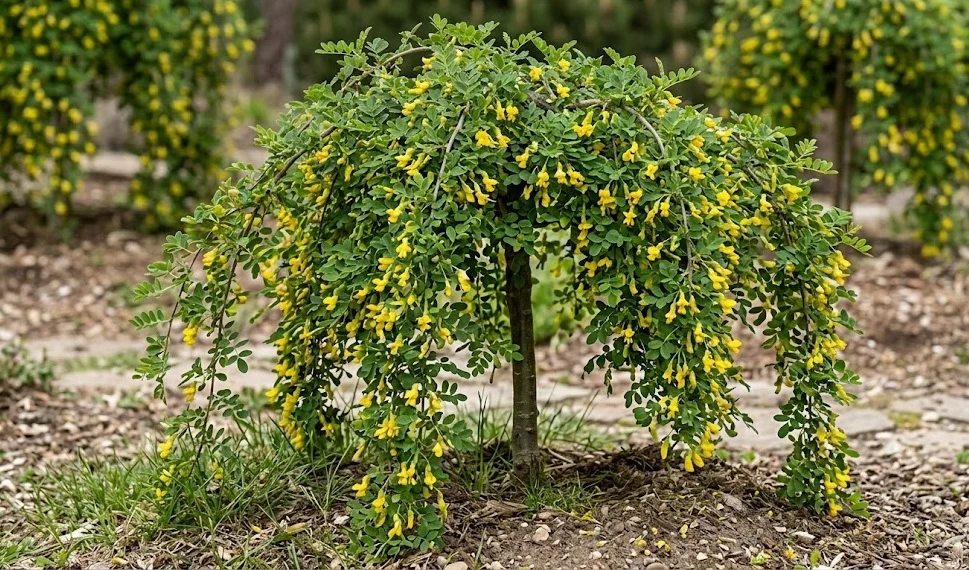

The weeping pea tree is generally a resilient ornamental tree, but it can still suffer from diseases and pests when growing conditions are unfavorable. Most serious problems are linked to stress, especially waterlogged soil, poor air circulation, drought during establishment, or mechanical damage. A healthy tree in a sunny, well-drained position usually resists pests and diseases effectively. Careful observation and early intervention are the best ways to protect both the plant’s health and its ornamental form.
General plant health and stress factors
A strong root system is the first defense against disease and pest damage. Trees planted too deeply, kept too wet, or grown in compacted soil are more likely to decline. Stress weakens natural resistance and makes the plant more attractive to opportunistic pests. Correct planting and drainage are therefore central to plant protection.
Air circulation around the crown also matters. Dense surrounding vegetation can trap humidity and slow leaf drying after rain. This can encourage fungal leaf spots and other foliage problems. Keeping the crown open and the planting area uncluttered helps reduce disease pressure.
Mechanical injuries should be avoided because wounds provide entry points for pathogens. Damage from lawn equipment, careless pruning, or animals can weaken the stem and branches. Grafted trees are particularly vulnerable if the graft union is injured. Clean maintenance habits reduce long-term risk.
A balanced care routine prevents many disorders before they appear. Overfeeding, overwatering, and severe pruning can all create stress. The tree performs best when growth is steady and not forced. Healthy, moderate growth is less vulnerable than lush, soft, or weakened growth.
More articles on this topic
Fungal leaf spots and foliage diseases
Fungal leaf spots may appear during wet seasons or in poorly ventilated sites. They often show as small brown, tan, or dark marks on the foliage. Severe infection can cause premature leaf yellowing and early leaf drop. In most cases, light spotting is cosmetic rather than life-threatening.
Good sanitation helps reduce repeated infection. Fallen leaves should be collected if disease has been noticeable during the season. Removing infected debris lowers the amount of overwintering fungal material near the plant. This is especially useful in small gardens where the same tree is exposed to recurring humidity.
Pruning can also help manage foliage disease. Selective thinning improves airflow through the weeping crown and allows leaves to dry faster. Cuts should be made cleanly and only where needed. Heavy, indiscriminate pruning is not necessary and may create additional stress.
Chemical treatment is rarely needed for minor leaf spot problems. If disease becomes severe every year, the growing conditions should be reviewed first. Shade, crowding, overhead irrigation, and excessive moisture are common underlying causes. Solving those issues is usually more effective than repeated spraying.
More articles on this topic
Root rot and moisture-related decline
Root rot is one of the more serious threats to the weeping pea tree. It is most likely in heavy, poorly drained, or constantly wet soil. Symptoms may include yellowing foliage, weak growth, wilting despite moist soil, and dieback in parts of the crown. Because the problem begins underground, it is often noticed only after damage is advanced.
Prevention is the best strategy against root rot. The tree should be planted in soil where water drains away reliably after rain. In heavy ground, planting slightly raised can help keep the root crown drier. Organic mulch should be kept away from the trunk to prevent constant bark moisture.
Once root rot is established, recovery can be difficult. Improving drainage, reducing irrigation, and removing wet mulch may help if the damage is not severe. Dead branches should be pruned out to reduce stress and improve appearance. Severely affected trees may not recover if the main root system has been destroyed.
Container specimens are also vulnerable to root problems. A potting mix that stays wet for too long can suffocate roots even when drainage holes are present. Containers should be filled with free-draining medium and checked regularly. Watering should follow actual moisture conditions rather than routine habit.
Common insect pests
Aphids may appear on young shoots and fresh spring growth. They feed by sucking sap and can cause curling, sticky honeydew, and mild distortion. Small populations are usually tolerated by healthy trees. Natural predators such as ladybirds, lacewings, and hoverfly larvae often reduce aphid numbers without intervention.
Scale insects can occasionally settle on stems and branches. They may look like small brown or gray bumps attached to the bark. Heavy infestations weaken shoots and may produce honeydew, which can lead to sooty mold. Early detection is important because young scale stages are easier to manage than mature protected insects.
Spider mites can become troublesome in hot, dry conditions. They may cause fine speckling, dull foliage, and delicate webbing on leaves. Drought-stressed plants are more vulnerable to mite outbreaks. Improving moisture balance and avoiding dusty, overheated sites can reduce the risk.
Control should begin with the least disruptive methods. Strong water sprays can dislodge aphids, while infested shoots can be pruned if the problem is localized. Horticultural soaps or oils may be used when appropriate and applied according to label directions. Broad-spectrum insecticides should be avoided unless clearly necessary because they can harm beneficial insects.
Monitoring, prevention, and integrated care
Regular inspection is more effective than waiting for major damage. The undersides of leaves, soft shoot tips, branch forks, and the graft union should be checked several times during the growing season. Small problems are easier to correct than established infestations. Monitoring is especially important during warm, dry periods and after wet springs.
The graft union deserves particular attention. Suckers from below the graft can weaken the ornamental crown by diverting energy to rootstock growth. These shoots are not a disease or pest, but they can seriously affect plant form. They should be removed promptly and cleanly.
Integrated care combines site selection, sanitation, pruning, watering, and biological balance. A tree in the right place with good airflow and moderate moisture will need fewer treatments. Avoiding stress is the foundation of pest and disease management. Professional plant care begins with prevention rather than emergency reaction.
When intervention is needed, accurate identification comes first. Treating the wrong problem wastes effort and may damage the plant or surrounding ecosystem. Fungal, insect, water, and nutrient symptoms can overlap. Careful observation of the whole plant and its growing conditions leads to better decisions.