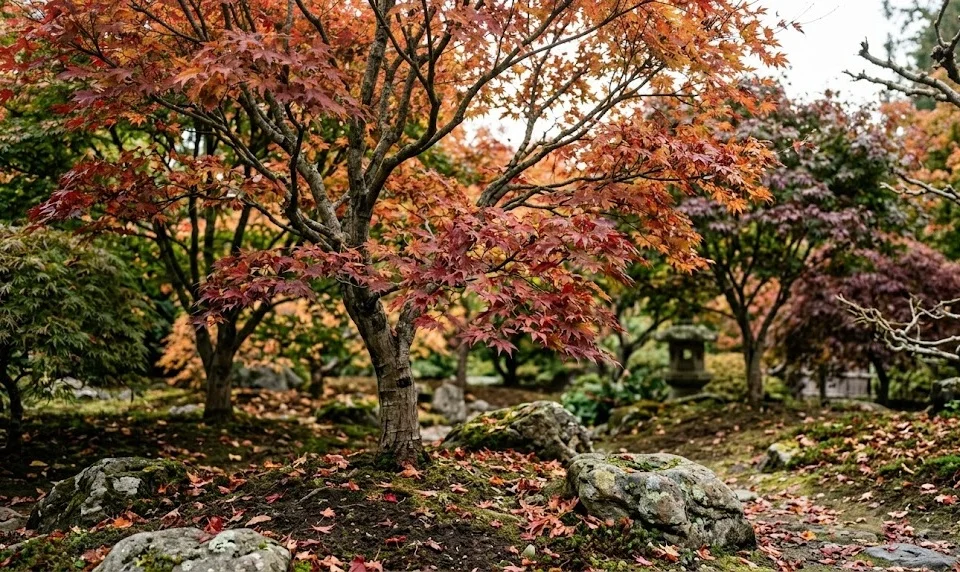

Pruning a Japanese maple is an art form that requires a delicate touch and a deep appreciation for the tree’s natural silhouette. Unlike many other landscape trees that require aggressive cutting to stay in bounds, maples are best served by a “less is more” philosophy. You should aim to enhance the tree’s inherent beauty by removing only what is necessary to maintain health and structure. When done professionally, a pruned maple should look as though it hasn’t been touched at all, displaying a clean and elegant form that allows light and air to pass through the canopy.
Tools and timing
The success of any pruning task begins with using the right tools and ensuring they are in peak condition. You should use sharp, high-quality bypass pruners for smaller twigs and a fine-toothed pruning saw for larger branches. Dull tools can crush the delicate vascular tissue of the maple, leading to slow healing and an increased risk of infection. Always clean your tools with alcohol before you start and between different trees to prevent the spread of pathogens like Verticillium wilt.
Timing is one of the most debated aspects of maple care, but most professionals agree that the best time for structural pruning is during the late winter or early spring. At this time, the tree is dormant, and the absence of leaves allows you to see the branch structure clearly. However, you should be aware that maples are “bleeders,” meaning they will leak sap if pruned just as the sap begins to rise in the spring. While this sap loss is rarely harmful to the tree’s health, it can be messy and unsightly.
Alternatively, you can perform light thinning and maintenance pruning in the mid-summer once the first flush of growth has hardened off. This timing allows you to see how the foliage fills out the space and to identify any branches that are weighing down the canopy too much. Summer pruning also has the advantage of not causing the “bleeding” that occurs in the spring. However, you should avoid heavy pruning during the heat of summer, as this can stress the tree and lead to sun scorch on newly exposed interior branches.
Late autumn is generally considered the worst time to prune, as the cuts may not have time to callus over before the extreme cold of winter arrives. Open wounds during the winter can lead to desiccation and provide entry points for winter-active fungi. Stick to the dormant season or mid-summer for the best results and the quickest healing. A professional approach involves planning your pruning activities around the tree’s natural cycles of growth and rest.
More articles on this topic
Aesthetic shaping techniques
When shaping a Japanese maple, your goal should be to reveal the “bones” of the tree rather than forcing it into a predetermined geometric shape. You should start by removing the “three Ds”: dead, damaged, and diseased wood, which often accounts for much of the work. Once the health-related pruning is done, step back and look at the tree’s overall balance and flow. Look for branches that are crossing or rubbing against each other, as these will eventually cause wounds and structural weakness.
One of the most effective techniques for these trees is known as “thinning,” which involves removing entire branches back to their point of origin. This opens up the interior of the tree, creating the “layered” look that is so highly prized in maple aesthetics. By removing some of the smaller, cluttered twigs in the center, you allow light to reach the inner branches and improve air circulation. This not only looks better but also makes the tree more resilient to pests and diseases.
Avoid “topping” or “shearing” your maple, as this leads to a flush of weak, unattractive “witches’ broom” growth at the tips of the branches. This kind of aggressive cutting destroys the natural grace of the tree and requires constant maintenance to keep under control. Instead, if a branch is too long, follow it back to a side branch that is heading in a desirable direction and make your cut there. This “drop-crotching” technique redirects the tree’s energy more naturally and preserves its elegant form.
For weeping or pendulous varieties, you should focus on thinning out the “skirt” of the tree to prevent it from becoming a solid mound of foliage. Removing some of the under-hanging branches allows you to see the twisted, sculptural trunk that is often hidden. You want to create a sense of transparency so that you can see through the tree to the landscape beyond. Professional shaping is about creating a conversation between the tree and its environment.
More articles on this topic
Corrective pruning for health
Beyond aesthetics, pruning is a vital tool for managing the long-term health and vigor of your Japanese maple. If you notice that a branch has been attacked by pests or is showing signs of fungal infection, you should remove it immediately, regardless of the season. Make your cut several inches into healthy wood to ensure that you have removed all of the infected tissue. Prompt action can prevent a localized problem from spreading and threatening the entire specimen.
In older trees, you may need to perform some regenerative pruning to encourage new growth in areas that have become stagnant. This involves identifying old, unproductive wood and removing it to make room for younger, more vigorous branches. This should be done gradually over several years to avoid shocking the tree’s system. By constantly refreshing the tree’s canopy, you can keep a specimen looking youthful and healthy for many decades.
Structural pruning is also important for young trees to ensure they develop a strong framework that can withstand wind and snow. You should identify a “central leader” if the variety is meant to be upright, and remove any competing stems that might create weak crotches. For multi-stemmed varieties, ensure that the main trunks have enough space to grow without crowding each other out. Investing time in the tree’s structure while it is young will save you from major corrective work later in its life.
Finally, always remember that you can always take more off, but you can’t put it back on. If you are unsure about a particular cut, leave the branch and come back to it the following year. Professional pruning is a slow, thoughtful process that respects the life of the tree and the time it takes to grow. Your patience and careful observation will be rewarded with a Japanese maple that is a true masterpiece of the garden.