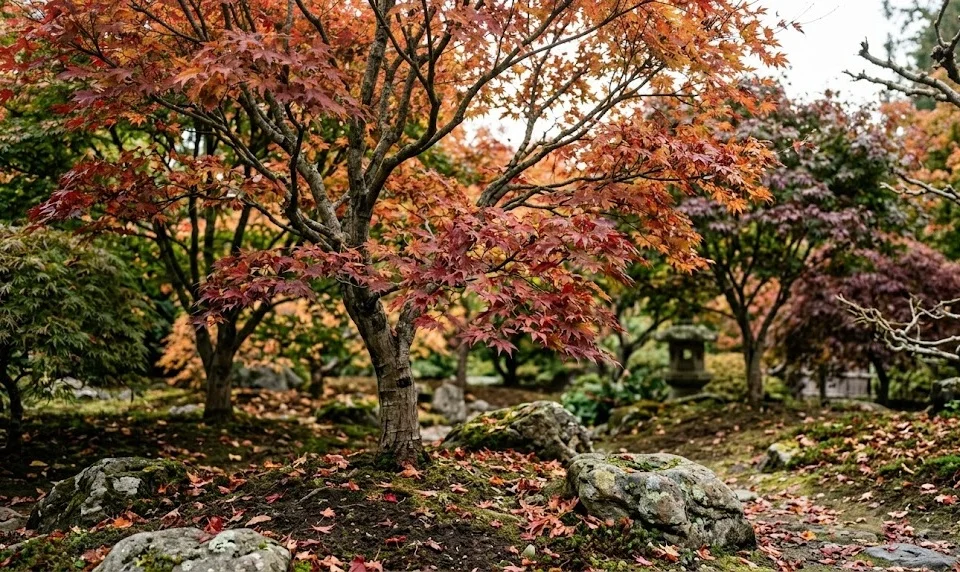

Successfully establishing a Japanese maple begins with a thoughtful planting process that respects the tree’s unique biological requirements. Whether you are starting with a young sapling from a nursery or attempting to grow your own through various propagation methods, timing and technique are everything. You will find that these trees respond exceptionally well to careful handling during their early stages of life. By following professional standards, you ensure that the tree develops a strong root system capable of supporting decades of healthy growth.
Site selection and preparation
Before you even bring a tree home, you must evaluate your garden to find a location that offers the right balance of light and shelter. Most varieties prefer a spot that receives morning sun and afternoon shade to protect their delicate foliage from the most intense heat of the day. You should also look for a site that is protected from strong, prevailing winds which can cause physical damage and moisture loss. Checking the drainage in your chosen spot is an absolute necessity, as these trees will not survive in waterlogged soil.
Preparing the soil in advance will give your new tree the best possible start in its new home. You should dig a hole that is at least twice as wide as the root ball but no deeper than the container it is currently in. Loosening the soil in a wide area around the planting site allows the young roots to expand more easily into the surrounding earth. If your soil is particularly poor, you can mix in some well-rotted organic matter, but avoid using too much as it can create a “bathtub effect” where water collects in the hole.
It is also important to consider the long-term spacing of the tree in relation to other plants and structures. Research the mature size of your specific cultivar so you don’t find yourself having to move it or prune it heavily in a few years. Proper spacing ensures adequate air circulation, which is vital for preventing fungal diseases as the canopy fills out. A well-placed tree will have room to display its natural form without being crowded by neighbors.
Testing the soil pH can provide valuable information about whether you need to make any adjustments before planting. These maples generally prefer a slightly acidic environment with a pH between 5.5 and 6.5. If your soil is too alkaline, you can add sulfur or peat moss to gradually lower the pH level over time. Taking these extra steps during the preparation phase will pay off in the form of a much healthier and more vigorous tree.
More articles on this topic
The planting process
When you are ready to plant, handle the tree by the root ball or the container rather than the trunk to avoid damaging the vascular system. Carefully remove the tree from its pot and inspect the roots for any signs of being “root-bound,” where they circle the inside of the container. If you see circling roots, gently tease them outward or make a few shallow vertical cuts to encourage them to grow into the new soil. This step is crucial for ensuring the tree becomes stable and well-anchored in the ground.
Place the tree in the center of the hole, making sure that the top of the root ball is level with or slightly above the surrounding soil surface. One of the most common mistakes is planting these trees too deep, which can lead to trunk rot and suffocated roots. You want the “root flare”—the area where the trunk begins to widen into the roots—to be visible above the ground. Adjust the soil at the bottom of the hole as needed to achieve the perfect height.
As you backfill the hole with the original soil, do so in layers and water each layer lightly to settle the earth and remove air pockets. Do not stomp on the soil with your feet, as this can cause excessive compaction that prevents oxygen from reaching the roots. Instead, use your hands to firm the soil gently around the root ball. Once the hole is filled, create a small basin of soil around the outer edge of the planting area to help direct water toward the roots.
Finish the job by applying a two-to-three-inch layer of organic mulch over the entire planting area, keeping it away from the trunk itself. Give the tree a thorough watering immediately after planting to ensure the roots are well-hydrated and the soil is fully settled. You should avoid fertilizing the tree during the first growing season, as it needs to focus its energy on root establishment rather than top growth. Consistent monitoring during the first year is the key to a successful transition.
More articles on this topic
Propagation from seeds
Growing maples from seeds is a rewarding process, though it requires a significant amount of patience and attention to detail. It is important to know that seeds from cultivar maples will not grow “true to type,” meaning the offspring will likely look different from the parent tree. This genetic variation can lead to interesting new forms, which is how many famous cultivars were originally discovered. Collect the winged seeds, known as samaras, in the late autumn when they have turned brown and are ready to drop.
Most maple seeds require a period of cold stratification to break their natural dormancy and trigger germination. You can mimic winter conditions by placing the seeds in a bag of moist peat moss or sand and keeping them in the refrigerator for about three to four months. It is a good idea to soak the seeds in warm water for 24 hours before starting the stratification process to soften the outer shell. Check the seeds periodically to ensure the medium stays moist and to look for any signs of early sprouting.
Once the stratification period is over, you can sow the seeds in small pots filled with a high-quality seed-starting mix. Place the pots in a bright location but out of direct sunlight, and keep the soil consistently moist but not soggy. Germination can be irregular, so do not give up if some seeds take longer than others to emerge. When the seedlings have developed their first true leaves, you can begin to provide them with a very dilute liquid fertilizer.
Young seedlings are extremely delicate and must be protected from extreme temperatures and strong winds during their first year. You should gradually acclimate them to outdoor conditions through a process called hardening off before planting them in a permanent spot. It often takes several years of growth in a nursery bed or container before a seedling is large enough to be moved into the landscape. This slow start is a natural part of the maple’s life cycle and shouldn’t be rushed.
Cuttings and grafting methods
For those who want to create an exact clone of a specific cultivar, propagation by cuttings or grafting is the necessary approach. Softwood cuttings should be taken in late spring or early summer from the current year’s growth when the stems are still flexible. You will need to use a rooting hormone and provide a high-humidity environment, such as a misting system or a covered tray, to keep the cuttings alive. Even with professional equipment, the success rate for rooting Japanese maple cuttings can be quite low.
Grafting is the most common professional method for propagating named varieties and ensuring they maintain their unique characteristics. This involves joining a piece of the desired cultivar, known as the scion, onto the rootstock of a hardy seedling. The most popular technique for maples is the side-veneer graft, which is typically performed in late winter or early spring while the plants are dormant. Successful grafting requires precise cuts and a clean environment to ensure the vascular tissues of the two plants align perfectly.
After grafting, the plants must be kept in a controlled environment with high humidity and stable temperatures while the union heals. You should monitor the graft site closely for any signs of infection or failure, and keep the rootstock free of any competing growth. Once the graft has successfully taken and the scion begins to grow, you can gradually remove the top of the rootstock. This method allows you to produce high-quality trees that are identical to the parent plant in a relatively short amount of time.
Whether you choose seeds, cuttings, or grafting, propagation is a skill that improves with practice and observation. Each method offers a different way to interact with these beautiful trees and expand your collection or share them with others. You should document your results and the conditions you provided to learn what works best in your specific environment. The satisfaction of seeing a tree you propagated yourself grow into a mature specimen is one of the greatest joys of gardening.