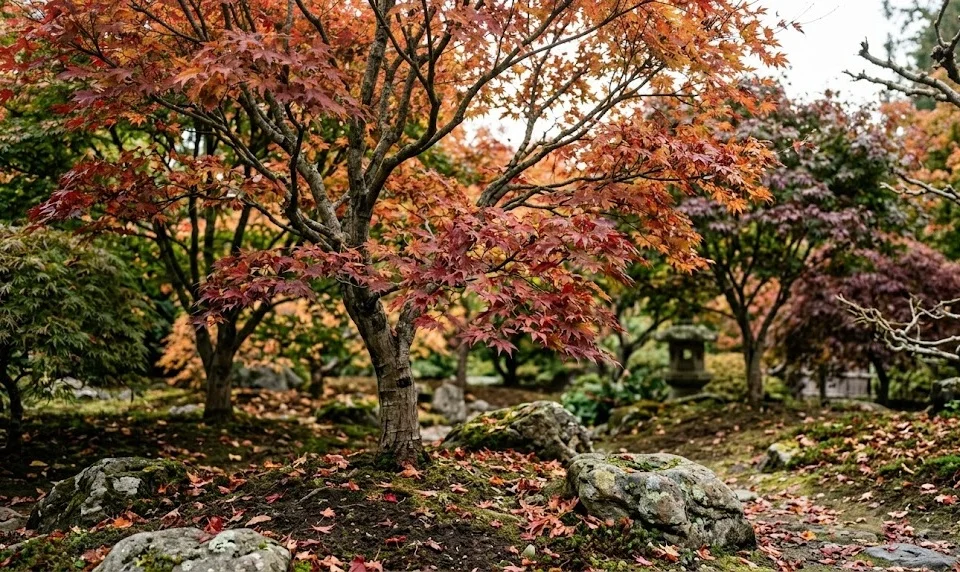

Proper hydration and nutrient management are the twin pillars of maintaining a healthy and vibrant Japanese maple throughout the growing season. You will find that these trees are quite communicative about their needs if you know what signs to look for in their foliage and growth patterns. Achieving the right balance is essential, as both over-watering and excessive fertilization can lead to significant health problems. A professional approach involves tailoring your routine to the specific age of the tree and the environmental conditions of your garden.
Establishing a watering routine
The most important rule for watering these trees is to prioritize consistency over sheer volume. You should aim to keep the soil consistently moist, like a wrung-out sponge, rather than allowing it to oscillate between being bone-dry and soaking wet. Newly planted trees will require much more frequent attention than established ones because their root systems are still confined to a small area. During the first two years, you should check the soil moisture levels several times a week, especially during hot or dry spells.
As the tree matures and its root system expands, it becomes more capable of accessing moisture from deeper soil layers. However, even an established maple will need supplemental water during prolonged periods of drought to prevent leaf scorch and dieback. You can test the soil moisture by inserting a finger a few inches into the ground; if it feels dry at that depth, it is time to water. Avoiding a rigid schedule and instead responding to the actual conditions is the hallmark of an expert gardener.
The time of day you choose to water can also impact the health of your tree and the efficiency of your efforts. Watering in the early morning is ideal because it allows the foliage to dry quickly, which reduces the risk of fungal infections. It also ensures that the tree has a full reservoir of moisture to draw from before the heat of the day arrives. Evening watering should be avoided if possible, as lingering moisture on the leaves and soil surface can invite pests and diseases.
Deep watering is far more effective than frequent, shallow sprinklings because it encourages the roots to grow deeper into the soil. You should apply water slowly at the base of the tree using a soaker hose or a drip irrigation system. This method minimizes runoff and ensures that the moisture reaches the entire root zone where it is needed most. For a mature tree, a long, slow soak once a week is usually much better than a quick spray every day.
More articles on this topic
Water quality and techniques
The quality of the water you use can have a long-term impact on the health of your soil and your Japanese maple. These trees are somewhat sensitive to high levels of salts and minerals, which can sometimes be found in well water or heavily treated municipal supplies. If you notice a white crust forming on the soil or the leaf edges constantly burning, you might want to have your water tested. Using rainwater collected in barrels is often the best choice for these sensitive plants as it is naturally soft and slightly acidic.
When applying water, you should always focus on the ground around the tree rather than spraying the canopy directly. While a gentle rinse can occasionally help remove dust and pests, constant wetting of the leaves can lead to many problems. Excessive moisture on the foliage provides the perfect environment for powdery mildew and other foliar pathogens to take hold. Keeping the trunk and lower branches as dry as possible is a simple but effective preventative measure.
In areas with heavy clay soil, you must be particularly careful not to over-water, as the soil can easily become anaerobic. If water sits on the surface for more than an hour after you finish, your drainage may be inadequate for the amount you are applying. You might need to break up the watering sessions into shorter intervals to allow the soil time to absorb the moisture. Understanding the infiltration rate of your specific garden soil is key to professional-level irrigation management.
For trees grown in containers, the watering technique must be even more precise because the root zone is so limited. You should water until you see a small amount of liquid draining from the bottom of the pot to ensure the entire root ball is saturated. During the peak of summer, a containerized maple may need water both in the morning and the afternoon if the weather is particularly windy and hot. Monitoring the weight of the pot can be a quick way to tell if it needs a drink.
More articles on this topic
Understanding nutrient needs
Japanese maples are generally light feeders and do not require large amounts of supplemental fertilizer to thrive. In fact, many problems with these trees stem from over-fertilization, which can cause lanky, weak growth and make the plant more attractive to pests. If your tree is growing well and the leaf color is appropriate for the variety, it may not need any fertilizer at all. You should always start with a soil test to determine if there are any actual deficiencies before adding nutrients.
Nitrogen is the primary nutrient responsible for green growth, but too much of it can be detrimental to maples. High-nitrogen fertilizers can cause the tree to produce long, spindly branches that lack the structural integrity to support themselves. It can also interfere with the beautiful autumn colors that these trees are known for by keeping the plant in a state of active growth too late into the season. A balanced, slow-release formula is usually the safest and most effective choice for general maintenance.
Micronutrients like iron, magnesium, and manganese also play a vital role in the health of the tree’s foliage. A deficiency in iron, for example, can cause chlorosis, where the leaves turn yellow while the veins stay green. This is often a sign that the soil pH is too high, making the iron already present in the soil unavailable to the plant. Addressing the underlying soil chemistry is often more important than simply adding more minerals.
The best time to apply any fertilizer is in the early spring, just as the buds begin to swell but before the leaves have fully unfurled. This provides the tree with a boost of energy right when it is entering its most active phase of growth. You should avoid fertilizing in late summer or autumn, as this can stimulate new growth that won’t have time to harden off before the first frost. Proper timing ensures that the nutrients are used efficiently and don’t put the tree at risk.
Organic vs. synthetic fertilizers
Many professional gardeners prefer organic fertilizers because they improve the overall health of the soil biology while providing nutrients. Materials like compost, fish emulsion, or seaweed extracts offer a broad spectrum of minerals and beneficial microbes. These products break down slowly, providing a steady, gentle supply of food that mimics the natural nutrient cycle of a forest. Organic matter also helps improve the soil’s ability to hold onto both water and nutrients over the long term.
Synthetic fertilizers can be useful in specific situations where a quick correction of a known deficiency is required. They are highly concentrated and provide nutrients in a form that the plant can absorb almost immediately. However, you must be extremely careful with the dosage, as it is very easy to burn the sensitive roots of a maple with chemical salts. If you choose to use synthetic products, it is often best to apply them at half the strength recommended on the label.
Using a layer of high-quality compost as a mulch is one of the most effective ways to “feed” your tree without the risk of over-fertilization. As the compost breaks down, it leaches nutrients into the soil where the shallow roots can easily reach them. This method also encourages earthworms and other beneficial organisms to thrive in the root zone. It is a holistic approach that supports the entire ecosystem of the tree rather than just providing a chemical boost.
Regardless of the type of fertilizer you choose, you should always water the tree thoroughly before and after application. This helps prevent root burn and ensures that the nutrients are carried down into the soil where they can be absorbed. Never apply fertilizer directly against the trunk of the tree, as this can cause bark damage and invite disease. Following these professional standards will help you maintain a tree that is both beautiful and structurally sound.
Seasonal adjustments for feeding
Your fertilization and watering strategy should shift as the tree moves through its annual cycle of growth and dormancy. In the spring, the focus is on supporting new foliage and the initial flush of growth with adequate moisture and a light application of nutrients. This is the period when the tree has its highest demand for resources, and consistent care now pays dividends throughout the year. You should be prepared to increase your monitoring as the temperatures begin to rise.
As summer arrives, the priority shifts almost entirely to water management and heat protection. You should generally stop all fertilization by mid-summer to allow the tree to begin its natural process of slowing down. During heatwaves, you may need to implement temporary measures like extra mulching or providing temporary shade. The goal during the hottest months is simply to keep the tree stable and hydrated until the cooler autumn weather arrives.
In the autumn, your watering should gradually decrease as the tree enters dormancy and its transpiration rate drops. However, you must ensure the tree doesn’t go into winter with bone-dry roots, so a deep watering before the ground freezes is often beneficial. This is the time to observe the tree’s color and form without the distraction of active growth. You can take note of any areas where the tree seemed to struggle so you can adjust your plan for the following year.
Winter is a time for the tree to rest, and your involvement should be minimal in terms of feeding and watering. In some climates, a mid-winter watering during a thaw can be helpful if the season has been exceptionally dry. You should use this time to reflect on the past year’s performance and prepare your supplies for the coming spring. Professional gardening is a year-round commitment that requires a deep respect for the tree’s natural rhythms and seasonal needs.