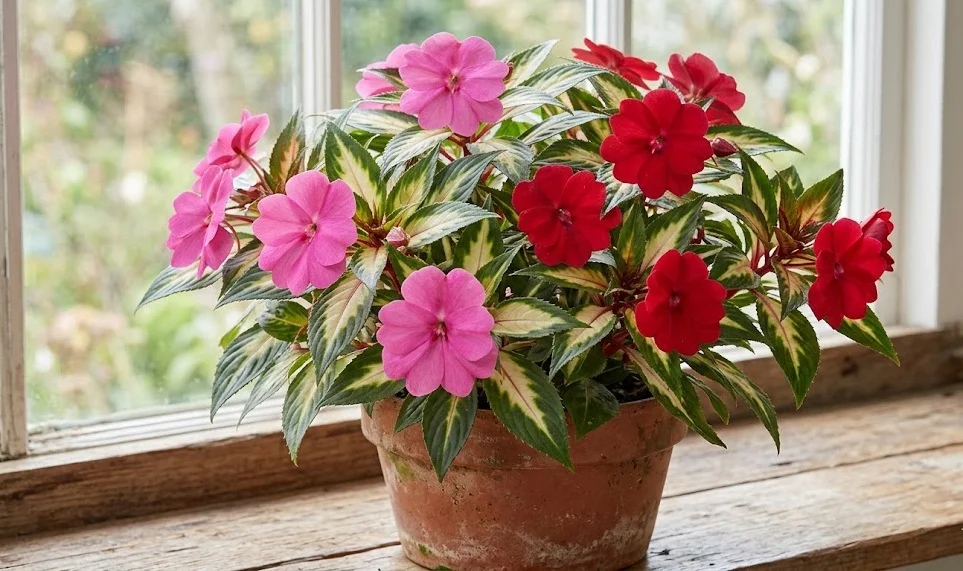

Pruning New Guinea impatiens is not complicated, but it has a strong effect on plant shape, flowering, and health. The plant naturally grows in a rounded form, yet it can become uneven, stretched, or crowded during the season. Light, timely cutting encourages branching and keeps the canopy attractive. Because the stems are succulent, clean tools and gentle handling are especially important.
Why pruning improves plant quality
Pruning helps maintain a compact and balanced shape. When a stem becomes too long, it can shade nearby growth and make the plant look untidy. Cutting it back encourages side shoots to develop below the cut. This creates a fuller plant with more flowering points.
Young plants often benefit from early pinching. Removing the growing tip directs energy into lateral branching. This is especially useful for plants started from cuttings or small plugs. A well-branched young plant becomes more impressive later in the season.
Pruning also improves airflow inside dense growth. Crowded stems and old leaves trap moisture, which can increase disease risk. Removing weak or congested material allows the plant to dry more evenly after watering or rain. Better airflow is especially important in humid or shaded sites.
Flowering can become more consistent after light pruning. Although cutting removes some buds temporarily, it often stimulates fresh growth that blooms strongly afterward. The best results come from modest, regular shaping rather than severe cutting. A plant kept in balance rarely needs drastic correction.
More articles on this topic
How to prune correctly
Use clean, sharp scissors, snips, or fingernails for soft young tips. Crushing stems with dull tools can leave ragged wounds that heal poorly. Disinfect tools when moving between plants, especially if disease symptoms are present. Clean cuts reduce the chance of infection.
Cut stems just above a healthy leaf node. New shoots usually emerge from nodes below the cut. Avoid leaving long bare stubs because they can dry out or decay. A neat cut close to active growth produces the best regrowth.
Remove yellow leaves, damaged stems, and faded flowers during routine care. This is not only cosmetic; it also lowers disease pressure. Decaying plant tissue can harbor fungi and attract pests. Regular grooming keeps containers and beds looking professional.
Do not remove too much foliage at once unless the plant is severely overgrown. Leaves are the plant’s energy source, and heavy pruning can slow recovery. A good rule is to reduce selected stems gradually. This keeps the plant attractive while new growth develops.
More articles on this topic
Cutting back during the season
Midseason cutting back may be useful when plants become leggy. Heat, low light, or crowded conditions can cause stretching. Shortening the longest stems by one-third can restore symmetry. With warmth, moisture, and nutrition, the plant often fills out quickly.
After pruning, water carefully and keep the plant out of severe stress. The soil should be moist but not saturated. A mild feeding can support regrowth once new shoots begin to appear. Avoid strong fertilizer immediately after heavy cutting.
Cutting back can also rescue plants after temporary neglect. If drought caused leaf drop or uneven growth, remove the weakest stems and shorten the remaining ones. The plant may recover if roots are still healthy. However, pruning cannot fix advanced root rot or severe disease.
Late-season pruning should be more conservative. As days shorten and temperatures fall, regrowth becomes slower. Heavy cutting in autumn may leave the plant sparse. If the plant will be overwintered, take healthy cuttings or lightly shape it before moving indoors.