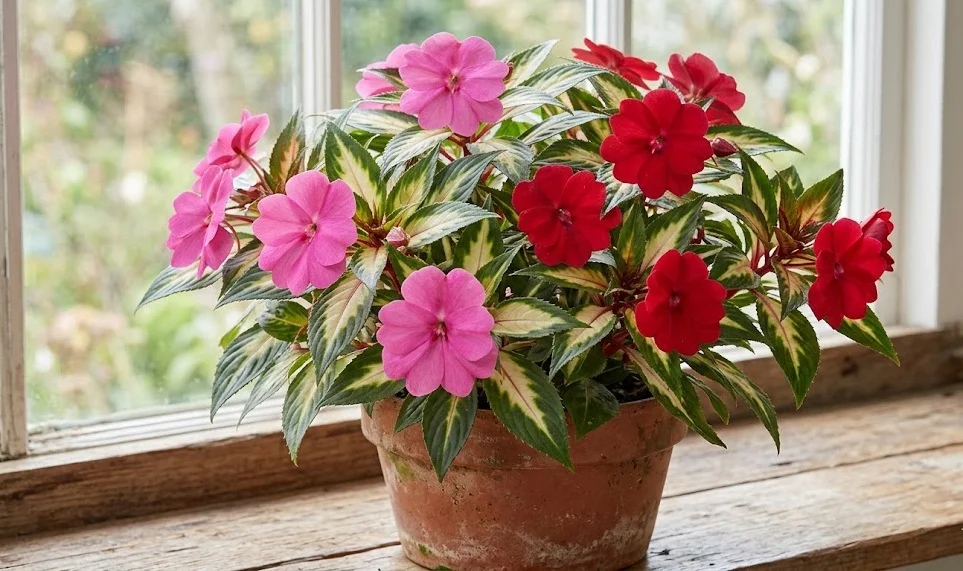

New Guinea impatiens can be overwintered indoors, but it should be treated as a tender plant that needs warmth, light, and careful watering. In cold climates, it cannot survive frost outdoors. Many gardeners grow it as an annual, but valuable cultivars or favorite container plants can be kept through winter with proper care. The key is to reduce stress before cold weather arrives and avoid forcing strong growth during the darkest months.
Deciding whether to overwinter
Overwintering is most worthwhile when the plant is healthy before autumn. A plant already weakened by root problems, pests, or severe drought is less likely to survive indoors. Strong stems, clean foliage, and active growing tips are good signs. It is better to overwinter one vigorous specimen than several declining ones.
Container plants are easier to save than bed-grown plants. They can be moved indoors with less root disturbance. Plants growing in the ground must be lifted carefully and potted before cold nights arrive. This process should be done early enough for recovery before indoor conditions begin.
Cuttings are often easier to overwinter than large plants. Small rooted cuttings take less space, suffer less shock, and can be kept under lights. They also allow the grower to preserve a cultivar without maintaining a large, mature specimen. For many home growers, this is the most practical method.
Timing is important. Plants should be moved or propagated before night temperatures become too low. Waiting until after cold damage appears reduces the chance of success. A gradual transition indoors produces better results than a sudden rescue after frost threatens.
More articles on this topic
Preparing plants for indoor conditions
Inspect the plant thoroughly before bringing it inside. Check leaf undersides, stem joints, flower buds, and the soil surface for pests. Aphids, whiteflies, thrips, and spider mites can multiply rapidly indoors. Treating problems before the move prevents a difficult winter infestation.
Prune the plant lightly to reduce size and remove weak growth. Long, stretched stems can be shortened to make the plant easier to manage. Remove faded flowers and yellowing leaves as well. Clean growth adapts better to indoor air and lower light.
If the potting mix is old, compacted, or poorly drained, repotting may be useful. However, heavy root disturbance in autumn should be avoided unless necessary. A slightly larger pot with fresh, airy medium can help if roots are crowded. The plant should never be placed in a container without drainage.
Acclimation should be gradual when possible. Move the plant to a brighter sheltered area first, then indoors near a suitable window. Sudden changes in light, humidity, and temperature can cause leaf drop. Some shedding is normal, but severe shock can weaken the plant.
More articles on this topic
Indoor care through winter
New Guinea impatiens needs the brightest indoor position available without being scorched through glass. An east-facing window is often suitable, while a south-facing window may work in winter if temperatures remain moderate. In dark homes, supplemental grow lights can make a major difference. Without enough light, the plant becomes leggy and flowering declines.
Watering should be reduced compared with summer care. Growth slows indoors, and evaporation is lower. Keep the medium lightly moist, but allow the top layer to begin drying before watering again. Wet soil in low light is one of the most common causes of winter decline.
Fertilizer should be used sparingly in winter. A plant that is barely growing does not need heavy feeding. A diluted fertilizer once a month may be enough if the plant remains active. If growth is weak or light is poor, it is better to wait until spring.
Indoor humidity can be helpful, but stagnant dampness is not. Grouping plants or using a humidity tray can reduce dry-air stress. Leaves should not remain wet for long periods in cool rooms. Gentle airflow supports healthier foliage.
Returning plants outdoors in spring
Spring reintroduction should be gradual. Indoor leaves are tender and can burn quickly in outdoor light. Start with a shaded, protected position for a few hours each day. Increase exposure slowly over one to two weeks.
Prune winter growth before the plant begins its main outdoor season. Thin, pale stems can be cut back to encourage compact new shoots. This pruning helps rebuild the plant’s shape after months of lower light. New growth produced outdoors is usually stronger and more attractive.
Resume regular feeding only when active growth is visible. Warmer temperatures and increasing light allow the plant to use nutrients efficiently. A balanced liquid fertilizer can help restart flowering. Avoid strong feeding immediately after the plant is moved outdoors.
Do not place overwintered plants outside permanently until frost risk has passed. Cold nights can undo months of careful indoor care. Once conditions are stable, the plant can return to containers, borders, or mixed displays. With good handling, an overwintered New Guinea impatiens can become a strong flowering plant again.