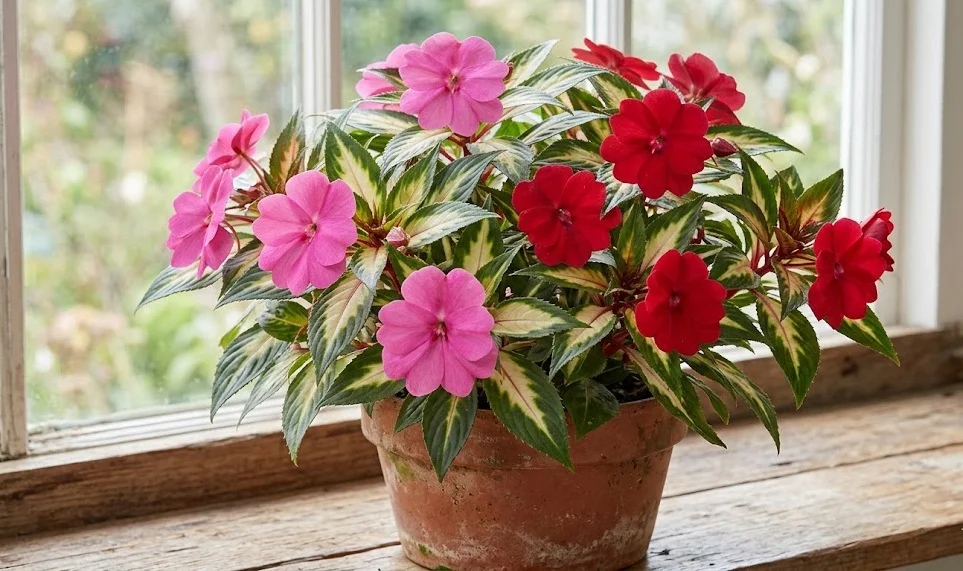

New Guinea impatiens is one of the most valuable flowering plants for shaded and semi-shaded gardens because it combines vivid color, dense foliage, and a long blooming season. It performs especially well in containers, balcony boxes, patio planters, and sheltered borders where many sun-loving annuals would struggle. Its thick stems, glossy leaves, and large flowers give it a more substantial appearance than common bedding impatiens. Successful care depends on steady moisture, gentle light, fertile soil, and protection from environmental stress.
Understanding the plant’s growth habits
New Guinea impatiens grows as a tender perennial in frost-free climates, but in temperate gardens it is usually treated as a seasonal ornamental. It develops soft, succulent stems that store water but are also sensitive to cold, drought, and rough handling. The plant naturally forms a rounded, bushy shape when it receives balanced light and regular nutrition. Healthy specimens produce flowers continuously from late spring until autumn if temperatures remain favorable.
The foliage is one of the plant’s strongest ornamental features. Leaves are usually broad, slightly serrated, and glossy, with colors ranging from deep green to bronze, burgundy, or variegated combinations. This strong foliage makes the plant attractive even between flowering flushes. Variegated cultivars often need slightly brighter positions than dark-leaved types to keep their markings vivid.
Flowering is strongly influenced by light, temperature, moisture, and plant energy. New Guinea impatiens does not require full sun to bloom well, but it does need enough filtered brightness to support continuous bud formation. In deep shade, it may stay leafy and healthy but produce fewer flowers. In harsh afternoon sun, flowers may fade quickly and leaves may scorch.
The plant has a relatively shallow and fibrous root system. This means it responds quickly to both good and poor growing conditions. A small improvement in watering or feeding can lead to visible growth within days. At the same time, drought, waterlogging, or cold soil can cause rapid wilting and decline.
More articles on this topic
Choosing the right location
The best location is bright, sheltered, and protected from the strongest midday and afternoon sun. Morning sun followed by afternoon shade is often ideal in warm regions. In cooler climates, the plant can tolerate more direct light if the soil remains evenly moist. The key is to provide brightness without heat stress.
New Guinea impatiens is particularly useful under open trees, beside east-facing walls, or on covered terraces. It enjoys the kind of filtered light created by high branches, pergolas, or shade cloth. This environment allows photosynthesis to remain active without exposing the plant to burning rays. Air movement should be gentle rather than harsh, because strong wind can damage stems and dry the potting mix too quickly.
In containers, location is even more important because roots heat up faster and dry out sooner. Dark-colored pots placed on hot paving can raise root-zone temperatures significantly. Using larger containers, light-colored planters, or insulating outer pots can help maintain a more stable root environment. A stable root zone supports stronger flowering and reduces wilting.
Avoid placing New Guinea impatiens in cold, wet, or poorly ventilated corners. These conditions encourage root problems and fungal leaf diseases. The plant prefers humidity, but stagnant air around wet foliage is not beneficial. A site with soft light, moderate warmth, and gentle airflow gives the most reliable results.
More articles on this topic
Soil and growing medium
A high-quality, moisture-retentive but well-drained growing medium is essential. New Guinea impatiens dislikes drying out completely, yet it also suffers in soggy, compacted soil. The best mix contains peat-free compost or fine organic matter, coco coir, composted bark, and mineral components such as perlite. This combination holds water while leaving enough oxygen around the roots.
In garden beds, the soil should be loosened and enriched before planting. Heavy clay needs compost and structural improvement so excess water can drain away. Very sandy soil benefits from organic matter that improves water retention. The goal is a fertile, crumbly texture that remains moist but never swampy.
Container-grown plants need a professional potting mix rather than ordinary garden soil. Garden soil in pots often compacts, drains poorly, and may carry pests or disease organisms. A container medium should stay open and aerated throughout the season. Good drainage holes are just as important as the mix itself.
The ideal soil reaction is slightly acidic to neutral. In overly alkaline conditions, nutrient availability can become limited, especially for iron and manganese. Symptoms may include pale young leaves while the veins remain more visible. Regular use of balanced, container-friendly fertilizers usually prevents these deficiencies in seasonal plantings.
Watering for steady performance
Consistent moisture is one of the main secrets of strong New Guinea impatiens growth. The plant should not be allowed to wilt repeatedly, because each severe dry spell weakens the stems and reduces flowering. Water when the upper layer of the medium begins to feel dry, but before the root ball becomes completely dry. The aim is even moisture rather than constant saturation.
In pots, watering frequency depends on container size, temperature, wind, and plant maturity. A full, flowering plant in summer may need water every day, especially in a small pot. Larger planters dry more slowly and give the root system a more forgiving environment. Always water thoroughly enough that the entire root ball becomes moist.
Garden plants usually require less frequent watering once established, but they still need attention during hot weather. Mulching around the plants helps keep the soil cool and reduces evaporation. Organic mulch also improves soil life and gradually contributes nutrients as it breaks down. Keep mulch slightly away from the stems to reduce the risk of rot.
Overwatering can be just as damaging as drought. If leaves yellow, stems soften, and the soil smells sour, the roots may be deprived of oxygen. Standing water in saucers should be emptied after watering, especially in cool weather. Healthy roots need moisture and air at the same time.
Feeding and nutrient management
New Guinea impatiens is a steady feeder because it produces flowers over a long period. A slow-release fertilizer mixed into the planting medium gives a reliable nutritional base. This can be supplemented with liquid feeding during peak growth. Balanced nutrition keeps foliage dense, flowers abundant, and stems strong.
A fertilizer with moderate nitrogen and good levels of potassium is especially useful. Too much nitrogen can produce soft, leafy growth at the expense of flowers. Potassium supports flowering, water regulation, and stress tolerance. Trace elements are also important, particularly in containers where nutrients leach out with repeated watering.
Liquid fertilizer is best applied to moist soil rather than dry soil. Feeding a dry root ball can increase the risk of root stress. A weaker solution used regularly is usually safer than a strong dose applied occasionally. This approach mirrors the plant’s continuous growth pattern.
Signs of underfeeding include smaller leaves, fewer flowers, pale growth, and slow recovery after pruning. Signs of excess fertilizer include leaf edge burn, salt crust on the pot surface, and sudden root damage. Flushing the pot with clean water can help remove accumulated salts. Good feeding is measured, consistent, and adapted to the plant’s response.
Temperature and seasonal care
New Guinea impatiens grows best in warm but not extreme conditions. It thrives when daytime temperatures are mild to warm and nights remain comfortably above cold-stress levels. Chilly nights slow root activity and can cause dull foliage or stalled growth. Frost damages the plant quickly and should always be avoided.
Planting outdoors should wait until the risk of frost has passed and the soil has warmed. Even if daytime weather feels pleasant, cold soil can prevent proper establishment. Harden young plants gradually before exposing them to outdoor conditions. This transition reduces shock and helps leaves adapt to brighter light and wind.
During heat waves, plants may wilt temporarily even when the soil is moist. This happens because water loss through the leaves exceeds root uptake. Providing afternoon shade, watering early, and improving humidity around containers can reduce stress. Avoid heavy fertilization during extreme heat because the plant is already under pressure.
In autumn, growth slows as light levels drop and nights become cooler. Flowering may continue until cold weather arrives, but the plant’s energy gradually declines. Container specimens can be moved to a protected place if they are worth overwintering. Otherwise, they are commonly replaced the following season.
Grooming and long-term appearance
New Guinea impatiens is generally low-maintenance, but regular grooming improves its appearance. Removing faded flowers and yellowing leaves keeps plantings clean and reduces disease pressure. Many modern cultivars shed old blooms naturally, but manual cleaning is still useful in dense containers. A tidy canopy also improves airflow.
Light pinching can encourage branching, especially in young plants. If stems become stretched or uneven, cutting them back slightly helps restore a compact form. Pruning should be done with clean, sharp scissors or fingers to avoid crushing the succulent tissue. The plant usually responds quickly when temperatures and moisture are favorable.
Crowded plants should be monitored carefully. Dense foliage traps humidity and can hide early pest or disease symptoms. Spacing plants properly at planting time prevents many later problems. A mature plant needs enough room for air to move around the leaves.
The best care routine is observant rather than rigid. New Guinea impatiens communicates clearly through leaf posture, color, and flowering intensity. A slightly wilted plant, pale new growth, or reduced bloom count all provide useful signals. Responding early keeps the plant attractive from planting until the end of the season.