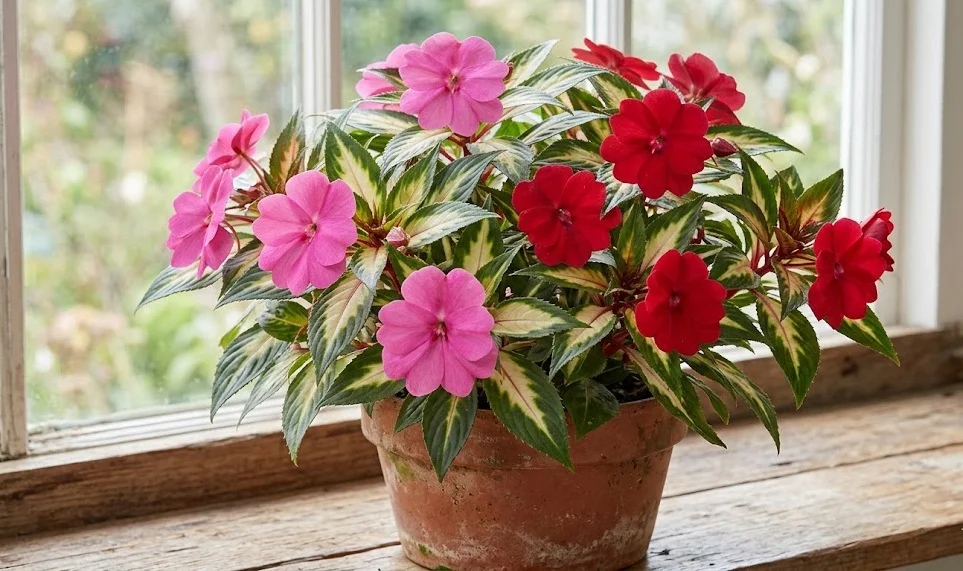

Planting New Guinea impatiens successfully begins with understanding its need for warmth, gentle light, and an evenly moist root environment. This plant establishes quickly when placed in fertile, well-drained soil after cold weather has passed. It can be used in containers, raised beds, window boxes, and shaded borders with excellent ornamental effect. Propagation is most commonly done by cuttings, because many modern cultivars are selected for uniform flowering and may not come true from seed.
Preparing for planting
The planting site should be selected before buying the plants. New Guinea impatiens prefers bright shade, filtered light, or morning sun with protection from hot afternoon exposure. A sheltered position prevents wind damage and helps the plants settle faster. Choosing the right site reduces later problems with wilting, scorching, and poor flowering.
Before planting in beds, improve the soil with compost or another mature organic amendment. The soil should be loose enough for fine roots to expand easily. Heavy soil should be opened with organic matter and, if necessary, coarse mineral material that improves structure. Poorly drained areas should be avoided because the plant is sensitive to oxygen-starved roots.
For containers, use a fresh, high-quality potting mix designed for flowering ornamentals. The container must have drainage holes, because decorative pots without drainage create serious root risks. A layer of broken material at the bottom is less important than using a good medium throughout the pot. The root ball should sit in a consistently moist but aerated environment.
Young plants should be inspected before planting. Healthy specimens have firm stems, active growing tips, and roots that hold the plug together without circling excessively. Avoid plants with blackened stems, yellow lower leaves, or a sour smell from the root ball. Starting with strong plants is the simplest way to achieve a dense, flowering display.
More articles on this topic
Planting technique and spacing
Plant New Guinea impatiens at the same depth it grew in its nursery pot. Planting too deeply can keep moisture against the stem base and increase the risk of rot. The top of the root ball should be level with the surrounding soil or potting mix. After planting, gently firm the medium so the roots make good contact without being compressed.
Spacing depends on the cultivar and the intended effect. In beds, plants are usually placed far enough apart to allow mature spread and air movement. Compact cultivars can be planted closer for a full carpet of color. Vigorous types need more space so they do not shade or crowd each other too quickly.
In containers, combine New Guinea impatiens with plants that enjoy similar moisture and light conditions. Good partners include shade-tolerant foliage plants, trailing ornamentals, and other annuals that do not demand dry soil. Avoid combining it with drought-loving plants because their care needs conflict. Mixed containers succeed best when every plant shares the same watering rhythm.
Water thoroughly after planting. This settles the medium around the roots and reduces transplant stress. For the first week, maintain steady moisture while the plant begins to root into its new environment. Strong establishment at this stage leads to more reliable flowering later.
More articles on this topic
Propagation from cuttings
Stem cuttings are the most practical way to propagate New Guinea impatiens. Select healthy, non-flowering shoots if possible, because they root more readily than heavily blooming stems. Each cutting should have several nodes and firm, disease-free tissue. Soft, weak, or yellowing stems should not be used.
Remove the lower leaves from the cutting to expose one or two nodes. These nodes are the points where new roots are most likely to form. The cutting can be placed in a sterile propagation medium such as perlite, vermiculite, coco coir, or a fine seed-starting mix. Clean tools are important because the succulent stems can be vulnerable to infection.
Humidity helps cuttings survive while they have no roots. A clear cover, propagation dome, or loosely closed plastic bag can maintain moisture around the leaves. The cover should not touch the foliage, and it should be opened regularly for ventilation. Excessive humidity without airflow can encourage fungal problems.
Bright indirect light is best during rooting. Direct sun can overheat the propagation chamber and cause cuttings to collapse. The medium should remain lightly moist, not wet and heavy. Once roots form and new growth appears, the cuttings can gradually be acclimated to normal growing conditions.
Aftercare for young plants
Newly planted or newly rooted New Guinea impatiens should be protected from extremes. Strong sun, cold nights, and drying winds can slow establishment. A gradual transition into outdoor conditions is especially important for plants raised indoors. This hardening process creates tougher foliage and reduces shock.
Young plants should not be overfed immediately. Their roots need time to expand before they can use higher nutrient levels. A mild liquid fertilizer can be introduced after clear new growth appears. Overfeeding too early can damage tender roots and produce weak, soft stems.
Pinching young plants can create a fuller habit. Removing the tip of a growing shoot encourages side branches to develop. This is useful for cuttings or small nursery plants that are tall and narrow. However, pinching may delay flowering slightly, so it should be done early rather than during peak display.
Monitor young plants closely during the first few weeks. Wilting, stem discoloration, or leaf yellowing should be addressed quickly. Most problems at this stage are linked to poor drainage, cold soil, or irregular watering. Careful early management produces compact, vigorous plants that bloom freely through the season.